


In dribs and drabs, we’re starting to get a better idea of what Tesla’s robotaxi service will look like when it launches in Austin, Texas, in just a few weeks. But it’s not nearly enough given what’s at stake.
The company is considering June 12th as a possible date to launch its robotaxi service in Austin, Bloomberg reports — though that date could change. Tesla has yet to publicly announce a date, nor has it clarified who will be able to access the vehicles.
The news comes as CEO Elon Musk said that the company has begun to test vehicles without safety drivers.
“For the past several days, Tesla has been testing self-driving Model Y cars (no one in driver’s seat) on Austin public streets with no incidents,” Musk said on X. “A month ahead of schedule. Next month, first self-delivery from factory to customer.”
But before you give Musk too much credit for the milestone, keep in mind that we still know next to nothing about how this service will operate. Tesla has never publicly demonstrated that its vehicles can operate fully driverless, without a human safety driver behind the wheel, on public roads. We have seen them drive themselves within the confines of Tesla’s factory, which is an environment totally controlled by the company and nowhere near as complex as an active city street with pedestrians, cyclists, and other vulnerable road users.
Don’t expect to see this vehicle in Austin any time soon. Image: Tesla
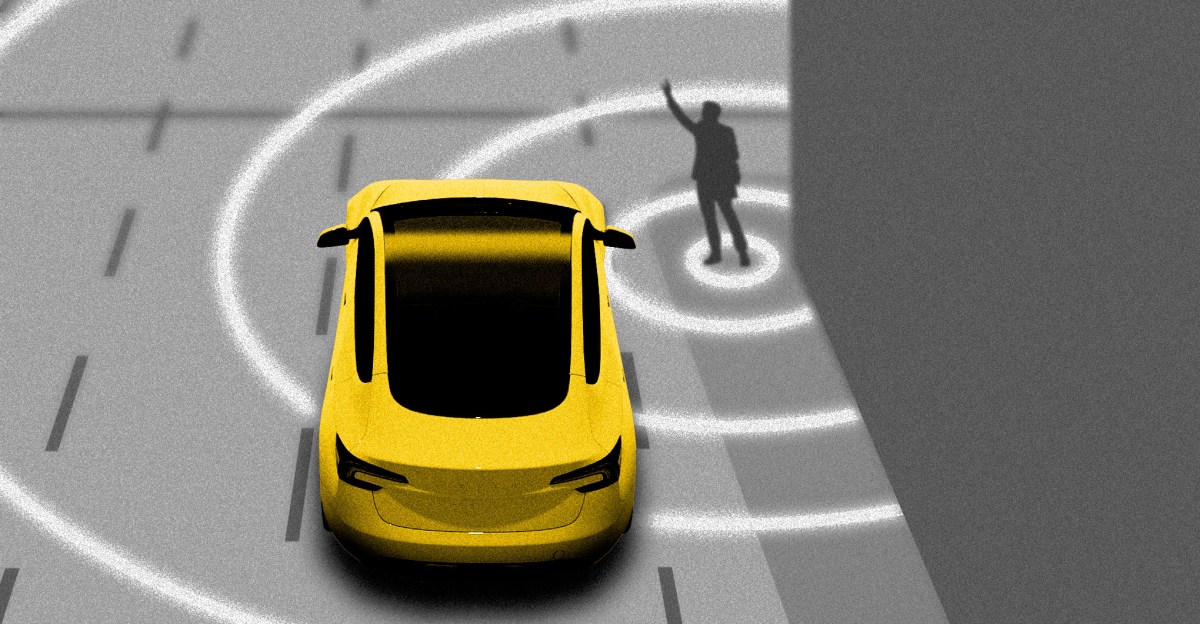
We know that Tesla plans to launch the service with 10–20 Model Y vehicles. Are these vehicles meaningfully different from the Model Ys that Tesla sells to its customers? It seems very likely, given that Ashok Elluswamy, VP of Autopilot and AI software, said in a recent earnings call that they would have “audio inputs” so they can pick up sirens from emergency vehicles, for example.
These vehicles will also be heavily teleoperated, meaning there will be remote operators watching the vehicles through their embedded cameras, ready to take control should a problem arise. But keep in mind this came from a research note published by Morgan Stanley analyst Adam Jonas, not from Tesla itself. Jonas also said the service will be invite-only at launch. So unless you’re a Tesla investor, a social media influencer with a sizable following, or a close personal friend of Elon Musk’s, don’t make any immediate plans to travel to Austin next month.
Tesla’s approach to its self-driving service is a major departure from how robotaxi companies typically handle these types of launches. Waymo, which it should be noted operates the only publicly available robotaxi service in the US, tests its driverless vehicles for weeks, sometimes months, before opening them up to members of the public. And even then, the company only allows specific people, usually from a waitlist, to ride in its vehicles.
Tesla’s approach to its self-driving service is a major departure from how robotaxi companies typically handle these types of launches
But before that, Waymo spends months driving manually around a city, gathering data about the streetscape and driving habits of other drivers. Sometimes it uses that information to launch a commercial robotaxi service; other times that data is just fed into Waymo’s central computer to make general improvements to its automated driving software.
Waymo is also relatively transparent about its process. Before it launched a robotaxi service in Phoenix, Arizona, the company invited journalists from dozens of outlets to its testing facility in Castle, California, allowing them to ride in the vehicles on a closed course. Waymo has also released its own safety case, posted numerous blog posts about its approach to safety, and published a handful of peer-reviewed studies that demonstrates how its technology routinely behaves safer than human drivers.
Tesla, on the other hand, has said very little about the safety of its vehicles beyond the hype-filled statements of its chief executive. Even the federal government, of which Musk was most recently a quasi-member as part of DOGE, has a lot of questions about the imminent launch. The National Highway Traffic Safety Administration, which operates under the US Department of Transportation, recently sent the company a barrage of questions, including about the number of vehicles, their ability to operate in poor weather conditions, and on what timetable Tesla owners will be able to access the supposed driverless technology.
A lingering concern for NHTSA is that Tesla is basing its robotaxi service on its Full Self-Driving (FSD) driver assist feature. Tesla’s first-gen driver assist system, Autopilot, has been linked to hundreds of nonfatal incidents and 51 reported fatalities as of October 2024. At least two of those fatalities have been linked to FSD. NHTSA has been investigating these crashes for a number of years now.
Self-driving technology is built on a lot of stuff — cameras, software, AI, engineering, probability — but the success of any public robotaxi service will ultimately come down to trust. Do people trust the company building the technology enough to get inside a vehicle with no one in the front seat? Numerous public opinion polls have shown declining support for autonomous vehicles over the years and a rise in outright hostility toward the technology.
On top of that, Tesla’s own brand problems come into focus. The company is clearly struggling under the yoke of Musk and his hard turn to the right. His online antics, his support of far-right political parties, and his fascist gestures at Trump rallies have all turned the Tesla brand toxic. A recent survey gauging the reputations of top companies ranked Tesla 95th, down from the 8th highest-rated brand four years ago.
Tesla will always have its fans — many of them fill my inbox with predictions of the company’s future success as well as personal insults for daring to question Musk’s leadership — but it will take more than a few reply guys to make a successful robotaxi business. Especially one we know very little about.
