


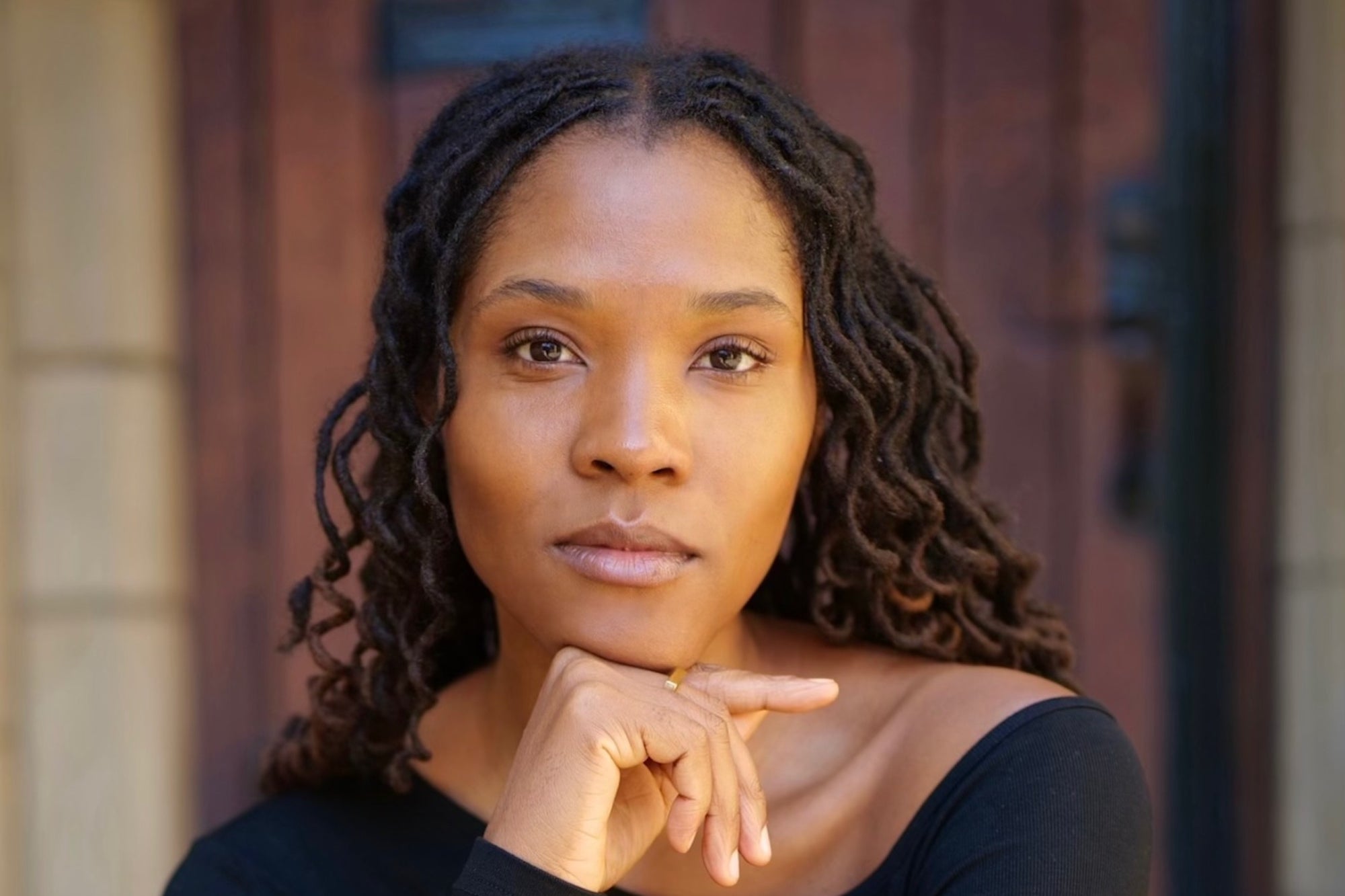
“I’ve always been someone who has a curiosity about people and society and culture,” Dr. Rachel Laryea tells Entrepreneur.
Image Credit: Courtesy of Penguin Random House. Dr. Rachel Laryea.
Raised by a single mother who immigrated to the U.S. from Ghana, Laryea started her career at Goldman Sachs and holds a dual PhD in African American studies and sociocultural anthropology from Yale University — experiences that helped shape the founding of her lifestyle brand Kelewele, current research at JPMorgan Chase and her new book, Black Capitalists: A Blueprint for What Is Possible.
“It was certainly a culture shock,” Laryea says of her time working in Goldman Sachs’ corporate services and real estate division, “and I’ve had a few culture shocks in my short life thus far. But it was also an experience that set me on [my] trajectory in a very pragmatic way, that unlocked a lot of the questions and curiosities that led me to write [Black Capitalists].”
Related: 5 Trailblazing Black Women Entrepreneurs Share How They’re Breaking Barriers — And How You Can Too
In her academic work, Laryea examined Black radical tradition and how history and critical race theory around the Black lived experience intersect with capitalism. Often, such scholarship suggests that Black people can’t have a relationship with capitalism that isn’t exploitative because of the history of American capitalism, given that Black people “were, and often still are, the laborers of capitalism, but hardly ever the beneficiaries of it,” Laryea says.
However, at Goldman Sachs, Laryea saw many people of color have “ complicated, interesting, contradictory relationships” with the “belly of the beast” — Wall Street. The experience made her rethink a lot of what she’d learned and consider how to make space for Black people within the U.S. economic system, to explore how they might benefit from capitalism themselves.
“Anyone can be invested in and practice Black capitalism.”
Laryea’s work on Black Capitalists began as she researched and wrote her dissertation, which focused on Black capitalists in the trans-Atlantic industry. As she continued with the project, she confronted the question of how people might use the tools of capitalism to uplift their communities.
Image Credit: Courtesy of Penguin Random House
Laryea’s book hinges on two essential terms: “Black capitalist” and “Black capitalism.”
“ I define a Black capitalist as an individual who identifies as a Black person and strategically repositions themselves within the economy in order to benefit from it [and] in order to create social good,” Laryea explains.
On the other hand, “Black capitalism” is race agnostic, Laryea notes. “Anyone can be invested in and practice Black capitalism,” she says, “because it can be an individual or collective that is doing that same thing of repositioning themselves within the economy in order to create social good.”
Related: This Black Founder Was Denied a Business Loan and Set Out to Prove the ‘Gatekeepers’ Wrong. He’s Made More Than $500,000 So Far — But It’s Just the Beginning.
According to Laryea, that communal mindset has the potential to “rupture” contemporary ideas about capitalism — about what it can be and how we can participate in it.
“For many people, the idea of a Black capitalist is oxymoronic or even an identity crisis.”
Laryea admits that some people will have a “visceral reaction in a negative way” to the title of her book: Black Capitalists.
“For many people, the idea of a Black capitalist is oxymoronic or even an identity crisis because the question becomes, How could I adopt an economic system that has never allowed me to benefit from it, and in fact has only been exploitative towards me and my community?” Laryea explains.
It’s a tense question that’s fueled by a history of legalized slavery in the U.S., generations of economic trauma carried into the present and the continuously widening racial wealth gap, Laryea says.
Related: America is Becoming the Land of Inequality and Diminishing Returns. Here’s Why.
Laryea also notes the distinction between a Black capitalist and a Black person who participates in capitalism. In the latter case, someone who is participating in capitalism to “reproduce the harms of capitalism” wouldn’t fit within Laryea’s definition.
“It became apparent to me that I would need to use my own story.”
A couple of the stories Black Capitalists unpacks are those of a Black Goldman Sachs employee and Ifa priest who describes himself as a “spy” gaining access, acquiring excess resources and giving back to his Black communities in Brooklyn, New York, and the Nigerian entrepreneur Wemimo Abbey, who co-founded unicorn fintech company Esusu, which allows low-to-moderate-income households in the U.S. to report rent payments and build credit.
“[Esusu is] this win-win-win construct,” Abbey told Entrepreneur in 2023. “It’s a win for the renter because they can establish their credit score or build their credit score and not go through what my mother and I went through when we came to this country, and during a tough time, [renters also] get access to zero-interest rent relief. The landlord can also get paid instead of evicting the renter. And the last win is for society — to prevent eviction and homelessness.”
Related: This Black Founder Stayed True to His Triple ‘Win’ Strategy to Build a $1 Billion Business
Laryea also made the “difficult choice” to tell her own story in the book. As she conducted interviews for the book, many of the women she spoke with had concerns about being included and identifiable despite anonymity.
“It became apparent to me that I would need to use my own story in a way to stand in for so many of the women that I spoke to,” Laryea explains. “Because at the end of the day, so many of our stories and experiences were similar in terms of how we navigate corporate America — so many of the negative experiences that we’ve had, the diminishing returns many of us experience in being in these spaces but never really reaping the benefits of them.”
Ahead of the publication of Black Capitalists on June 10, Laryea hopes the book moves readers to unified action.
“What’s so important, especially in the time in which we’re living, [is to] lock arms and get on the same page about how we are going to live through this moment and get through this moment,” Laryea says. “We know that capitalism isn’t going to be dismantled tomorrow, so from a pragmatic standpoint, it’s a question of, How can we can use the tools of this system in order to create social good [and] a more equitable system, in a constant endeavor to get us to something that’s a little bit more just?”
