

Close Menu
TechurzTechurz
    What's Hot

    Asian AI startups launch Mythos-like models as Anthropic’s export ban drags on

    June 27, 2026

    Corgi, the buzzy Y Combinator-backed insurance tech startup, says it didn’t steal an open source product

    June 26, 2026

    OpenAI poaches Uber India chief to lead its biggest market outside the US

    June 26, 2026
    X (Twitter) Pinterest YouTube LinkedIn WhatsApp
    Tech Pulse
    • Asian AI startups launch Mythos-like models as Anthropic’s export ban drags on
    • Corgi, the buzzy Y Combinator-backed insurance tech startup, says it didn’t steal an open source product
    • OpenAI poaches Uber India chief to lead its biggest market outside the US
    • Early Bird pricing ends tonight for Founder Summit
    • Robotaxis drive miles just to get cleaned and charged; this new startup wants to fix that
    X (Twitter) Pinterest YouTube LinkedIn WhatsApp
    TechurzTechurz
    • Home
    • Tech Pulse
    • Future Tech
    • AI Systems
    • Cyber Reality
    • Disruption Lab
    • Signals
    TechurzTechurz
    Home - Guides - The one word you should never say to your AI chatbot
    Guides

    The one word you should never say to your AI chatbot

    TechurzBy TechurzJune 26, 2025Updated:May 12, 2026No Comments3 Mins Read
    Share Facebook Twitter Pinterest LinkedIn Tumblr Reddit Telegram Email
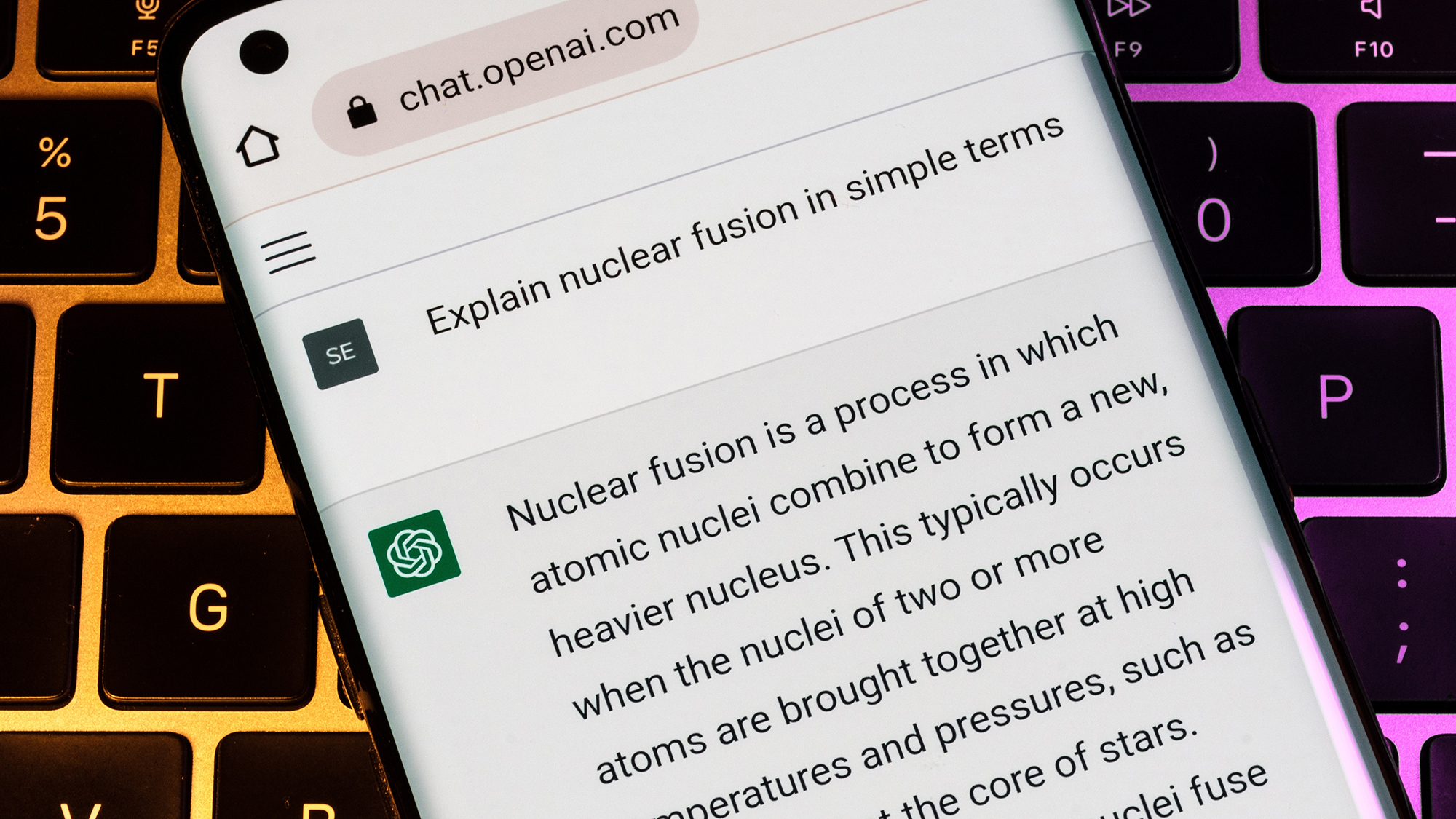
    ChatGPT chatbot AI from Open AI
    Share
    Facebook Twitter LinkedIn Pinterest Email


    Getting the best response from your favorite chatbot, whether it’s ChatGPT, Gemini, Claude or 500 other bots, doesn’t always mean using power words or the prompts that work like magic. Sometimes, it’s about what word you eliminate.

    By cutting one simple word, you can exponentially increase the changes of better results. After testing hundreds of prompts, I’ve found that avoiding a single term consistently delivers sharper, more useful responses.

    Users should avoid starting their prompts with “can.”

    Table of contents
    1 Why “can” sabotages your prompts
    2 Try this instead
    3 Other Words That Weaken AI Responses
    4 What to say instead
    5 The takeaway
    5.1 More from Tom’s Guide

    Why “can” sabotages your prompts

    (Image credit: Shutterstock)

    Because words like “can you” or “could you” introduce uncertainty from the start, it makes the AI interpret your request more like a polite question or suggestion rather than a clear instruction.

    Here are a few examples of what users are currently doing: “Can you rewrite this to sound more professional?” and “Can you summarize this report and give me the top 5 bullet points?”

    The problem is, the chatbot may interpret “can” literally. Instead of doing the task, they often:


    You may like

    • Answer the question (“Yes, I can!”)
    • Hedge with timid phrasing (“Sure, I can try…”)
    • Deliver generic, unconfident outputs
    • Chatbots don’t need permission; what they need is clarity.

    Try this instead

    (Image credit: Future)

    Drop “can” and command directly.

    For example, prompting: “Can you list the current marketing trends?” won’t get as good of results as “Create a list of current marketing trends.”

    Leading with a strong verb (“Create,” “Summarize,” “List”) helps the AI understand exactly what you want, resulting in faster, more accurate answers. It also saves you time; the AI won’t waste words explaining whether it can do something, it will simply do it. The more direct your prompt, the better the result.

    Pro tip: For complex tasks, add context, but always lead with a command. This is a great place for the 3-word-rule. Example: “Act as a career coach. Draft a step-by-step plan to transition into AI engineering.”

    Get instant access to breaking news, the hottest reviews, great deals and helpful tips.

    Other Words That Weaken AI Responses

    Avoid these “soft” openers that invite uncertainty:

    “Try to…” This one suggests tentativeness and may confuse the chatbot

    “Please…” (at the start) This one actually distracts from the command

    “Maybe do…” / “Could you…” Actually invites refusal and could lead to hallucinations

    You’d be surprised how many users regularly use prompts like this in their daily chatbot use, particularly users that aren’t quite sure what chatbots are capable of yet. I’m guilty of it when I try a new chatbot or am in a hurry. But it adds fluff without value

    What to say instead

    For better results, use short, direct prompts that tell the chatbot exactly what you want. Some good examples of solid prompts:

    Write a headline for this article
    Summarize this report in 3 bullet points
    Draft an email to my boss about project delays
    List 5 ideas for summer side dishes
    Explain this concept in simple terms

    The takeaway

    Skip soft openers and get straight to the action. The more direct your prompt, the clearer and more useful your AI results will be.

    When you treat your chatbot like a skilled and able assistant (not a hesitant intern on their first day), you’ll discover that you’ll get confident, precise outputs that accomplish the task exactly (or at least far closer) to what you hoped.

    By starting prompts with verbs and ditching “can” and other similar polite fillers, you’ll see better results.

    More from Tom’s Guide

    Back to Laptops

    SORT BYPrice (low to high)Price (high to low)Product Name (A to Z)Product Name (Z to A)Retailer name (A to Z)Retailer name (Z to A)

    Show more

    chatbot word
    Share. Facebook Twitter Pinterest LinkedIn Tumblr Email
    Previous ArticleToday’s NYT Mini Crossword Answers for June 26
    Next Article Nvidia’s ‘AI Factory’ narrative faces reality check at Transform 2025
    Techurz
    • Website

    Related Posts

    Opinion

    Character.AI is ending its chatbot experience for kids

    October 29, 2025
    Cyber Reality

    How to use ChatGPT: A beginner’s guide to the most popular AI chatbot

    October 17, 2025
    Disruption Lab

    USA Today Enters Its Gen AI Era With a Chatbot

    September 16, 2025
    Add A Comment
    Latest Tech Pulse

    College social app Fizz expands into grocery delivery

    September 3, 20252,290

    SolarSquare in talks to raise up to $60M as India’s rooftop solar market draws major VC interest

    May 23, 202622

    Future of Digital Privacy and Security: 7 Truths Nobody Tells You

    May 25, 202619
    Stay In Touch
    • YouTube
    • WhatsApp
    • Twitter
    • Pinterest
    • LinkedIn

    Techurz helps readers stay ahead of digital change with clear, practical, future focused technology intelligence written today,searched tomorrow.

    X (Twitter) Pinterest YouTube LinkedIn WhatsApp
    Company
    • About Us
    • Contact Us
    • Our Authors / Editorial Team
    • Write For Us
    • Advertise
    Policy
    • Editorial Policy
    • Privacy Policy
    • Terms and Conditions
    • Affiliate Disclosure
    • Cookie Policy
    • Disclaimer
    • DMCA
    Explore
    • AI Systems
    • Cyber Reality
    • Future Tech
    • Disruption Lab
    • Signals
    • Tech Pulse
    • Sitemap

    Join the Techurz Brief

    The future does not arrive suddenly.
    Stay ahead with fast, sharp tech signals.

    Type above and press Enter to search. Press Esc to cancel.