

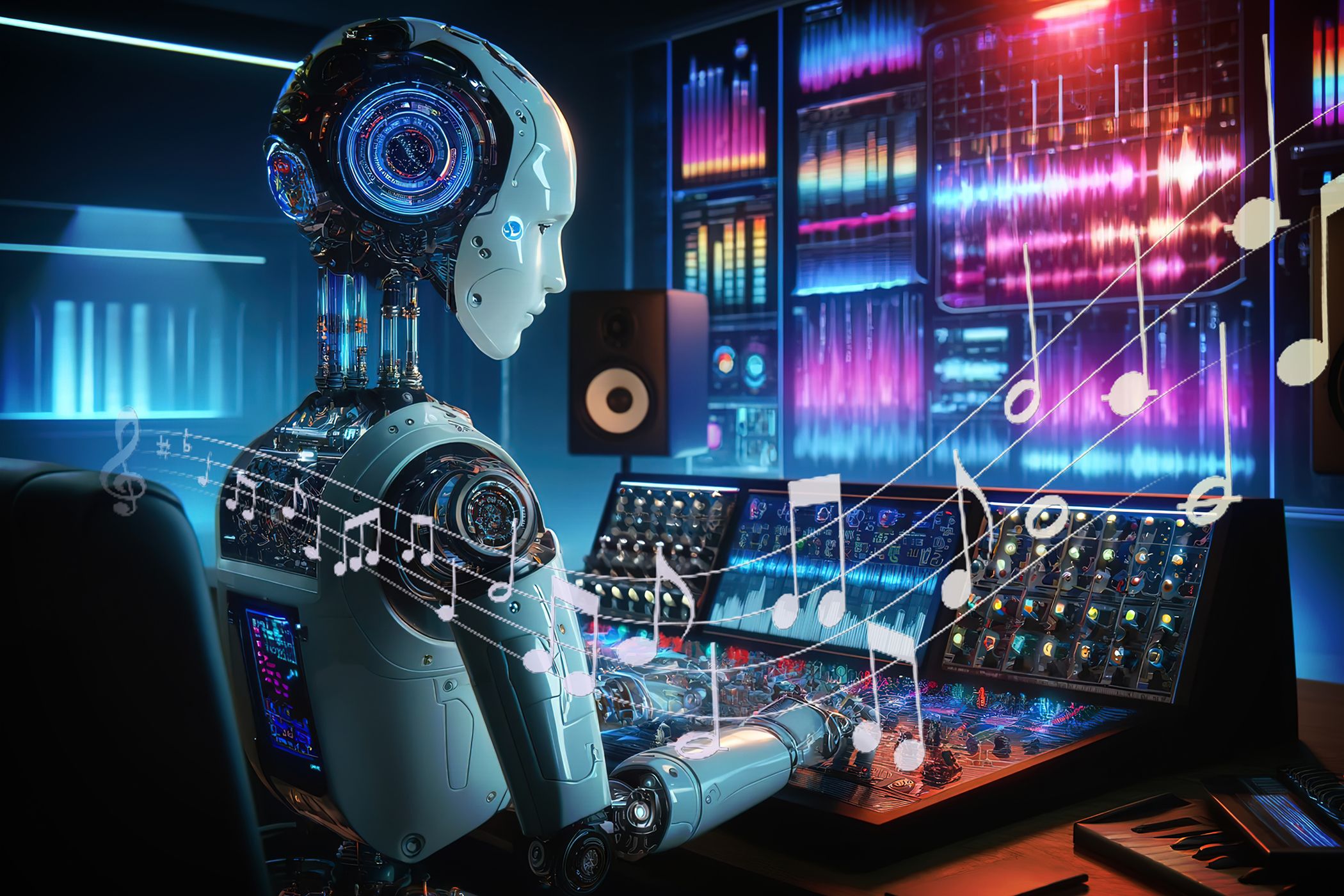
Artificial intelligence is infiltrating many aspects of modern life, including our music! If you’d rather not listen to AI-generated music on your chosen music streaming service, these steps will help you identify it and avoid it altogether.
3
Identify Whether a Song Was Made by AI
AI-generated music is becoming increasingly difficult to distinguish from authentic music as the technology behind it continues to advance. However, with careful listening, most tracks still reveal subtle clues as to their artificial origins, and with a bit of practice, it becomes easier to see the wizard behind the curtain.
1. Are the Lyrics or Song Titles Generic-Looking or Repetitive?
The Velvet Sundown
The human factor is typically the most obvious indicator when it comes to identifying AI-generated music. After all, many modern tracks incorporate music technology in one way or another, whether it’s a quantized drum loop or a synthesized bass line. However, AI lyrics often lack depth and emotional nuance, and nuance is key to creating convincing and relatable music.
AI-generated lyrics are typically generic and follow familiar tropes, without venturing into deeper meanings or storytelling. Look for familiar-looking song titles, vague lyrics, cliches, and unusually repetitive vocal lines. While song lyrics are often ambiguous by nature, those written by human beings frequently rely on metaphors, double meanings, and past experiences, which AI doesn’t authentically reproduce.
2. Do the Vocals Lack Emotion
It must be said that I am impressed with AI’s ability to mimic and even improve real human voices. I have even given my own embarrassingly poor vocals the AI treatment and achieved usable results. However, human vocal performances are typically rooted in experience or meaning that carries significant emotional depth. The key to identifying AI vocals, therefore, isn’t so much about spotting perfection as looking for minor imperfections.
AI struggles to replicate the nuances that accompany a vocal performance, which include changes in inflection, spontaneous imperfections, breath control, or sibilant sounds that made it into the mix. If a song sounds too perfect in pitch and clarity, with a flawless delivery, or lacks variety in tone and phrasing from one verse to the next, it is likely to be generated by AI.
3. Check the Artist’s Background and Social Media
Social media goes hand in hand with creative pursuits, and almost every artist with a significant following uses it to connect with their fan base. If someone has a minimal online presence, doesn’t engage with their fans, and is not forthcoming with information about their roots or their influences, this is a major red flag.
AI-generated artists usually have generic bios, revolving around their musical releases and little else. If you check for a personal website, YouTube interviews, live performance dates, collaborations with other musicians, or a Wikipedia page, and come up with nothing, the artist in question is likely AI. This was all too apparent with Spotify’s viral AI sensation The Velvet Sundown, which amassed 500,000 monthly listeners before being revealed as a purely AI project.
4. Listen for Unusual Production Patterns
Even if you don’t create your own music, you are likely naturally familiar with the formulas and structures that comprise a song. You don’t have to be Mozart to be able to tell if something sounds “off.”
If you hear a weird transition, a musical progression that doesn’t quite resolve, or inconsistencies in rhythm patterns, it could be that AI is struggling to create a flowing musical tapestry. Human beings, on the other hand, are very good at creating tension and release in music and finding ways to seamlessly bridge the sections that comprise a song. If a song fails to evoke any kind of emotion or lacks dynamics, it may signal that the music is machine-made.
5. Check Songwriting Credits and Contributors
The Velvet Sundown
Since the decline of physical music media, it’s rare that we even think about the people behind the tracks that we listen to, but this is a key identifier as to whether a song is AI-generated. Check the credits on your music streaming service for pseudonyms, aliases, or company names that don’t reflect the artist’s actual identity, as these often accompany AI tracks.
Conversely, if a song is created by humans, you’ll usually be able to find a comprehensive list of those involved in its creation, including its producers, engineers, songwriters, arrangers, and featured musicians. A quick search on a music industry database like AllMusic or Discogs will put your suspicions to rest if you’re still unsure if a song is AI-generated.
2
Take Back Control of Your Playlists
If you don’t want to support AI-generated music, there are measures that you can take to back real artists and sustain genuine creativity within the music industry.
1. Curate Your Own Playlists
I love the convenience of Spotify’s curated playlists and the fact that they introduce me to a lot of new music. However, it’s best to avoid those that are created by algorithms or auto-generated, if you don’t want to listen to AI-generated tracks.
2. Use Platforms That Prioritize Transparency
Bandcamp
Some platforms, such as Bandcamp and SoundCloud, prioritize providing detailed artist information and offering support for independent music. I find Bandcamp to be an excellent resource for finding new music by genre, and—so far—it is refreshingly free of AI-generated content. Deezer is one of the first music-streaming platforms to actively label AI music, helping you spot and avoid it if you want.
3. Follow Real Musicians
There’s always a bigger story behind the music. By engaging with the artists themselves, through social media, live performances, or interviews, you gain a deeper understanding of their influences and the creative journey they’re on.
4. Show an Interest in Legislation and Ethical Standards
As a music fan, I try to stay informed about industry regulations related to AI music. Showing support for transparency in songwriting credits and the correct labeling of algorithm-generated music helps ensure that people are given the choice to decide whether they want to listen to AI-generated music or not.
While there’s no denying that artificial intelligence is remarkable in what it can do, I’d prefer that it be used only in limited creative ways for music, similar to how we use autotune to improve a vocal. By recognizing the signs of AI in music and staying informed about AI’s broader applications in the industry, I still have the power to choose what I listen to, support real artists, and help ensure that human creativity isn’t diluted for future generations.
1
Be Aware of the Negative Effects of AI Tracks
Music is constantly evolving, and as a musician, I have personally witnessed the transition from recording to DAT tape in studios, to digital home recording, and now to the innovation of AI music creation. One thing is certain: AI-generated music is here to stay, which raises concerns about the future of the music industry and the broader music landscape.
We should be aware that, while AI can generate pleasing results, it is increasingly creeping into curated playlists, the media, and commercial releases as a convenient way to generate audio without paying artists royalties. However, convenience always comes at a cost, and in this case, it means that musicians lose out on income and exposure, as machines take their place.
As a result, the future of high-quality music is in jeopardy. What used to be a uniquely human experience has now been replaced by a cheap imitation that, while impressive, feels devoid of everything that makes music special, not least on an emotional level. Our creativity is being filtered through a synthetic lens, and we risk flooding the market with formulaic and joyless garbage.
