


The Texas-based startup Quidnet Energy just completed a test showing it can store energy for up to six months by pumping water underground.
Using water to store electricity is hardly a new concept—pumped hydropower storage has been around for over a century. But the company hopes its twist on the technology could help bring cheap, long-duration energy storage to new places.
In traditional pumped hydro storage facilities, electric pumps move water uphill, into a natural or manmade body of water. Then, when electricity is needed, that water is released and flows downhill past a turbine, generating electricity. Quidnet’s approach instead pumps water down into impermeable rock formations and keeps it under pressure so it flows up when released. “It’s like pumped hydro, upside down,” says CEO Joe Zhou.
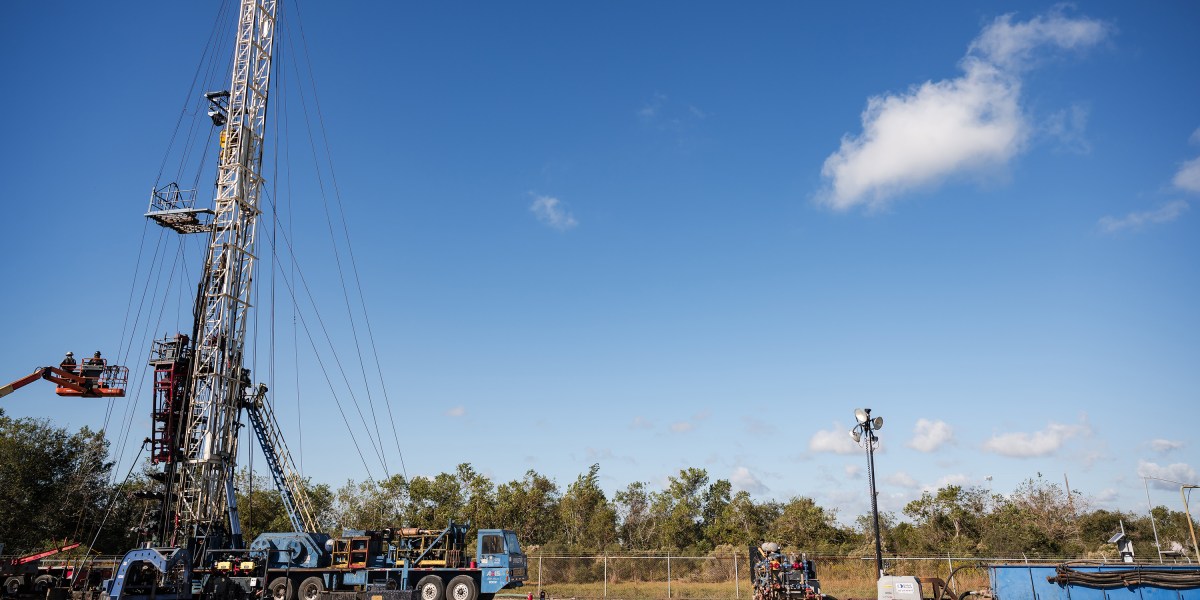
Quidnet started a six-month test of its technology in late 2024, pressurizing the system. In June, the company was able to discharge 35 megawatt-hours of energy from the well. There was virtually no self-discharge, meaning no energy loss, Zhou says.
Inexpensive forms of energy storage that can store electricity for weeks or months could help inconsistent electricity sources like wind and solar go further for the grid. And Quidnet’s approach, which uses commercially available equipment, could be deployed quickly and qualify for federal tax credits to help make it even cheaper.
However, there’s still a big milestone ahead: turning the pressurized water back into electricity. The company is currently building a facility with the turbines and support equipment to do that—all the components are available to purchase from established companies. “We don’t need to invent new things based on what we’ve already developed today,” Zhou says. “We can now start just deploying at very, very substantial scales.”
That process will come with energy losses. Energy storage systems are typically measured by their round-trip efficiency: how much of the electricity that’s put into the system is returned at the end as electricity. Modeling suggests that Quidnet’s technology could reach a maximum efficiency of about 65%, Zhou says, though some design choices made to optimize for economics will likely cause the system to land at roughly 50%.
That’s less efficient than lithium-ion batteries, but long-duration systems, if they’re cheap enough, can operate at low efficiencies and still be useful for the grid, says Paul Denholm, a senior research fellow at the National Renewable Energy Laboratory.
“It’s got to be cost-competitive; it all comes down to that,” Denholm says.
Lithium-ion batteries, the fastest-growing technology in energy storage, are the target that new forms of energy storage, like Quidnet’s, must chase. Lithium-ion batteries are about 90% cheaper today than they were 15 years ago. They’ve become a price-competitive alternative to building new natural-gas plants, Denholm says.
When it comes to competing with batteries, one potential differentiator for Quidnet could be government subsidies. While the Trump administration has clawed back funding for clean energy technologies, there’s still an energy storage tax credit, though recently passed legislation added new supply chain restrictions.
Starting in 2026, new energy storage facilities hoping to qualify for tax credits will need to prove that at least 55% of the value of a project’s materials are not from foreign entities of concern. That rules out sourcing batteries from China, which dominates battery production today. Quidnet has a “high level of domestic content” and expects to qualify for tax credits under the new rules, Zhou says.
The facility Quidnet is building is a project with utility partner CPS Energy, and it should come online in early 2026.
