


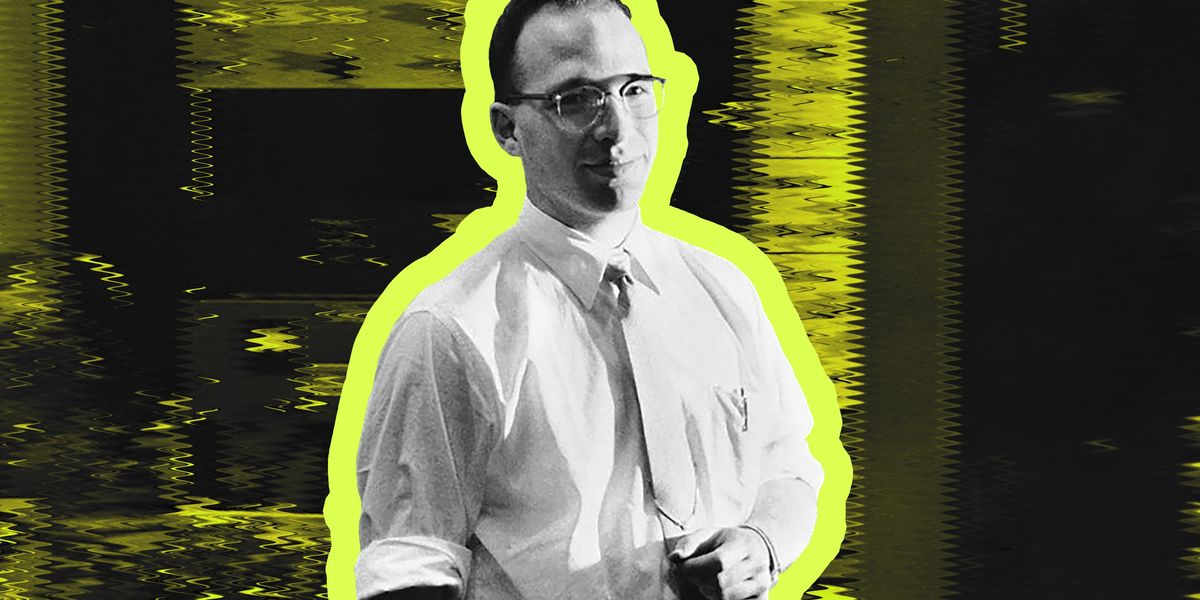
Richard L. Garwin
Designer of the first hydrogen bomb
Life Fellow, 97; died 13 May
Garwin played a critical role in developing the world’s first hydrogen bomb in the early 1950s.
For 41 years he worked as an IBM researcher in Yorktown Heights, N.Y. During that time he also served as science advisor to several U.S. presidents.
After earning a bachelor’s degree in physics in 1947 from Case Western Reserve University, in Cleveland, Garwin joined the University of Chicago’s doctoral program in physics. His thesis advisor was Enrico Fermi, the physicist who developed the first nuclear reactor. Garwin earned a Ph.D. in 1949, joining the hydrogen bomb project at Los Alamos National Laboratory, in New Mexico, thanks to Fermi’s recommendation.
In 1951 Garwin designed the hydrogen bomb, applying theoretical work by physicists Edward Teller and Stanislaw Ulam. His design led to the successful 1952 test of a thermonuclear device, code-named Ivy Mike. The test took place at the Enewetak Atoll in the Pacific Ocean. His contributions were not made public until 2001 because of the classified nature of his work, according to an IEEE Spectrum article about his career.
Garwin left the Los Alamos lab and joined IBM’s Watson Research Center in 1952. There he worked on projects focusing on early developments in computing, communications, and medical imaging.
His contributions led to advancements in MRI, high-speed laser printing, and touchscreen monitors.
Garwin was also instrumental in the development of the Fast Fourier transform, a computer algorithm that was 100 times faster than the existing computer code at the time. FFT is in just about every electronic device and was recently commemorated with an IEEE Milestone.
He also developed technology to detect gravitational waves—disturbances in the space-time fabric caused by black hole collisions, star explosions, and similar phenomena.
In addition to being a researcher, Garwin advised U.S. presidents on defense and nuclear policy for more than 50 years, from Dwight D. Eisenhower to Bill Clinton.
Garwin retired from IBM in 1993 but stayed active in public service. He chaired the U.S. State Department’s arms control and nonproliferation advisory board until 2001 and served on commissions involved with arms-control issues and missile-threatassessments.
He was granted 47 U.S. patents and authored almost 500 scientific papers. He cowrote several books including Nuclear Weapons and World Politics and Megawatts and Megatons. In 2017 science writer Joel N. Shurkin published True Genius: The Life and Work of Richard Garwin, a biography.
Garwin received awards for his contributions to science and national policy, including a 2002 National Medal of Science, presented by President George W. Bush, and a 2016 Presidential Medal of Freedom, awarded by President Barack Obama.
Garwin was an IBM Fellow emeritus as well as a Fellow of the American Academy of Arts and Sciences and the American Physical Society.
Donald Twieg
Medical imaging researcher
Life member, 80; died 28 April
Twieg was a medical technology researcher who contributed to the early development of MRI machines. In 1983 he published a pivotal paper introducing the k-trajectory formulation, a mathematical approach to tracking the path an MRI system follows as it collects data to reconstruct an image. The technology’s researchers quickly adopted his method and used it to improve MRI machines’ imaging speed, resolution, and signal-to-noise ratio.
After earning a bachelor’s degree in physics in 1971 from Rice University, in Houston, Twieg had a brief stint as an associate engineer at Boeing in Huntsville, Ala. He decided to continue his education, and in 1977 he earned a Ph.D. in biomedical engineering from Southern Methodist University, in Dallas.
That year he joined the University of Texas at Dallas as an associate professor of radiology. He made contributions there to cardiovascular nuclear medicine, including diagnostic tests to measure cardiac function.
In the early 1980s, Twieg changed his research focus to MRI technology. He left the university and joined the Philips research laboratory in Aachen, Germany, as a staff scientist. After a year, he became a member of the medical imaging research group at San Francisco State University.
In 1990 he began his 22-year tenure as a professor of biomedical engineering at the University of Alabama at Birmingham. He worked on high-field MRI systems and made contributions to advanced spectroscopic imaging of the brain.
He retired in 2012 and was named professor emeritus.
Joseph “Joe” Watson
Electrical engineering professor
Life senior member, 94; died 24 April
Watson spent most of his career as a professor of electrical engineering at Swansea University, in Wales. He collaborated with aeronautics experts, chemists, engineers, and surgeons on developing gas-leak detection technology and using electrical stimulation to heal bone fractures.
He earned a bachelor’s degree in electrical engineering in 1954 from the University of Nottingham, England. He accepted a King George VI Memorial Fellowship at MIT, where he studied nuclear engineering. After earning a master’s degree in EE in 1955, he returned to the University of Nottingham as a doctoral candidate. His work focused on developing sensors and instrumentation for nuclear reactors. After earning a Ph.D. in EE in 1958, he was hired as head of process control electronics at Hilger and Watts, an optoelectronics company in London.
Watson left in 1963 to join Swansea University as a professor of electrical engineering. During the next decade, he also served as a visiting professor at the Davis and Santa Barbara campuses of the University of California. At UC Davis, he worked with Verne Brown, cofounder of gas-detection company Enmet of Ann Arbor, Mich. Watson helped design the company’s first gas detector—a handheld device equipped with semiconductor sensors that could locate fuel vapors in boats.
In 1993 Watson helped found the Gas Analysis and Sensing Group, a research association in Huntingdon, England. He served as chair for more than 20 years before being elected president. He retired in 2015.
Anthony C. Davies
2003–2004 director of IEEE Region 8
Life Fellow, 89; died 22 March
An active IEEE volunteer, Davies served as the 2003–2004 director of Region 8 (Europe, Middle East, and Africa). He was a professor emeritus at King’s College London, and he served as director of its electronic and electrical engineering department.
He began his career in 1961 as an engineer at General Electric Co. in Coventry, England, where he worked on filter design and pulse code modulation. Two years later he joined the Northampton College of Advanced Technology (now part of City St. George’s, University of London) as a lecturer. In 1982 he was appointed chair of the college’s information engineering department and served as head of its microprocessor laboratory until 1987. That year Davies became a Royal Society Industry Fellow in the army weapons division of British Aerospace, in Hampshire. He worked at the aircraft, munitions, and defense systems manufacturer for a year.
In 1990 he joined King’s College, where he taught classes on digital signal processing and software design. He retired in 1999 but returned to work in 2002 as a visiting professor at Kingston University, near London. There, he was the principal investigator of a government-funded project to develop communications methods for asynchronous real-time systems.
In addition to his leadership of IEEE Region 8, Davies served as vice president of the IEEE Circuits and Systems Society and chair of the IEEE UK and Ireland Section.
He was a member of the British Computer Society and the Institution of Engineering and Technology.
After two years of service in the British Army, Davies earned a bachelor’s degree with honors in 1961 in electrical engineering from the University of Southampton, in England. He then earned a master’s degree in EE in 1967 from the University of London and a Ph.D. in EE in 1970 from the Northampton College of Advanced Technology.
From Your Site Articles
Related Articles Around the Web
