


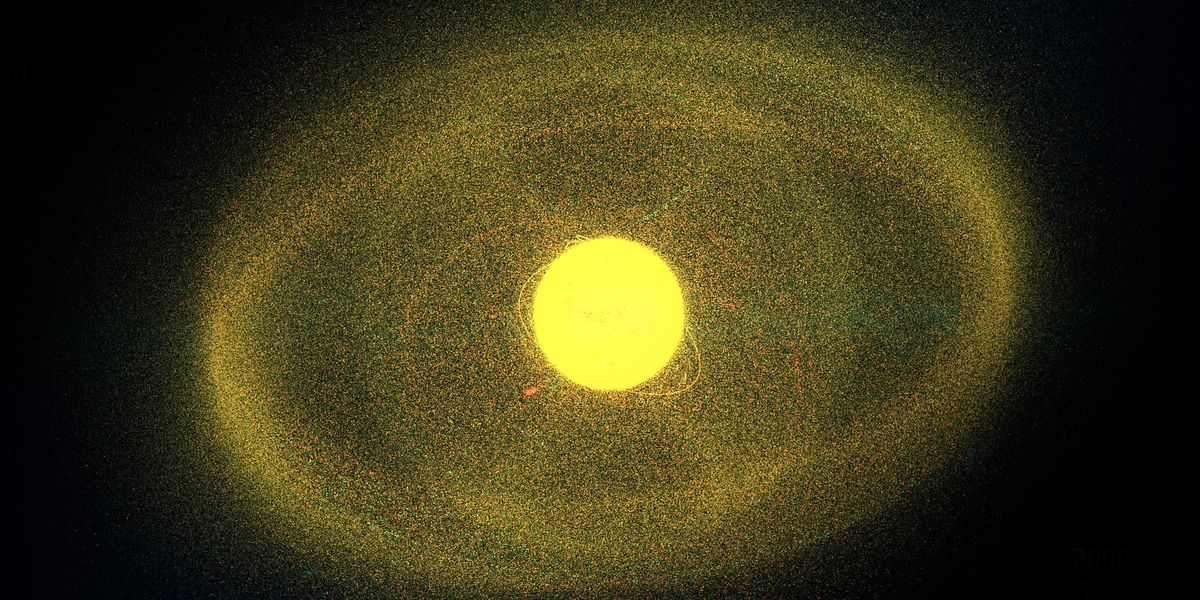
The numbers paint a stark picture of our orbital traffic problem: More than 11,000 active satellites currently circle Earth, with thousands more planned for launch in coming years. Even more concerning are the over 1.2 million pieces of space debris larger than one centimeter hurtling through space at incredible speeds. At those velocities, even a paint chip can damage a spacecraft, while larger debris can destroy entire satellites.
This growing congestion has turned collision avoidance into a daily headache for satellite operators worldwide. Currently, teams of specialists must manually assess threats, calculate risks, and coordinate with other operators when collisions seem likely. This process is time consuming, labor intensive, and prone to communication breakdowns that can complicate emergency responses.
That is where the European Space Agency’s Collision Risk Estimation and Automated Mitigation (CREAM) project comes in. It aims to revolutionize this chaotic process by automating most collision avoidance activities. The system can evaluate potential crashes, generate precise manoeuver plans, and support decision making with minimal human intervention. Think of it as an air traffic control system for space, but with artificial intelligence handling much of the complex coordination.
SUBHEAD 1
One of CREAM’s most innovative features is its ability to connect different types of organizations involved in space operations. Satellite operators, space monitoring services, regulators, and observers can all communicate through the system, streamlining what was previously a fragmented and often frustrating process.
The system goes even further by facilitating negotiations between operators when potential collisions involve two active satellites rather than debris. If operators disagree on the best solution, CREAM can refer the dispute to mediation services, ensuring fair and transparent resolution.
Currently, CREAM exists as a ground-based prototype system developed by GMV, a Spanish private capital interest group, and Guardtime, an Estonian data management company. This version can already provide collision alerts and generate actionable avoidance manoeuvers that ground crews can implement. However, the real breakthrough will come when CREAM moves into orbit itself.
The project is preparing for expanded pilot testing while simultaneously developing space-based versions. These include “piggyback missions” where CREAM will ride aboard other spacecraft as a digital payload, plus a dedicated demonstration mission to test the system’s capabilities in the harsh environment of space.
Beyond preventing immediate collisions, CREAM addresses a fundamental challenge in space governance. Establishing “rules of the road” for space traffic has always faced a chicken and egg problem; you need both international agreement on the rules and the technology to enforce them.
CREAM provides that missing technological foundation. The system offers standardized tools that help operators follow best practices while giving regulators ways to monitor compliance. Its flexible design allows non-technical users to update standards and rules as international norms evolve. This adaptability ensures CREAM will remain relevant as space technology advances and new challenges emerge. Rather than becoming obsolete, the system can grow and adapt alongside our expanding presence in space.
From Your Site Articles
Related Articles Around the Web
