

Close Menu
TechurzTechurz
    What's Hot

    Evotrex raises $30M to build the RV that doesn’t need a charging station

    June 9, 2026

    It’s not FAANG anymore. It’s MANGOS.

    June 9, 2026

    Zepto’s IPO filing reveals fast growth, bigger losses, and a valuation question nobody’s answered yet

    June 9, 2026
    X (Twitter) Pinterest YouTube LinkedIn WhatsApp
    Tech Pulse
    • Evotrex raises $30M to build the RV that doesn’t need a charging station
    • It’s not FAANG anymore. It’s MANGOS.
    • Zepto’s IPO filing reveals fast growth, bigger losses, and a valuation question nobody’s answered yet
    • How to apply to Startup Battlefield 2026, what you need ahead of today’s June 8 deadline
    • Beyond Instagram: Introducing the next generation of social apps
    X (Twitter) Pinterest YouTube LinkedIn WhatsApp
    TechurzTechurz
    • Home
    • Tech Pulse
    • Future Tech
    • AI Systems
    • Cyber Reality
    • Disruption Lab
    • Signals
    TechurzTechurz
    Home - Cyber Reality - NASA’s Quiet Supersonic Jet Takes Flight
    Cyber Reality

    NASA’s Quiet Supersonic Jet Takes Flight

    TechurzBy TechurzOctober 30, 2025Updated:May 10, 2026No Comments3 Mins Read
    Share Facebook Twitter Pinterest LinkedIn Tumblr Reddit Telegram Email
    NASA’s Quiet Supersonic Jet Takes Flight
    Share
    Facebook Twitter LinkedIn Pinterest Email

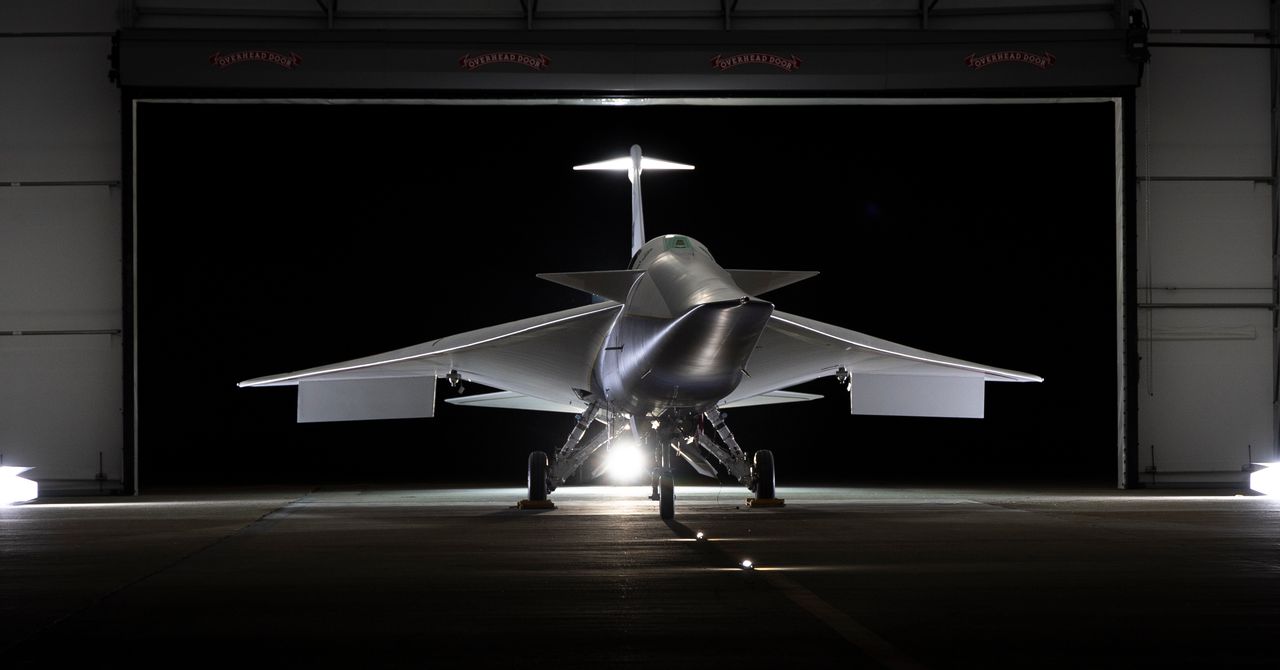
    The X-59 will generate a lower “sonic thump” thanks to its unique design. It was given a long, slender nose that accounts for about a third of the total length and breaks up pressure waves that would otherwise merge on other parts of the airplane. The engine was mounted on top of the X-59’s fuselage, rather than underneath as on a fighter jet, to keep a smooth underside that limits shock waves and also to direct sound waves up into the sky rather than down toward the ground. NASA aims to provide key data to aircraft manufacturers so they can build less noisy supersonic planes.

    A Jet Like No Other

    The X-59 is a single-seat, single-engine jet. It is 99.7 feet long and 29.5 feet wide, making it almost twice as long as an F-16 fighter jet but with a slightly smaller wingspan. The X-59’s cockpit and ejection seat come from the T-38 jet trainer, its landing gear from an F-16, and its control stick from the F-117 stealth attack aircraft. Its engine, a modified General Electric F414 from the F/A-18 fighter jet, will allow the plane to cruise at Mach 1.4, about 925 mph, at an altitude of 55,000 feet. This is nearly twice as high and twice as fast as commercial airliners typically fly.

    Perhaps the most striking change on the X-59 is that it does not have a glass cockpit window. Instead, the cockpit is fully enclosed to be as aerodynamic as possible, and the pilot watches a camera feed of the outside world on a 4K monitor known as the eXternal Visibility System.

    “You can’t see very clearly through glass when you look at it at a very shallow angle, and so you need to have a certain steepness of the view screen to have good optical qualities, and that would develop a strong shock wave that would really corrupt the low-boom characteristics of the airplane,” says Michael Buonanno, the air vehicle lead for the X-59 at Lockheed Martin.

    The X-59 has repurposed components of other NASA aircrafts.

    COURTESY OF: Lockheed Martin

    For this first flight, the X-59 flew at a lower altitude and at about 240 mph, according to NASA. During future tests, the jet will gradually increase its speed and altitude until it goes supersonic, NASA said, which occurs at about 659 mph at 55,000 feet, or 761 mph at sea level. The speed of sound varies according to temperature and to a lesser degree pressure, causing it to decrease at higher altitudes.

    “The primary objective on a first flight is really just to land,” James Less, a project pilot for the X-59 who will be conducting future flights, tells WIRED. Less flew an F-15 fighter jet in formation with the X-59 as a support aircraft during the flight, observing the new experimental jet for any issues.

    flight Jet NASAs quiet Supersonic takes
    Share. Facebook Twitter Pinterest LinkedIn Tumblr Email
    Previous ArticleNeed cash? Perplexity will give you $15 for every friend you refer to Comet – how to get it
    Next Article Chromium flaw crashes Chrome, Edge, Atlas: Researcher publishes exploit after Google’s silence
    Techurz
    • Website

    Related Posts

    Cyber Reality

    Digital Identity Protection: 7 Hidden Risks Most Users Miss

    May 25, 2026
    Cyber Reality

    Neural Data Policy: 7 Risks That Brain Privacy Laws Miss

    May 25, 2026
    Cyber Reality

    How AI Changing Cyber Crime: 7 Critical Shifts to Watch

    May 25, 2026
    Add A Comment
    Latest Tech Pulse

    College social app Fizz expands into grocery delivery

    September 3, 20252,289

    SolarSquare in talks to raise up to $60M as India’s rooftop solar market draws major VC interest

    May 23, 202621

    A Former Apple Luminary Sets Out to Create the Ultimate GPU Software

    September 25, 202518
    Stay In Touch
    • YouTube
    • WhatsApp
    • Twitter
    • Pinterest
    • LinkedIn

    Techurz helps readers stay ahead of digital change with clear, practical, future focused technology intelligence written today,searched tomorrow.

    X (Twitter) Pinterest YouTube LinkedIn WhatsApp
    Company
    • About Us
    • Contact Us
    • Our Authors / Editorial Team
    • Write For Us
    • Advertise
    Policy
    • Editorial Policy
    • Privacy Policy
    • Terms and Conditions
    • Affiliate Disclosure
    • Cookie Policy
    • Disclaimer
    • DMCA
    Explore
    • AI Systems
    • Cyber Reality
    • Future Tech
    • Disruption Lab
    • Signals
    • Tech Pulse
    • Sitemap

    Join the Techurz Brief

    The future does not arrive suddenly.
    Stay ahead with fast, sharp tech signals.

    Type above and press Enter to search. Press Esc to cancel.