

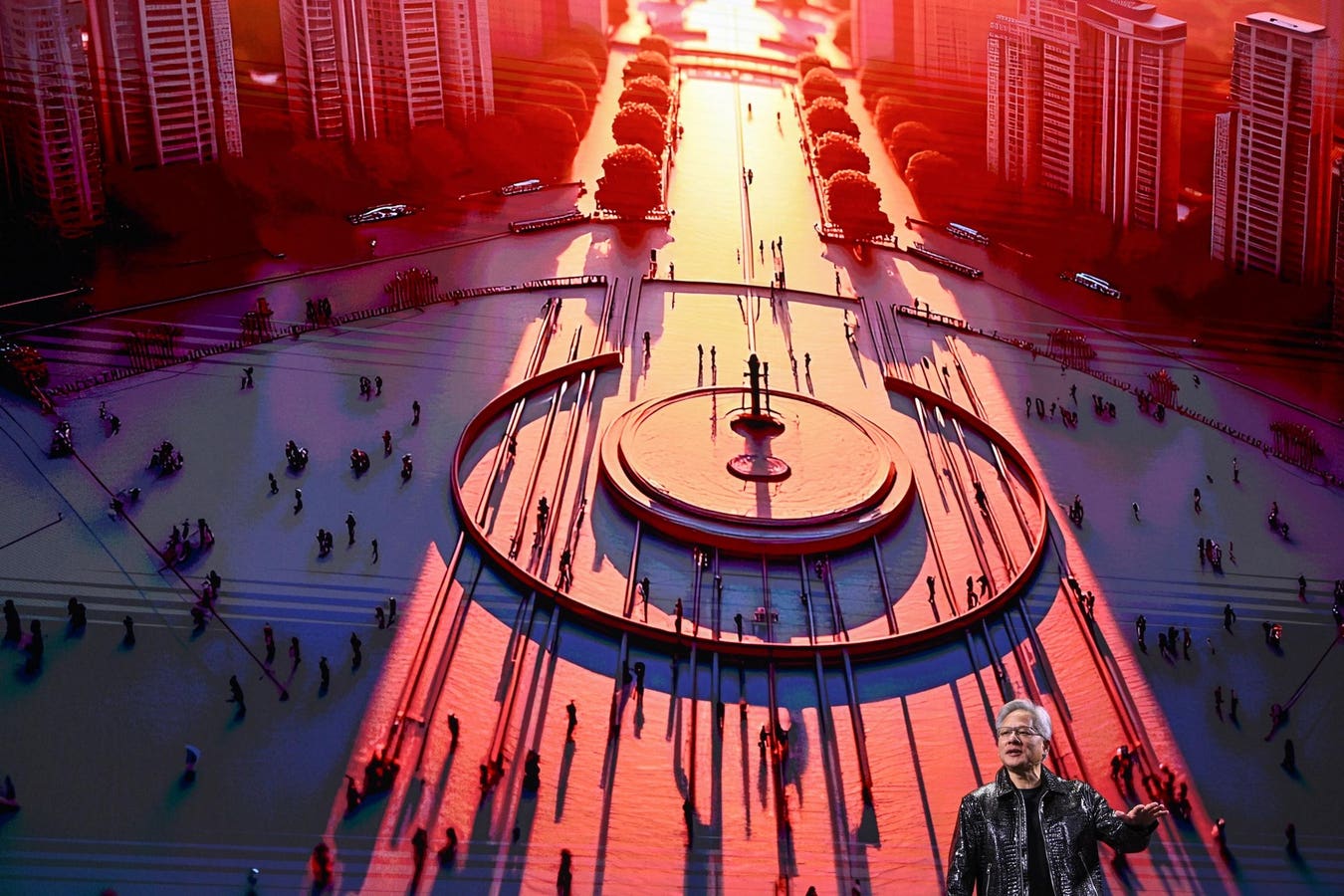
LAS VEGAS, USA – (Photo by Artur Widak/NurPhoto via Getty Images)
NurPhoto via Getty Images
Despite the Trump administration’s aggressive efforts to curb AI ambitions through tariffs and chip export restrictions(U.S. official reveals that Nvidia and AMD may have to pay 15% of their China chip sale revenues) – essentially exhausting the presidential playbook on Chips supplying side – a surprising trend is emerging: China AI development isn’t slowing down; it’s simply shifting to new fields. While industry titans grapple with trade policies, the real disruption in gaming is taking place far from those high-stakes negotiations.
In an industry long dominated by big-budget franchises and sprawling studio teams, the rumored $2 billion development cost of Grand Theft Auto VI feels like a logical—if extreme—endgame. Yet as eye-popping as that number may be, the real disruption in gaming today isn’t happening in Rockstar Games’ studios. It’s unfolding in small apartments, dorm rooms, and co-working spaces across the world, where solo developers and micro-studios are using AI to build immersive games once only possible for industry giants.
Artificial intelligence is democratizing game development at a speed few anticipated. Generative tools now automate everything from dialogue to animations, while AI-based engines streamline design, asset creation, and bug testing. What used to require a team of hundreds can now be done by a handful—or even just one person. And while much attention is focused on Silicon Valley, a parallel movement is quietly accelerating in China. With open-source AI frameworks and a user-first strategy, Chinese developers are rapidly redrawing the boundaries of global gaming innovation.
AI Levels the Playing Field
The traditional production model for AAA games has long favored studios with time, money, and headcount. Creating thousands of digital assets, coding massive environments, and writing hours of dialogue could take years and cost tens, even hundreds of millions. AI is now dismantling those barriers.
Tools like Tencent’s HunyuanWorld 1.0 now stand at the forefront of this change. This open-source framework enables developers to generate interactive 3D environments from a simple text or image prompt, compatible with major engines like Unity and Unreal. Automated rigging, AI-generated assets, voice synthesis, and even procedural storytelling have compressed timelines and slashed costs across the board.
Play Puzzles & Games on Forbes
These capabilities are not just streamlining production; they’re making features once considered cutting-edge—like adaptive difficulty or dynamic NPCs—accessible to independent creators. Developers can now build complex, high-quality games with fewer resources, while personalizing gameplay in ways that would have been cost-prohibitive only a few years ago.
While OpenAI, Google DeepMind, and Anthropic dominate Western AI headlines, China is building its own infrastructure—faster and, in some ways, more inclusive. A recent analysis by a Chinese tech outlet identified more than 100 active AI tools across domains like chat, design, search, and code. Emerging players such as MiniMax and Moonshot AI are rolling out products rapidly, using community feedback to iterate and evolve.
“China’s rapid embrace of open-source AI is a key part of its tech strategy,” says Li Tongyu, an AI analyst at Dao Insights. “By releasing products early and iterating on user feedback, Chinese companies are creating a self-reinforcing loop that drives widespread adoption and cultural relevance.”
This open-source, user-driven approach is helping Chinese platforms embed AI into daily life. ByteDance integrates generative features into Douyin (China’s TikTok), while Tencent deploys AI across game dev kits and productivity platforms. Everyday apps—from Sogou’s input tools to Keep’s language processing—are becoming playgrounds for AI testing and integration, including in gaming.
In contrast, Western firms tend to emphasize centralized control, monetization, and IP protection. That strategy often delivers polished products, but it may also stifle the kind of rapid experimentation flourishing in China’s AI sandbox.
From Bedroom Coders to Global Contenders
One of the most striking consequences of this shift is the rise of solo creators and micro-studios capable of producing commercially viable games. “The rise of solo creators and small studios is a significant outcome of this AI transformation,” says Li. “AI tools enable individual developers to handle tasks once requiring entire departments… This efficiency not only reduces costs, but also shifts the financial model, allowing smaller teams to enjoy higher profit margins and explore new revenue streams.”
Freed from the overhead of office space or publishing deals, these lean teams are creating new monetization models—from downloadable AI-generated content to dynamically updated subscription-based experiences. Cloud-based infrastructure, Discord communities, and platforms like Patreon or itch.io allow them to build and distribute games with minimal institutional support.
This isn’t just a creative revolution—it’s a commercial one. The high-margin, low-overhead model could attract the kind of indie-to-unicorn success stories seen in e-commerce or digital design. Think Stardew Valley or Undertale, but on steroids, with generative NPCs, personalized missions, and global distribution from day one.
East vs. West: A Diverging AI Playbook
Both the West and China are racing to lead in AI gaming, but they’re taking very different paths. U.S. firms like NVIDIA are advancing AI-powered rendering (e.g., DLSS), player analytics, and dynamic storytelling. Venture capital is flooding into AI game startups, many focused on intelligent NPCs and more immersive design layers.
But China’s advantage may lie in its bottom-up approach. “The US focuses on centralized control and high-polish products, whereas China’s approach prioritizes distribution and daily use through open-source models,” Li explains. “This divergence could lead to a competitive overlap where a major AI platform or toolkit emerges from a Chinese startup rather than a familiar Western name.”
In other words, the next Unreal Engine might not be American.
Of course, this new frontier isn’t without its pitfalls. Legal frameworks around IP ownership and AI-generated content are still nascent. As generative models contribute more to games—from characters to music—the line between derivative and original creation will be hotly debated.
Technical hurdles also persist. Advanced AI models still require significant compute power, and ensuring creative consistency over long gameplay arcs is no small task. Infrastructure and energy costs could be limiting factors for some studios, even as the tools themselves become more accessible.
Still, the trajectory is clear. What Shopify did for e-commerce entrepreneurs and Canva did for graphic designers, AI is now doing for game developers. The biggest upside may not come from the next Call of Duty or Fortnite, but from the platforms and frameworks that power thousands of smaller titles—each tailored to niche audiences, local cultures, or entirely new genres.
The Future: Distributed Creativity at Scale
Artificial Intelligence isn’t just changing how games are played—it’s changing who gets to play the role of creator. As open-source ecosystems expand and AI capabilities improve, the gaming industry is becoming more distributed, more global, and far more inclusive.
The next billion-dollar game franchise might not be announced at E3 or built in a glass tower in Los Angeles. It could come from a solo developer in Hangzhou, using an open-source toolkit, building a community on Discord, and letting AI handle the heavy lifting.
That’s not science fiction. That’s already happening.
