

Binoculars mean the difference between seeing a little gray bird and identifying a titmouse, cheering a home run and seeing the epic catch, or realizing that the 10-point buck is actually a doe standing in front of dead branches. Whether you’re scouting terrain, watching birds in your backyard, stargazing, or getting season tickets at Fenway, binoculars bring the world closer.
If you’re looking for binoculars for bird-watching, check out our guide All the Gear You Need to Start Birding. Be sure to check out our other guides, including The Best Gear to Make Your Backyard More Fun, The Best Hiking Gear, and How a Birdfeeder Can Bring You Joy.
Updated June 2025: We’ve added Zeiss’s new SFL 50 high-powered binoculars, along with specs tables and more testing notes. We’ve also updated prices and links throughout.
Table of Contents
What Do the Model Numbers Mean?
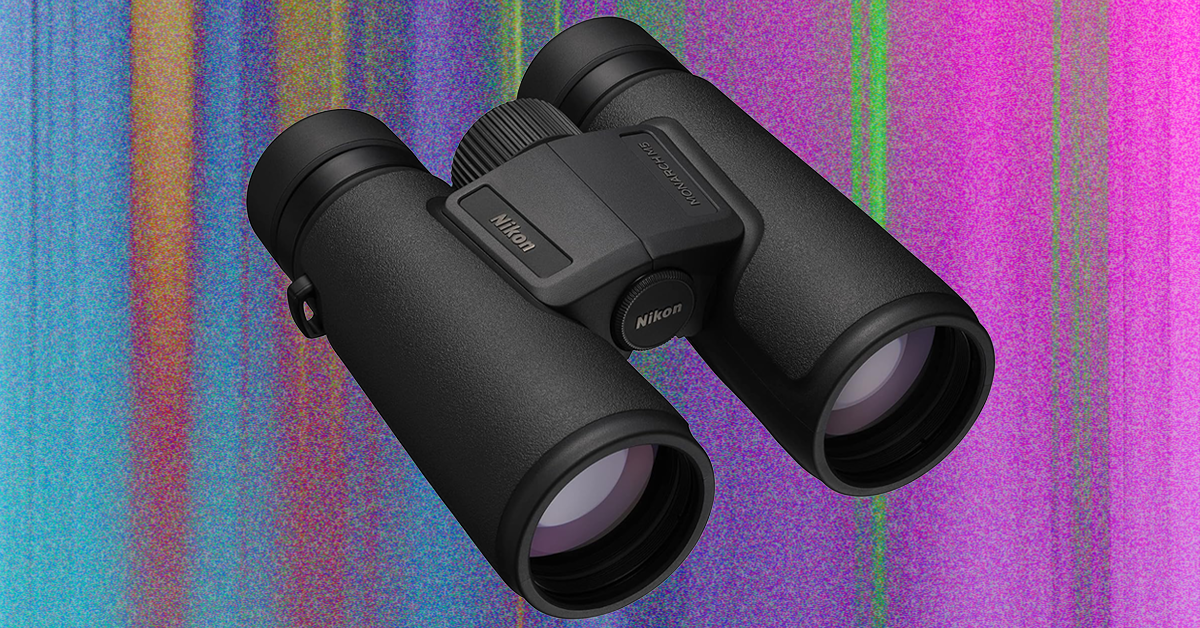
Binoculars are usually listed with two number specifications; for example, our top pick, the Nikon Monarch M5 are 8×42 binoculars. Here’s what that means:
The number 8 refers to the magnification power. Objects seen through these binoculars will be eight times bigger than when you look with your naked eye. Newcomers should stick with 6X or 8X. They have enough power that you’ll see things clearly, but they don’t magnify so much that you’ll struggle to find what you want to see or have trouble following fast-moving objects (though all binoculars take some practice).
The 42 refers to the size of the front lens in millimeters. The larger the front lens (also called the objective lens), the more light reaches your eye. That means the image will be bigger, brighter, and clearer. A pair of 8×42 binoculars should be significantly brighter and offer a better viewing experience than a pair of 8×32 binoculars, even though both provide the same magnification. But the larger you get, the more glass they will use—so they’ll weigh more. The weight difference between an 8×32 pair and a 10×42 pair is significant if you’re wearing them all day. We suggest sticking with lenses in the 26-50 range. Our top pick is roughly in the middle, at 8×42, generally considered the sweet spot for most people.
While knowing that 8×42 means 8x magnification with 42mm objective lenses is a good starting point for choosing binoculars, there are a number of other terms it helps to understand.
- Objective Lens: This is the big lens, at the opposite end from from where you look. The size of the objective lens determines how much light reaches your eye. All other things being equal, a larger objective lens gives you a brighter image.
- Field of View: This refers to how much you can see. The wider the field of view the more you can see. The standard measurement is how many feet wide the viewing area is at 1000 yards. This can then be translated to degrees. You’ll see field of view (also often just, FOV) listed in both degrees and feet, which can make it hard to compare. It’s also abstract and can be difficult to wrap your head around, which is why I like the FOV visualization tool on Cornell’s All About Birds website.
- Eye Relief: Eye relief refers to the ideal distance from your eye to the eyepiece glass. The ideal distance varies, but for most binoculars it’ll be in the 10mm to 20mm range. In order to see the full view provided, your eye needs to be at the right eye relief spot. Too close and you’ll see black shadows, too far and the FOV shrinks. This is only an issue for those of us who wear glasses, as some binoculars make it nearly impossible to get a full field of view when wearing glasses. I try to always note how each model is wearing glasses, but since every pair of glasses is different, it’s worth heading to a local shop to try before you buy.
- Roof Prism: This refers to a type of binocular design, the alternative being Porro prism (see below). Roof prism design puts the objective lenses directly in line with the eyepieces, giving you the H-shape common in binoculars these days. This design makes for a lighter, smaller, more streamlined binocular.
- Porro Prism: Porro prism binoculars use offset objective lenses that are not in line with the eyepiece—think the wider, bulkier binoculars you sometimes see. Porro prisms are often sharper, but bulkier (a birding friend of mine has a pair of 1950s Zeiss Porro prism binoculars that have one the sharpest images I’ve ever seen). Porro binoculars often produce a more 3D image with better depth perception, which is why they’re still common in hunting and military applications. Nikon has a nice visualization showing how the different designs actually bounce light to your eye.
You may have noticed that the binoculars in this guide span a huge price range, from under $100 to over $3,000. This comes down to two main factors: the quality of glass and coatings, and the engineering behind them.
Most of the binoculars listed here share the same BaK-4 roof prism design, which is a glass designation used by the German glassmaker Schott AG. However, within that design standard, there is still a significant range in quality. The unfortunate truth is that the more you spend, the better the image quality will likely be.
That difference is very obvious when comparing high-end Leicas or Swarovskis to $300 models like the Monarch M5. The difference between the Monarch M5 and similarly priced 8×42 binoculars is much less obvious. For this reason, I highly suggest visiting your local store and trying some of these, if at all possible. Some people will see little difference between a $300 pair and a $500 pair, but you’ll never know unless you try them out.
If you can’t get to a store, stick with our top pick. It may not be the absolute best that money can buy, but it will be good enough for most people and will leave more money in your pocket.
I look at a number of factors, including the optical quality, AKA sharpness and clarity, the brightness (taking into account objective lens size), color rendition, eye relief (where your eye needs to be to see the entire field of view), weight, and comfort. In the end I will admit I am biased toward sharpness and clarity. If it isn’t sharp, nothing else matters. Lately though I’ve also been carefully testing eye relief not just for human viewing, but also for digiscoping (a fancy neologism for sticking a camera up to the lens).
I am very fortunate to be able to go birding nearly every day. Most of my testing is done birding, though if you ever see me at baseball game with four pairs of binoculars around my neck, please try not to laugh. I test in conditions ranging from the deep, dark forests of the north woods, to the dry desert canyons of the west, to the harsh, glaring sun of the Florida panhandle. I also spend plenty of time out hiking, subjecting these binoculars to life in a bag, life around my neck to get a sense of their durability.
Since a number of readers have asked, I personally own a pair of Nikon 8×42 Monarchs (the older version of our top pick), a pair of Celestron 10×42 Regal ED. When I head of hiking and I don’t have anything to test, I use the Celestron Trailblazer ED 8×32.
Best Overall
Photograph: B&H
Nikon’s Monarch M5 binoculars strike an excellent balance between optical power, quality, and price. The roof prism design includes phase coatings and ED glass (Extra Low Dispersion Glass). The multi-coated glass cuts down on chromatic aberrations (distortion or color fringing sometimes seen around objects in bright sunlight). The Monarch M5s give nice, bright views with very little distortion, making them excellent birding binoculars. The eyepieces have large (21 mm) eye lenses and they’re deeply recessed in the eye cups, which allows for nearly a full field of view even when wearing glasses.
The Monarch M5s are also light enough that they can hang around your neck all day without bothering you too much, and they come with the most comfortable stock strap of any binoculars I’ve tested.
Nikon’s Monarch 5 binoculars were my first “real” binoculars. Years later, their upgraded M5 is my top pick for most people just getting started. These offer great bang for your buck, and the 8×42 magnification is the most versatile. It isn’t just me, either. These are some of the most common binoculars I see when I’m out birding.
More Great 8×42 Binoculars
Celestron
Nature DX ED 8×42
A good budget option, these are not as bright as the Nikons, with more purple fringing, and the sharpness definitely fades toward the edges, but these are hard to beat for the price.
Pentax
8×43 ZD ED Binoculars
An upgrade over the Nikons, these are a bit sharper, clearer, and brighter than the Monarchs. I also like the slightly cooler colors of these compared to the Monarch M5s.
Zeiss
8×42 Conquest HDX
These fairly compact Zeiss binocs have a bright image and are very capable in low light at dusk and dawn. I like the Zeiss SFL 8x50s below better, but overall these are great binoculars that live up to the Zeiss name.
Leica
8×42 Noctivid Binoculars
These are by far the brightest, sharpest lenses I’ve ever put to my eye, though contrast isn’t the best. The 19mm eye relief makes them great for eyeglasses. The other thing I don’t like is the weight: 30.3 oz (860 g)
Best Premium Binoculars
-
Photograph: Zeiss
-
Photograph: Scott Gilbertson
-
Photograph: Scott Gilbertson
Leica and Swarovski dominate the top end of the binocular market. Both brands do make some of the best optics you can buy (see especially the Swarovski EL 10 x 42 below), but I’d like to make an argument for the Zeiss SFL series, especially the 8 x 50 model. The Zeiss SFL 8 x 50 manages to offer darn near top-end optics but in a lighter package that’s easier to have around you neck all day. In fact, despite the extra 8mm of objective lens, these feel like you’re wearing 8 x 42 binoculars.
The 8×50 SFL’s larger objective lens size (over an 8 x 42) offers more light gathering ability, giving you a brighter view. It’s not a huge difference in bright sunlight, but if you’re out birding in the early morning or evening you definitely get a better view with these over an 8 x 42 binocular. I find Zeiss’s rendering tends to the blue end of the spectrum, with a nice crisp image, which is the case here. Honestly, as with any top in binocular these days, it’s hard to find things wrong. Yes, there are some extreme situations under which you can probably produce color fringing or other chromatic aberrations, but I definitely didn’t notice any in weeks of normal use. Nor will you find any softness at the edges; these are tack sharp across the frame.
The SmartFocus (Zeiss’s name) focus wheel is extremely sensitive and requires only small movements of the dial to snap your subject in focus. The only focus wheel I’ve used that’s better is the Swarovski and this is a very close second.
Overall these are the most impressive binoculars I’ve tested in quite some time and for the high-end binocular market are a real bargain.
Best High-Powered Binoculars
Photograph: Amazon
The difference between 8X and 10X doesn’t sound like much, but in practice, it’s significant. Objects are larger, but the field of view is narrower. That means it’s harder to follow things since a wide field of view gives you more context to orient yourself. This is especially true with something like a small bird in thick shrubs. The greater magnification also means any hand shaking can cause you to lose your subject. That said, this is my favorite resolution for birds, as long as I am not carrying these all day, because 10x42s are considerably heavier.
Our top pick at this size is the Vortex Viper HD Binoculars. These offer excellent clarity, crisp, clear views, and good color accuracy. The colors are slightly less saturated to my eye, but I only noticed this in side-by-side comparisons with the Nikons above. The focus wheel is smooth, though I wish it were slightly faster. There is some blurring in the periphery (the edges of your field of vision through the lenses), but that’s to be expected at this price.
One caveat: Cabela’s frequently sells the pre-2018 model of these at a steep discount but doesn’t label it as such. I have not tested that model, and while the deal is pretty good, the optics are definitely different and potentially inferior.
More Great 10×42 Binoculars
Maven
B1.2 10 x 42 ED Binocular
These are in my top three all-time best list. Images are clear, sharp, and crisp with no distortion or softness in the edges. These are punching well above their price.
Nikon
Monarch M5 10×42 Binocular
These are the stronger-magnification version of our top pick in the 8 x 42 category above, and everything I say about those holds true for the 10×42 as well. For those on a budget, these are a great option.
Celestron
10×42 Regal ED Binoculars
The Celestron Regal EDs are a sleeper deal. You’ll find very little information about these online, but they’re excellent binoculars. You get great field of view (6.5 degrees), a sharp clear image, and very little chromatic aberration. I have not tested a better binocular that costs less.
Swarovski Optik
10×42 EL Binoculars
Swarovski’s are deservedly legendary, and this pair is no exception. This is fabulous glass, bright, sharp, with a very flat field. For all that, I don’t happen to like the eyecups, so it’s worth trying these in person before you invest. If they eyecups work for you, these are probably the best you can buy.
Best Compromise Picks
What if you want 8X magnification, but not the size and weight of 8×42 binoculars? That’s where 8×32, 8×30, and even 7×32 come in. They offer the same magnification, but a narrower field of view. For hiking and traveling light, this is the size I recommend.
Photograph: Scott Gilbertson
Celestron
TrailSeeker ED 8×32 Binoculars
When I head out hiking, the Celestron 8×32 Trailseeker ED (8/10, WIRED Recommends) are the binoculars I want around my neck. The TrailSeekers offer the best combination of image quality, durability, and price that I’ve found. Many times have I brought these to my eye and thought, I can’t believe these are only $324. They perform well above their price, matching the performance of models that cost twice as much. The Trailseekers offer phase and dielectric-coated BaK-4 prisms, which are rare in this size binocular at this price (another way you might see this listed is roof prism binoculars with multi-coated optics). It works. The ED glass keeps fringing and other chromatic aberrations under control even in very bright, high-glare conditions. With a roughly 7.9-degree field of view, I find birding with these to be very similar to my 10×42, both the power and objective lens size are smaller, but the field of view ends up almost the same.
What makes these probably my most used pair of binoculars is that they’re light enough to hardly notice them. They’re also not so expensive that I baby them like I do more expensive models. I throw these in a bag whenever I head out, be it hiking, backpacking. bikepacking, or just wandering the ponds near my house. They included caps keep the objective lens side safe, and I haven’t had any scratches on the eyepieces either, despite never covering them.
Don’t get the idea that these are Swarovskis. They’re not that nice. But they’re great for the price and make a great backup pair of binoculars for the traveler.
More Great 8×32 and 7×32 Picks:
Pentax
AD 7×32 ED
These Pentax offer a wider 7.8-degree field of view, and the ED glass is very effective, with hardly any chromatic aberrations in most situations. The sharpness to the edge is outstanding, better, in fact, than the Celestrons above, but the magnification is less, they weigh more, and the FOV is also slightly narrower.
Nocs
Field Issue 8×32 Binoculars
These Nocs (8/10, WIRED Recommends) are compact and lightweight, but still provide a nice sharp image. As with Nocs’ other binoculars, the Field Issue are waterproof and fogproof, and they come in a variety of colors. They offer comfortable eyecups and a nice oversized focus wheel that you can’t miss.
Best Compact Pick
Compact binoculars often involve a significant compromise in image quality. Depending on your use case, the weight savings may be worth the trade-off, but in general, I suggest that birders and hunters stick with 32-mm or larger binoculars.
Photograph: Maven
Maven’s C.2 series is the first compact binocular I’ve tested that didn’t leave me frustrated. Yes the 28-mm field of view is narrow when you’re used to 42 mm, but these are so small and light—just 4.5 inches and weighing only 12 ounces—that I barely even noticed them around my neck. If you want compact, lightweight optics that still deliver a bright, sharp image, these are the binoculars to get. They’re good for general-purpose use—wildlife, sports, travel, or any time you want binoculars but don’t want to know you have binoculars.
More Great Compact Binoculars
Zeiss
Terra ED 8 x 25 Binoculars
These lightweight (10.9 ounces) pocket bins from Zeiss deliver a very good, sharp image. They have 8X magnification and come with a nice rugged, waterproof case. The folding design means they also easily fit into your pocket. The downside is that they’re more expensive than most 8×42 models yet offer a much smaller field of view.
Nocs
Standard Issue 8×25 Binoculars
These are detailed below, but the short story is that these are wonderfully compact and light, but the image quality could be better. These are a great choice for the ballpark or general use, but not as good for birders and hunters.
Best Budget Binoculars
Photograph: Caramel Quin
Bushnell
Powerview 2 8×21 Binoculars
At just 4 inches long and weighing a mere 7.2-ounce, the Bushnell Powerview 2 8×21 binoculars are as compact as they are ridiculously affordable. They’re not amazing binoculars, but they’re amazing value. They’re sturdy, with an aluminum chassis rather than plastic. Despite the price tag, they come with a simple neck strap and case (but no lens caps). Consider them good first binoculars for your kids or a good addition to your everyday carry. You never know when you might spot a bird.
The eye cups fold down for glasses-wearers but not easily. They’re better without glasses, adjusting the focus and diopter to your eyesight. The image is bright enough by day. Tracking a flying bird may be difficult, but they’re good for studying stationary birds. They’re also a great introduction to the magic of moon-gazing.—Caramel Quin
Best for Kids
Photograph: Nocs Provisions
Nocs
Standard Issue 8×25 Binoculars
Before I dive into why the Nocs are great for kids, let me be clear: Nocs are not kids’ binoculars. They’re fine compact binoculars that fit well in the ultralight category above. I “borrow” them from my kids all the time. I wouldn’t suggest these as the best first pair of binoculars for young kids (in that case, grab the Bushnell’s above), but for anyone over the age of 8, these make a great, compact, first pair of binoculars.
You get good magnification, with a waterproof (IPX7 rating) and fogproof design in a lightweight package (11.8 ounces). These also have two things that specifically make them great for kids: rugged construction and a nice, rubberized grip. I can’t tell you how many trees and rocks these have bashed into while around my son’s neck, and they’re still as good as new.
Stargazing Binoculars
Photograph: Celestron
When you think stargazing you probably think telescopes, but binoculars can work too, especially larger, higher-magnification models like these Celestron Skymasters. The first thing to know is that these are huge—most of the time you’ll want to use them with a tripod, which is not included in the price (they do include an adapter, which I used to put them on a photo tripod, which worked fine). The Porro prism design (see above), with 15x magnification and 70mm objective lenses, make these nice and bright, perfect for getting good views of the moon. They also work for larger clusters and nebulae. They do work for birding as well, but it’s more like using a spotting scope. They’re nice for digiscoping, though if you’re viewing something reasonably stationary, like water birds.
As with all Celestron binos there’s a nice big, smooth focusing knob, and they also have long eye relief which makes them easy to use with glasses. There is a fair bit of chromatic aberration, especially with bright stars or the moon, but I didn’t find it distracting. In fact, for the price, these provide surprisingly great views.
Image-Stabilizing Binoculars
Image-stabilized binoculars use electronics to smooth out your view, similar to what action cams do to get rid of jittery video. There are quite a few models out there, and we are still testing, but here are a few that have stood out from the pack so far.
Photograph: Caramel Quin
Canon
8 x 20 Image Stabilization Binoculars
Image-stabilized binoculars tend to be expensive, but Canon has quite a few budget models worth considering. They’re simple to use. You just tap the button on top for five minutes of stabilization, or tap again to turn it off sooner. The tech detects your movement and adjusts for it optically, in real-time. The Canon 8×20 IS, its smallest, is doubly pocket-friendly: They’re surprisingly affordable and fit in a large pocket. At 15-ounce plus battery, they won’t weigh you down.
The 8X magnification is good for wildlife and sports, as is the 10X magnification of the only slightly larger Canon 10×20 IS. The 6.6-degree field of view is narrow but wide enough for most situations.
The stabilization is game-changing. I never really noticed the shake before, then I pressed the button and saw the difference: It’s crisp, like a photo, yet moving. Leaves rustle, smoke rises. It’s almost like using a tripod. They’re great for shake-free birdwatching, hiking, and general snooping. And at night, they’re good for moon-gazing, with crisp detail so steady that it trumps optically superior models. —Caramel Quin
More Great Image-Stabilizing Binoculars
- Fujinon 14×40 Techno-Stabi Image-Stabilized Binoculars for $1,300. If you’re on a boat, these are the binoculars you want. They offer industry-leading stabilization of plus or minus 6 degrees, there’s hardly any image lag, they carry an IPX7 waterproof rating, and as an added bonus, they float. I did most of my testing on a SUP, which is about the most unstable watercraft I could come up with, and these made it possible to bird-watch without going ashore. They’re not cheap, but they definitely deliver.
Spotting Scopes
Photograph: Scott Gilbertson
Pentax
PF-85EDA Spotting Scope
If you really want to zoom in on the world, spotting scopes are the way to go. They have a steeper learning curve than binoculars. It can be very challenging to track small active birds, but when you get something in the viewing lens of Pentax’s new PF-85EDA Spotting Scope, the view is stunning. The 85-mm objective lens is bright and sharp with almost no chromatic aberrations. I tested the kit with the 8-24 mm eyepiece, but the eyepiece slot accepts most XF series eyepieces and XW series, which are optimized for astronomical observation.
The 45-degree bend in the scope makes it comfortable to use sitting or standing. That said, if you’re looking for a lightweight scope, look elsewhere; this thing is large and heavy. That said, it’s relatively compact, and the performance is outstanding for the price. While I haven’t tested many others, the PF-85EDA is a nice midrange option that’s light-years better than cheaper models but won’t set you back $3,000 or more like high-end spotting scopes.
