

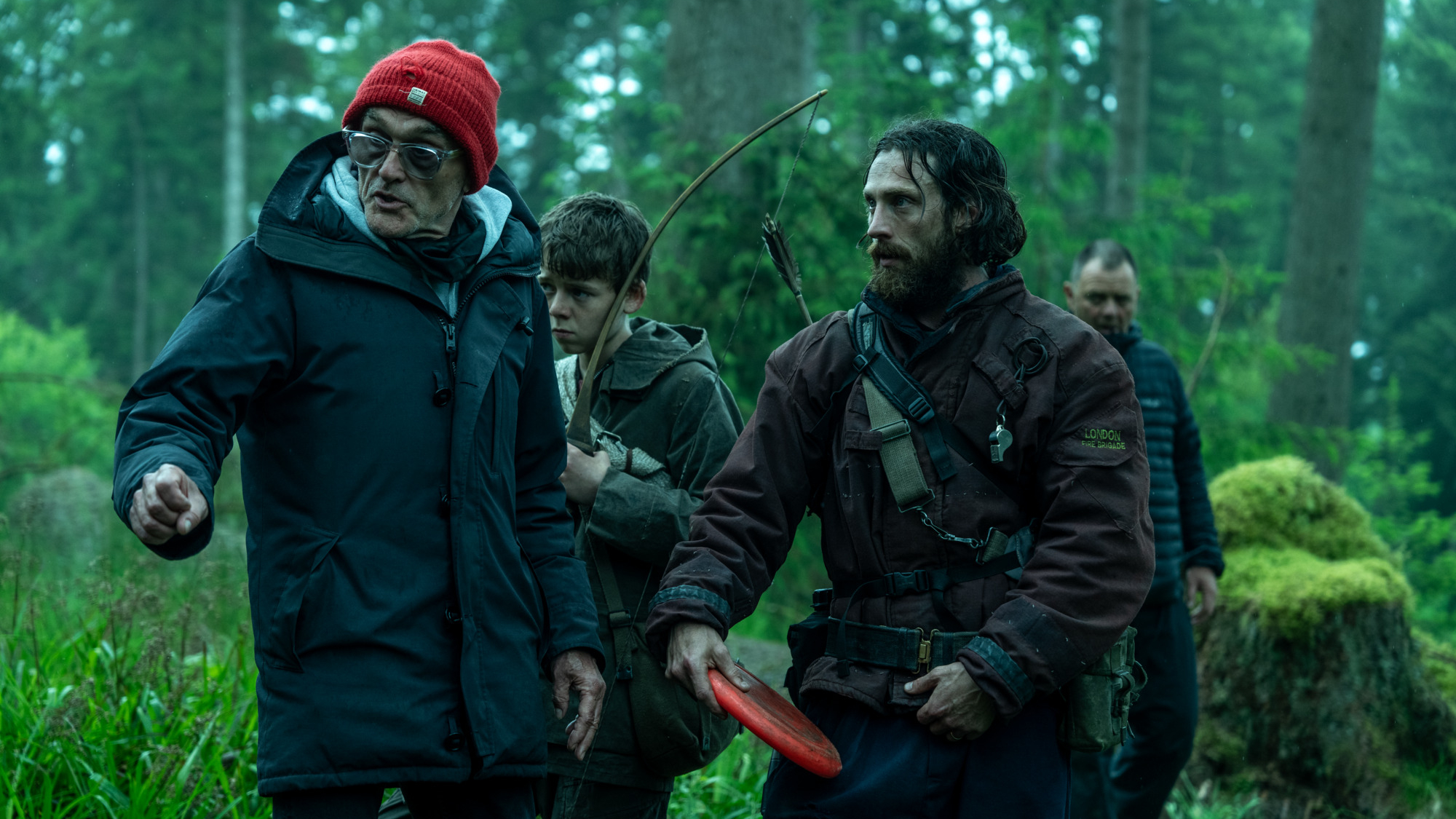
We’ve all ended up with smartphone videos of a night out that’s left us looking like the walking dead. But for Oscar-winning director Danny Boyle that’s exactly what he’s looking for in his new movie.
His new box-office smash hit sequel, 28 Years Later, sees him return to the horrors of a ‘Rage’ infected world, with not-quite-zombies stalking the British countryside almost three decades after the nation was ravaged by the virus.
Boyle, whose enviable credits include sitting in the director’s chair for Steve Jobs, the 2015 biopic about the Apple co-founder, opted to shoot this latest horror adventure on the most commonplace video camera around – one of the best iPhones. Speaking at a special charity screening of 28 Years Later in East London following the film’s release, he revealed that the choice was as much a nod back to the first film in the series – 2002’s 28 Days Later – as much as it was a chance to innovate with the technology of today.
You may like
“The first film was shot on domestic video cameras, because they felt like they’d be the only video equipment that would be lying around that you could record anything on,” Boyle said of the first film’s production, and the diegetic approach to camera tech.
“And we wanted to keep a lineage with that. It felt organic somehow to use the most ubiquitous technology that we now have, and which now shoots at a resolution that’s acceptable in cinema, whereas the first film is very, very low resolution.”
A Hollywood outing for the iPhone 15
(Image credit: Sony Pictures Releasing)
The iPhone 15 was the device of choice, with the iPhone 15 Pro Max variant offering a triple camera system with Wide, Ultra Wide and Telephoto lenses, shooting stills at 48MP and ƒ/1.78 aperture as standard, and HDR / Dolby Vision video at 4K resolution, 60fps,as well as providing Academy-grade Color Encoding. Portability allowed for versatile shooting options, but also had a secondary green-friendly bonus.
“We used iPhones, principally because they were very light, and we could go to places in the countryside and leave a very low footprint, so that we didn’t disturb the areas too much,” says Boyle. “It felt like the actors were there alone.”
iPhones were used for the majority of filming, but not every shot was possible without the help of other filming equipment. But even these devices were primarily household names that any budding film-maker can get hold of.
“We used lots of different cameras,” says Boyle. “But all lightweight, like GoPros, some drone cameras, and we did use some lenses on the iPhones to give us control over focus, and aperture which is controlled by the algorithm within the iPhone normally. You can switch that off by using an app called Black Magic, and so that’s what we did with those.
“But sometimes we used iPhones just as they come out of your pocket like how anybody would use them.”
The return of bullet time
(Image credit: Sony Pictures Releasing)
That’s not to say the film crew didn’t get inventive with the portable power of the iPhone. Though it’s a step away from what the average iPhone-toting filmmaker can manage, Boyle’s team built elaborate multi-iPhone gimbals that allowed for a flexible take on a modern classic of cinematic techniques.
“iPhones did make it a lot easier to build these rigs – you can put 20 in an arc, and it’s basically a poor man’s bullet-time from The Matrix, you know, when Keanu slows down,” reveals Boyle.
“It’s just that, really, except it’s movable, because it’s small and light, and we can carry them around and put them into strange places. So they were enormously helpful to us in creating a language we wanted for the film that was different from the classical one.”
Is 28 Years Later the resurrection of both zombie movies and bullet-time, then?
“I wouldn’t say that!” laughs Boyle. “But seriously, I love it. I love it because, though when we go to a cinema we watch a two-dimensional image, it’s one of those techniques that just pulls you in. You’re inside the film for a moment and then back out again.”
Boyle calls it akin to “a little 3D moment” but is keen to point out that it “isn’t a sustained 3D moment, like with glasses.” And if there’s one thing that puts Boyle in rage of his own, it would seem to have been the brief boom period of 3D film-making.
“What’s happened to 3D, where did that go? It just faded away very quickly. I’m blind basically and, obviously, as a glasses wearer I used to hate having to put another set of glasses on my glasses. But seriously, the technique just puts you inside the film, and then throws you out of it. And I love that, particularly for violence in this film. It’s the startling impact to the violence it brings.”
The future of cinema may be immersive, but it has to stay communal
(Image credit: Sony Pictures Releasing)
Leave the polarized glasses at home then if you’re ever invited to a screening at Danny Boyle’s house. But the 68-year old director is more taken with the idea of immersive video, as offered up by mixed-reality headsets like the Apple Vision Pro or Meta Quest 3 – even if he urges caution to preserve the magic of traditional cinema.
“I don’t think it’ll happen in my lifetime, but I think you will end up inside that screen somehow,” muses Boyle.
“I don’t know if cinema continues as a communal experience – which is how I think it should be – because we are being developed by the technologists to communicate ever more powerfully, but always through their devices.”
The fear for Boyle is a loss of connection – even if its replacement does come with a sensory overload that the best TVs of today could only dream of.
“You sacrifice something human,” he stresses.
“Communal experiences like this I love to support. I love to go to football games, partly because I love football, but obviously for the communal experience too. A rock concert. The theater. Having a dance, whatever it is, something happens to us collectively that’s different.
“Even if you don’t know a lot of people, it’s not like huggy, you know, cuddly or anything like that, you’re not making new friends. But there’s something communal that happens, and there’s a danger in losing that.
“But I think if cinema does continue, I think you’ll end up inside the screen in some way. I don’t know how that will be, but the technology that we use behind phones surrounding everything, I think there’s a kind of little gesture in that. I think more of that will emerge.”
