

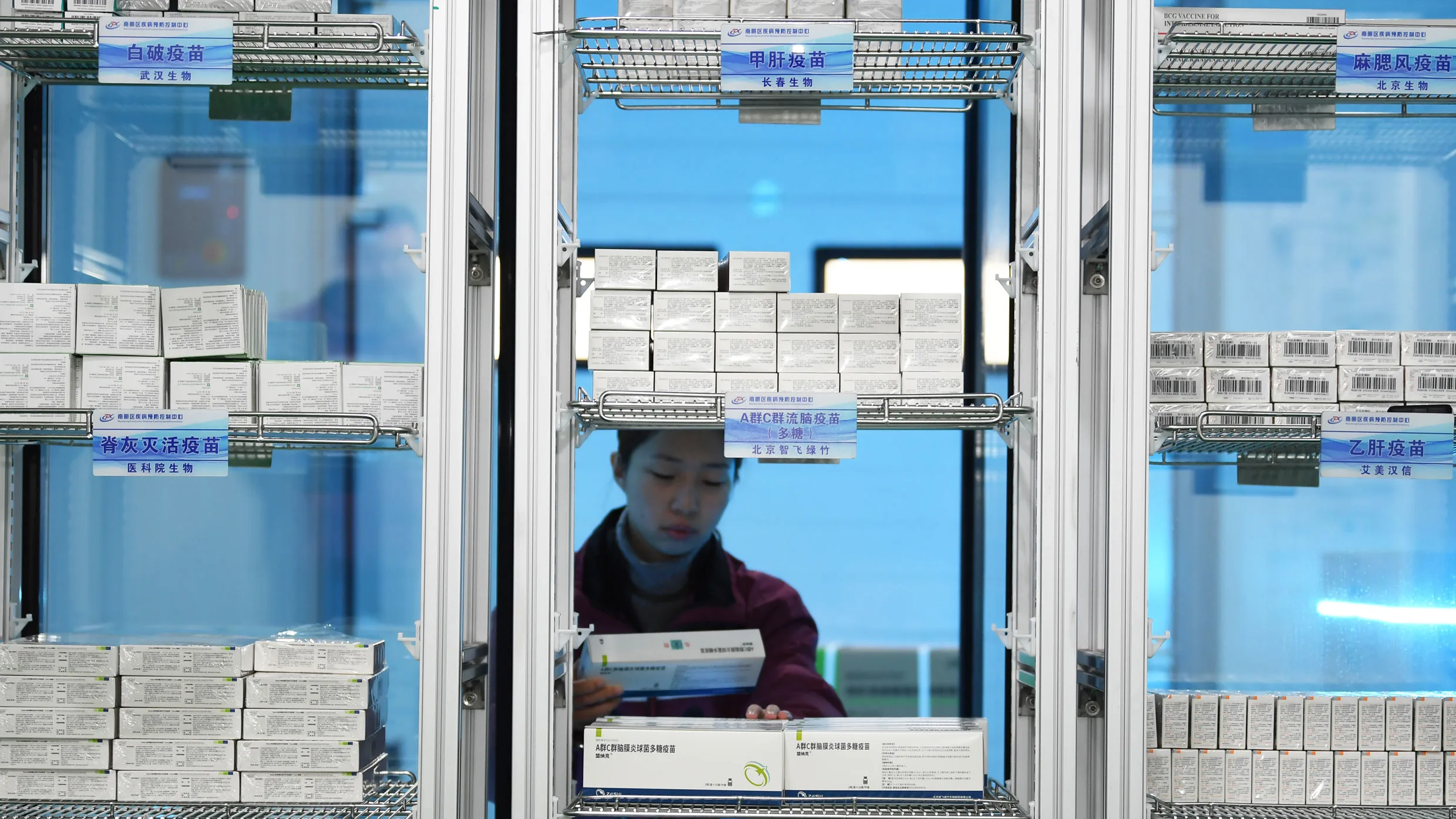
A decade ago, China had just a few hundred pharmaceutical drugs actively in development. Today, China has thousands of drugs in active development and is continually increasing investment to make even more.
This transformation was not, however, a foregone conclusion: China faced incredibly high barriers to growing its pharmaceutical industry including weak research investment and a highly fragmented market of small drug development firms. However, through engineering an environment conducive to pharma innovation, China went from developing 2% of all drugs globally to 25%. Over the same period, the U.S. decreased its share from 45% to 36%, according to Evaluate’s internal data.
A boost in funding and regulatory changes opened the door, but access to the right talent has taken China across the threshold into a pharmaceutical golden age. Scientists from China and other parts of Asia used to come to the U.S. to work for the biggest drug companies and with the brightest minds. Now, many experts are heading East to fill China’s labs, and this return began well before the current administration took office. The result? A huge increase in the quality and quantity of novel Chinese medicines in development.
Licensing deals
To understand the threat China poses, look to major drug companies’ product portfolios. Increasingly, instead of acquiring homegrown innovations, pharma giants including Novo Nordisk, Merck & Co., AstraZeneca, and most recently Pfizer are entering into high-profile licensing deals with Chinese firms. In 2024, 31% of big pharma licensing deals involved a Chinese biotech and that number is projected to grow this year.
China now offers a dizzyingly abundant source of innovative, high-quality therapies at—by pharma standards—reasonable prices. Could the U.S. pharmaceutical industry, long a shining example of innovation on the world stage, soon be eclipsed?
While China’s pharma industry is close to becoming the world leader, the U.S. still holds key advantages to maintain dominance.
Where China Has The U.S. Beat
There are three hot spots of innovation in next-generation therapies where China’s lead is becoming pronounced:
- Bispecific Antibodies (‘Bispecifics): Engineered antibodies that bind to two different targets simultaneously, offering a novel way to fight cancers. They garnered billions of dollars in sales last year and 56% of those currently in development originated in China, according to Evaluate’s internal data.
- Antibody-Drug Conjugates (‘ADCs’): These antibodies deliver a highly potent chemotherapy drug directly to cancer cells. The ADC market is projected to reach $50B by 2030 and 55% of those currently in development originated in China.
- Chimeric Antigen Receptor T-Cells (‘CAR-Ts’): T-cells modified to recognize and kill cancer cells. The CAR-T market is expected to reach over $21B by 2030 and 51% of therapies currently in development originated in China.
GLP-1s
Notably, despite the increasingly crowded nature of the obesity and diabetes space, Evaluate’s internal data shows 46% of GLP-1 therapies in development are from Chinese sponsors. Merck, for example, made its first move into the obesity space not by developing its own drug but by licensing a Chinese GLP-1 pill late last year. Questions remain, though, about whether Chinese players can catch Western pharma leaders which have a huge head start in the obesity space.
Realistically, it’s unlikely that the U.S.—or any other country—will beat China in these top three areas, though many of these Chinese drugs will be acquired by U.S. companies before they reach the market. Despite China’s formidable drug development pipeline, the nation still faces outsized challenges around financing innovative and late stage trials, multiple competitors racing to patent highly similar versions of a single drug, and pricing pressure from generic versions of drugs whose patents have expired—all of which might stall China’s influence.
U.S. Pharma’s Secret Weapons
While China ramps up novel cancer treatments, the U.S. remains a powerhouse with the infrastructure, academic institutions, and regulatory systems that will ensure it continues to play a critical role in the global market.
While the U.S. does not have an overwhelmingly large global share of the development of any kind of drug, it still has a significant portion of many of the largest, and most exciting types. These include:
- Radiopharmaceuticals: Radioactive molecules injected into the body for both targeted cancer irradiation and medical imaging. They’re already a multi-billion-dollar market, and the U.S. controls 40% of those currently in development.
- Traditional Small Molecules: The foundation of medicine (Lipitor is an example), these drugs are still extremely widely used and the U.S. controls 37% of those currently in development.
Discovery advantages
Beyond dominating in these two treatment types, the U.S. has a few key advantages that will be its saving grace in the competition for biopharma dominance.
The United States’ ace-in-the-hole is making initial scientific discoveries. It is still the best at finding new disease processes and ways of designing drugs while China’s strength is iterating on already-established successes. Take the aforementioned ADCs and CAR-Ts: these innovations were discovered in U.S. labs and China has run with tweaked versions. While China is starting to break ground on developing new biology, the U.S. still has the drug discovery edge.
Secondly, U.S. investors are willing to take risks. While the Chinese state is working to create a strong environment for biotechs, private investors in China are more risk-averse than their Western counterparts. So, there is opportunity in the U.S. to support potentially high-growth areas, such as cell and gene therapy.
Thirdly, don’t underestimate manufacturing. Since the announcement of potential tariffs hitting the pharma industry, a number of large drug companies have announced huge investment in their U.S. manufacturing sites. Many of these were almost certainly in the cards already but more investment in the U.S. will help bolster the wider industry. The Biosecure Act also supports this effort, enforcing stricter regulations on the supply chain.
Innovation insurance
Finally, dealmaking is innovation insurance. U.S. big pharma is well used to sourcing innovation and drug development programs through dealmaking, so one can argue that simply extending their gaze East to draw from the new pool in China is not such a shift anyway. Many, if not most, of the next generation therapies are likely to be acquired from abroad before completing their late-stage trials in the U.S. and reaching the market. Continued international licensing will ultimately benefit the bottom lines of American companies.
China’s genie is out of the bottle and there is no doubt that the country’s ability to develop innovative drugs will continue to thrive. As the landscape diversifies, both countries will play crucial roles in advancing pharmaceutical innovation. Both the U.S. and China hold unique advantages; now is the moment America can reinvest in theirs to come out on top.
The final deadline for Fast Company’s Next Big Things in Tech Awards is Friday, June 20, at 11:59 p.m. PT. Apply today.
