
Close Menu
TechurzTechurz

    Subscribe to Updates

    Get the latest creative news from FooBar about art, design and business.

    What's Hot

    Didero lands $30M to put manufacturing procurement on ‘agentic’ autopilot

    February 12, 2026

    Eclipse backs all-EV marketplace Ever in $31M funding round

    February 12, 2026

    Complyance raises $20M to help companies manage risk and compliance

    February 12, 2026
    Facebook X (Twitter) Instagram
    Trending
    • Didero lands $30M to put manufacturing procurement on ‘agentic’ autopilot
    • Eclipse backs all-EV marketplace Ever in $31M funding round
    • Complyance raises $20M to help companies manage risk and compliance
    • Meridian raises $17 million to remake the agentic spreadsheet
    • 2026 Joseph C. Belden Innovation Award nominations are open
    • AI inference startup Modal Labs in talks to raise at $2.5B valuation, sources say
    • Who will own your company’s AI layer? Glean’s CEO explains
    • How to get into a16z’s super-competitive Speedrun startup accelerator program
    Facebook X (Twitter) Instagram Pinterest Vimeo
    TechurzTechurz
    • Home
    • AI
    • Apps
    • News
    • Guides
    • Opinion
    • Reviews
    • Security
    • Startups
    TechurzTechurz
    Home»AI»See stunning first images from the Vera C. Rubin Observatory
    AI

    See stunning first images from the Vera C. Rubin Observatory

    TechurzBy TechurzJune 23, 2025No Comments3 Mins Read
    Share Facebook Twitter Pinterest LinkedIn Tumblr Reddit Telegram Email
    See stunning first images from the Vera C. Rubin Observatory
    Share
    Facebook Twitter LinkedIn Pinterest Email

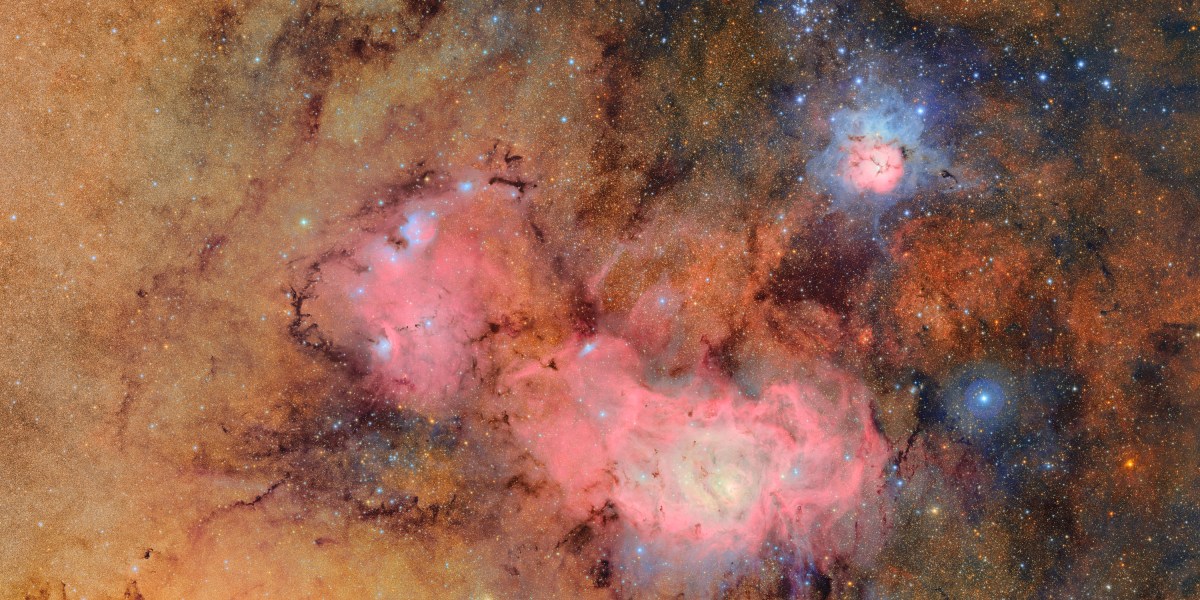
    Rubin’s first glimpse of the firmament is predictably bursting with galaxies and stars. But the resolution, breadth, and depth of the images have taken astronomers aback. “I’m very impressed with these images. They’re really incredible,” says Christopher Conselice, an extragalactic astronomer at the University of Manchester in England.

    One shot, created from 678 individual exposures, showcases the Trifid and Lagoon nebulas—two oceans of luminescent gas and dust where stars are born. Others depict a tiny portion of Rubin’s view of the Virgo Cluster, a zoo of galaxies. Hues of blue are coming from relatively nearby whirlpools of stars, while red tints emanate from remarkably distant and primeval galaxies. 

    The rich detail in these images is already proving to be illuminating. “As galaxies merge and interact, the galaxies are pulling stars away from each other,” says Conselice. This behavior can be seen in plumes of diffuse light erupting from several galaxies, creating halos around them or illuminated bridges between them—records of these ancient galaxies’ pasts.

    Images like these are also likely to contain several supernovas, the explosive final moments of sizable stars. Not only do supernovas seed the cosmos with all the heavy elements that planets—and life—rely on, but they can also hint at how the universe has expanded over time. 

    Anais Möller, an astrophysicist at the Swinburne University of Technology in Melbourne, Australia, is a supernova hunter. “I search for exploding stars in very far away galaxies,” she says. Older sky surveys have found plenty, but they can lack context: You can see the explosion, but not what galaxy it’s from. Thanks to Rubin’s resolution—amply demonstrated by the Virgo Cluster set of images—astronomers can now “find where those exploding stars live,” says Möller.

    Another small section of the observatory’s view of the Virgo Cluster. The image includes many distant galaxies along with stars from our own Milky Way galaxy.

    NSF-DOE VERA C. RUBIN OBSERVATORY

    While taking these images of the distant universe, Rubin also discovered 2,104 asteroids flitting about in our own solar system—including seven whose orbits hew close to Earth’s own. This number may sound impressive, but it’s just par for the course for Rubin. In just a few months, it will find over a million new asteroids—doubling the current known tally. And over the course of its decadal survey, Rubin is projected to identify 89,000 near-Earth asteroids, 3.7 million asteroids in the belt between Mars and Jupiter, and 32,000 icy objects beyond Neptune. 

    images Observatory Rubin stunning Vera
    Share. Facebook Twitter Pinterest LinkedIn Tumblr Email
    Previous ArticleTwo of my favourite gaming OLED monitors are at irresistible all-time low prices for EOFY
    Next Article Weekly poll: which (if any) would you rather have, Pura 80 Ultra or one of the other three?
    Techurz
    • Website

    Related Posts

    Opinion

    SkyFi raises $12.7M to turn satellite images into insights

    January 14, 2026
    Security

    What Nvidia’s stunning $5 billion Intel bet means for enterprise AI and next-gen laptops

    September 18, 2025
    AI

    How we feel about AI friends, OpenAI’s money, and vibe coding

    September 13, 2025
    Add A Comment
    Leave A Reply Cancel Reply

    Top Posts

    College social app Fizz expands into grocery delivery

    September 3, 20251,521 Views

    A Former Apple Luminary Sets Out to Create the Ultimate GPU Software

    September 25, 202514 Views

    The Reason Murderbot’s Tone Feels Off

    May 14, 202511 Views
    Stay In Touch
    • Facebook
    • YouTube
    • TikTok
    • WhatsApp
    • Twitter
    • Instagram
    Latest Reviews

    Subscribe to Updates

    Get the latest tech news from FooBar about tech, design and biz.

    Most Popular

    College social app Fizz expands into grocery delivery

    September 3, 20251,521 Views

    A Former Apple Luminary Sets Out to Create the Ultimate GPU Software

    September 25, 202514 Views

    The Reason Murderbot’s Tone Feels Off

    May 14, 202511 Views
    Our Picks

    Didero lands $30M to put manufacturing procurement on ‘agentic’ autopilot

    February 12, 2026

    Eclipse backs all-EV marketplace Ever in $31M funding round

    February 12, 2026

    Complyance raises $20M to help companies manage risk and compliance

    February 12, 2026

    Subscribe to Updates

    Get the latest creative news from FooBar about art, design and business.

    Facebook X (Twitter) Instagram Pinterest
    • About Us
    • Contact Us
    • Privacy Policy
    • Terms and Conditions
    • Disclaimer
    © 2026 techurz. Designed by Pro.

    Type above and press Enter to search. Press Esc to cancel.