

This is an edition of Plugged In, a weekly newsletter by Fast Company global technology editor Harry McCracken. You can sign up to receive it each Friday and read all issues here.
Hello and welcome back to Plugged In.
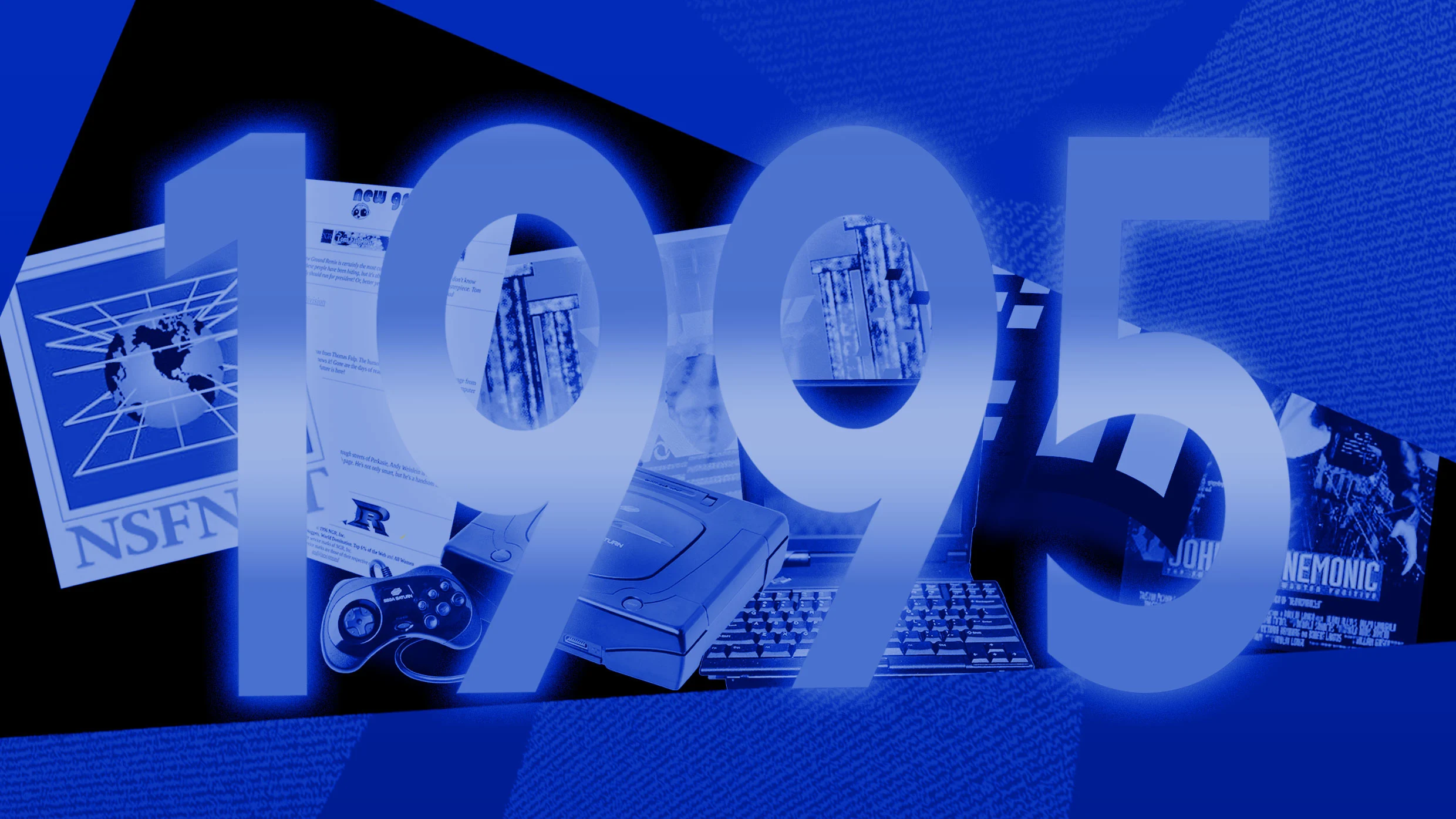
We at Fast Company are uncommonly fond of the year 1995. After all, it’s the year we officially began ongoing publication, after putting out a test issue in 1993. But there’s a more straightforward reason why we decided to publish a series of stories this week about some of 1995’s most significant products and developments. Last year, we produced a package paying tribute to 1994, and it turned out so well we decided to continue the tradition of 30-year-old flashbacks.
Here are the seven stories that make up our 1995 Week:
Until we began work on these stories, I’d forgotten that in 2015 we published a similar roundup of articles timed to 20 years post-1995 (I told you it’s a special year to us.) The topics were entirely different from what we picked this time, so what the heck—here are those pieces, too:
Submerged as we are in a never-ending deluge of news about AI and other pressing subjects, it’s always nice to have an excuse to briefly press pause on concerns of the day and look back. At the same time I get nervous about growing too nostalgic. Any objective assessment of tech circa 1995 should acknowledge that in many ways it was terrible.
For starters, the PCs were disastrously crash-prone and prone to eating your work in a way that’s far less common today. Sans modern conveniences such as USB and Wi-Fi, they made tasks as fundamental as adding a printer into a bit of a science project. Online search tools were rudimentary, digital photography wasn’t yet capable of competing with film, and downloading software such as Netscape Navigator over a dial-up connection took so long that it was borderline impractical.
In short, I don’t want to go back. Yet thinking about the period as we worked on our new series, I also developed a new appreciation for what we’ve lost. Many of the ways technology has changed everyday life for the better were yet to come—but so were most of its downsides.
In case you’ve forgotten the state of computing in 1995—or weren’t around to experience it—a study from October of that year provides some helpful context. Conducted by the Times Mirror Center, it reported that only 32% of Americans used computers. Of them, only a subset went online—typically a few times a week. They typically sent three email messages per day and received five. Just 32% of those online said they would miss it “a lot” if they couldn’t do it anymore, a far lower percentage than the newspaper readers and cable TV subscribers who deemed those media essential.
In other words, the digital world didn’t matter all that much, even to most of the relatively few Americans who were online. It’s tough to have an unhealthy relationship with a technology if you use it only occasionally and can easily see yourself living without it.
Nobody checked their smartphone a jillion times a day in 1995: Smartphones barely existed and weren’t yet connected to the internet. Even laptops were a rarity, owned by only 18% of people who had a PC, according to the Times Mirror study. Instead, computing was still nearly synonymous with desktop PCs, and going online was a conscious decision involving a dial-up modem and a phone line. Unless you had two lines, you couldn’t even check your email if someone else in the house was making a call.
Compared to a modern computer or phone with a persistent internet connection, a 1995 PC on dial-up was a Fortress of Solitude. Hackers were already wreaking havoc when they could—read Alex Pasternack’s story on “AOHell” for proof—but with e-commerce and online banking still rare, there was a limit to how much damage they could do. Being overrun in notifications was unknown, because there was no practical way to deliver them to a computing device. (Even Pointcast, the famously bandwidth-sucking alert system that pioneered “push” technology, didn’t arrive until 1996.)
The business models that powered access to technology in 1995 also feel healthier than those of 2025. Online advertising was already getting rolling—Wired.com ran the web’s first banner ad in October 1994—but the days of tech giants collecting vast amounts of personal data and using it to target advertising were still in the future. People paid for tech products with money, not by sacrificing some of their privacy.
In retrospect, it all seems downright Edenesque. But the consumers of 1995—including me—didn’t look at it that way, because we didn’t know what was to come. The Times Mirror survey says that 50% of respondents were already concerned about computers being used to invade privacy. Some 24% considered themselves “overloaded with information,” though perhaps they were more stressed out by an excess of cable channels than anything they were doing on a computer.
The Times Mirror Center later changed its name to the Pew Research Center and continues to survey Americans about their attitude toward technology. In April, it reported that twice as many adults thought that AI’s impact over the next 20 years would be negative than those who expected it to be positive. I can’t help but think that the past three decades have left us more jaded than we were in the 1990s—and that it’s a fair reaction to what the tech industry has given us.
Will the tech of 2045 or 2055 prompt reveries for the simpler times of 2025? It’s a scary thought. I repeat: I have no desire to return to the tech of 1995. But understanding it better can help gird us for what’s next. That was among our goals for 1995 Week, and I hope it shows in our stories.
More top tech stories from Fast Company
Slack expands AI features with enterprise search, translation, and smart summaries
New offerings will be able to draft documents and answer questions based on knowledge housed in Slack and linked cloud systems.
Read More →
How to launch a great product: Advice from a Google exec
It comes down to balancing the three Ps: people, politics, and product.
Read More →
YouTube Shorts algorithm steers users away from political content, study finds
Researchers say YouTube’s algorithm downplays political topics in favor of viral entertainment to keep users watching.
Read More →
This beloved retro gaming computer is making a comeback—and it’ll cost you $299
A reimagined Commodore 64 is now available for preorder, offering nostalgia with updated specs and support for classic games.
Read More →
Inside the redesign that will make you actually want to use Nextdoor
The hyperlocal app is moving away from its message board layout with a new focus on local news, real-time alerts, and AI suggestions.
Read More →
Gmail’s new ‘Manage Subscriptions’ tool could change email marketing forever
Google is rolling out a powerful unsubscribe feature in Gmail that gives users more control—and marketers a reason to rethink their strategy.
Read More →
The super-early-rate deadline for Fast Company’s Most Innovative Companies Awards is Friday, July 25, at 11:59 p.m. PT. Apply today.
