

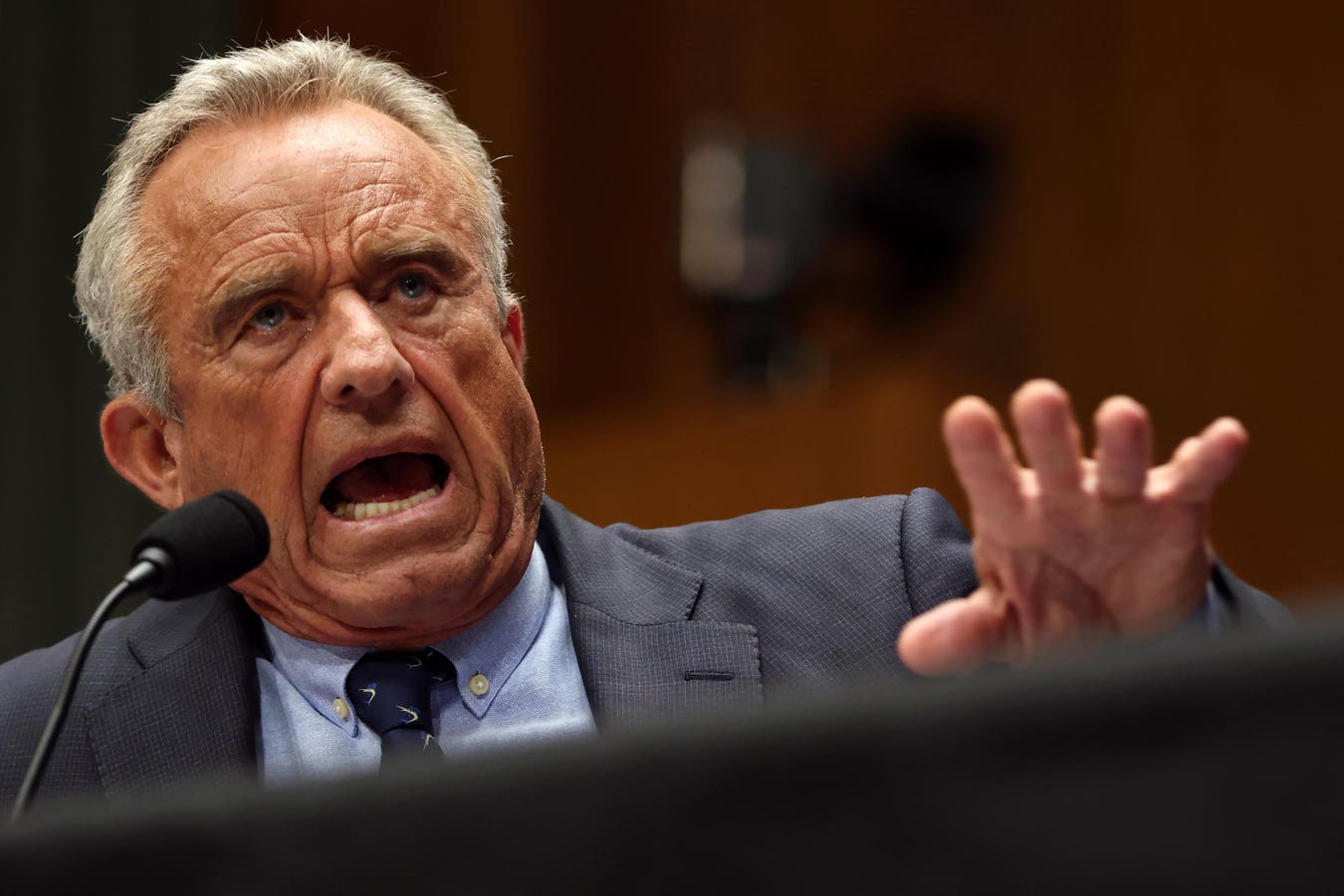
The CDC’s immunization advisory committee—whose membership Health and Human Services Secretary Robert F. Kennedy Jr. purged in June and replaced with people more aligned with his anti-vaccine views—is slated to meet this week, starting on Thursday. On the agenda, a topic crucial to the health of the country and its pharma industry: childhood vaccinations, specifically those that protect against hepatitis B, measles and chickenpox, as well as COVID-19.
Typically meetings of this committee, known by its acronym ACIP, are straightforward and off the public’s radar, but since 1964 they’ve served a vital role in setting immunization recommendations and schedules to serve public health. States generally follow this guidance in setting vaccine mandates for schools, while insurers typically follow it in determining what shots they’ll cover. Global immunization efforts saved at least 154 million lives between 1974 and 2024, more than 100 million of them children, according to a study published in The Lancet.
“ACIP isn’t ACIP anymore. It’s essentially an arm of our Secretary of HHS who is an anti-vaccine denialist and has been for the last 20 years.”
Dr. Paul Offit
Since his appointment, Kennedy has been pushing anti-vaccine policies at the federal level and this meeting could prove critical for U.S. immunization policy going forward. Already, he has announced plans to award a no-bid contract to Rensselaer Polytechnic Institute to ‘investigate” long-debunked links between vaccines and autism, and appointed committee members like Retsef Levi and Robert Malone, who have been outspoken opponents of COVID vaccines, which saved an estimated 14.4 million lives the first year after they were made available, and Catherine Stein, who has argued against vaccine mandates. Sources with knowledge told Forbes that ACIP may restrict its COVID-19 vaccine recommendations to people older than 75 and those younger with a narrow set of preexisting conditions. The Washington Post reported this possibility previously.
“We should be very worried because ACIP isn’t ACIP anymore,” Dr. Paul Offit, director of the Vaccine Education Center at the Children’s Hospital of Philadelphia, told Forbes. “It’s essentially an arm of our Secretary of HHS who is an anti-vaccine denialist and has been for the last 20 years.”
This puts pharmaceutical companies into uncharted territory. Vaccines are a big business: Grand View Research estimates the global vaccine market reached $88 billion last year, with the U.S. accounting for the major share of it. They’re also a safe business: many vaccines have been around for decades, and regulations around them have been both relatively certain and grounded in evidence. That may no longer be the case.
“There’s a lot at stake, even if not a ton of [the pharmaceutical companies’] annual sales are tied to it,” said Rajiv Leventhal, a healthcare analyst for Emarketer. “They could be looking at declines that just have not been anticipated.”
On Friday, shares of the biggest COVID-19 vaccine makers fell dramatically when Trump Administration health officials indicated they were investigating unsubstantiated reports of child deaths from the vaccine. Moderna, which at the peak of the pandemic was worth $200 billion but has since seen its stock collapse, faces the biggest risk because it has only mRNA vaccines for COVID-19 and RSV on the market; its shares fell 7% that day. Pfizer has a broader business: The $5.4 billion it made from the COVID-19 vaccine it developed with BioNTech, last year represents less than 10% of its total $64 billion business. Its shares fell 4%. Smaller Novavax, which makes COVID-19 shots in partnership with Sanofi that rely on proteins rather than mRNA to elicit an immune response, has been less the target of conspiracy theories, but still saw its shares drop 4% on Friday.
At least 14 states, including New York and New Mexico, have set their own pro-vaccine policies for COVID-19 shots.
Conspiracy theories and misinformation about mRNA have run rampant online, including that it changes a human’s genetic code, that vaccinated people can transmit spike proteins to other people and that the vaccines contain microchips to track people.
The investor reaction isn’t surprising given the constant thrum of anti-vaccine misinformation since the COVID-19 pandemic, as well as Kennedy’s own role through the Children’s Defense Fund back in May 2021 in petitioning the federal government to revoke authorization of COVID-19 vaccines.
As HHS Secretary, Kennedy cancelled a contract with Moderna to develop an mRNA vaccine against potential pandemic flu virus worth up to $760 million in June, then slashed nearly $500 million in research funding for mRNA vaccines in August. In August, the FDA placed additional restrictions on who’s eligible to get COVID-19 shots, generating confusion and fear among those who want to be vaccinated in advance of a fall resurgence of the disease. With new restrictions on COVID-19 vaccination eligibility, vaccine policy for those shots is fragmenting: At least 14 states, including New York and New Mexico, have set their own pro-vaccine policies for COVID-19 shots, while Florida recently announced it would eliminate the state’s vaccine mandates — without studying the possible consequences of doing so.
An even bigger risk are the longstanding childhood vaccines against preventable diseases that include measles, chickenpox, whooping cough and hepatitis B. The United States’ childhood immunization program is widely recognized as one of the greatest achievements of public health. It eradicated measles in the U.S. by the year 2000, slashed the infection rate of hepatitis B by 99%, and turned whooping cough into a rarity. Although the vast majority of Americans–79% of all adults, according to a recent poll by Harvard T.H. Chan School of Public Health and the de Beaumont Foundation–support requirements for vaccinating children against preventable diseases to attend school, childhood vaccination rates continue to decline, according to the CDC.
Any weakening of recommendations for childhood immunizations could lead to fewer shots, and even a 10% drop in childhood vaccinations could lead to millions of hospitalizations and tens of thousands of deaths among the nation’s children, according to a recent study in the Journal of the American Medical Association. Lower vaccination rates have already caused historic outbreaks of measles and whooping cough this year.
The confusing hodgepodge of state policies we’re already seeing with COVID-19 vaccines is likely to spread to other vaccines, analyst Leventhal said. ACIP may decide to step back and leave the question of policy to the states explicitly, he said. Or more likely, it may issue recommendations so at odds with the scientific consensus that many states choose to follow those of their own public health agencies or those of medical organizations instead. “It’s just going to be a scattershot, fragmented regulatory vaccine landscape across the country,” he said.
“I think they could say other countries don’t use the chicken pox vaccine, so why should we?”
Dr. Paul Offit
Adding to the confusion will be a question of insurance coverage. Once acting CDC director Jim O’Neill signs off on ACIP’s recommendations, Medicare, Part D and Medicaid plans must provide vaccines at no cost to patients who fall under those guidelines; commercial plans have to adhere to them within the next benefit year. But if those recommendations are narrower than the medical consensus, insurers, especially government ones, could narrow their coverage to match, and the 37 million kids covered by Medicaid and CHIP could find the preventative shots are no longer free.
“If you’re a health insurer and you’re running these numbers, I think that you’re probably incentivized to find a way to get it to people who need it,” said Bill Maughn, a healthcare analyst at Clear Street. But he added this might not line up with what local politicians want. “I could see insurers having a narrower recommendation than a state would.”
Since taking charge at HHS, Kennedy has instructed the CDC’s advisory committee to review the agency’s hepatitis B recommendations and has repeatedly raised scientifically debunked claims that vaccines cause autism. As the CDC’s own website notes, no such link exists. During the previous ACIP meeting in June, committee member Martin Kuldorff presented a widely-criticized report claiming the MMRV vaccine–which protects against, measles, mumps, rubella and varicella (chickenpox)–was linked to childhood seizures, a topic that is on the agenda again this week. Earlier this year, HHS stopped inviting experts from medical associations to weigh in on vaccine science. It no longer invites vaccine makers to present updated COVID data, instead allotting them just a few minutes to respond to other presentations.
As we head into the CDC’s vaccine advisory committee meeting this week all bets are off, Offit said. “Literally anything could happen,” he said. “I think they could not encourage hepatitis B. They may say the RSV vaccine isn’t working the way it should….I think they could say other countries don’t use the chicken pox vaccine, so why should we?”
More At Forbes
