

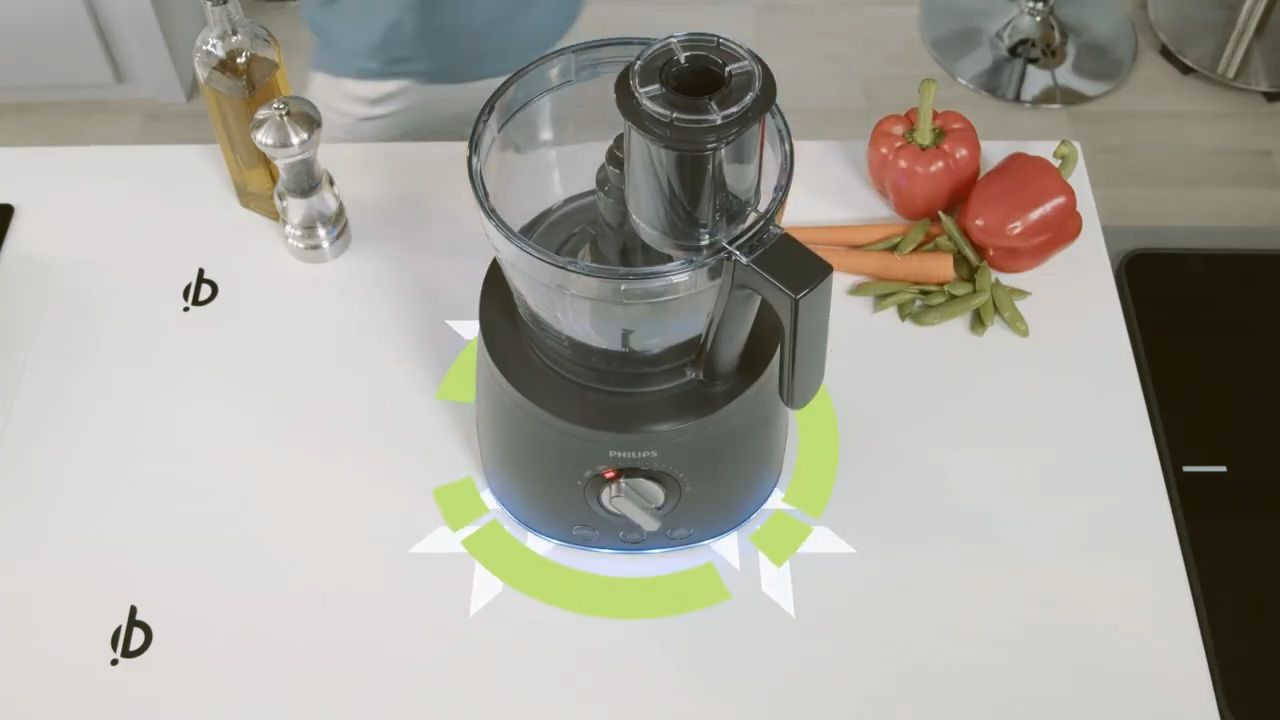
Ki (pronounced “kee”) is a wireless power standard built for kitchens. Developed by the Wireless Power Consortium, the same group behind the Qi standard, Ki is designed to power full-size appliances like blenders and coffee makers.
Similar to how smartphones work with Qi wireless chargers, placing a compatible appliance on a Ki-powered surface provides power through magnetic induction. Since it’s wireless, there’s no need to plug the appliance in and worry about cables.
How Does Ki Wireless Power Work?
Ki uses inductive power transfer. A coil inside the transmitter, which is built into or under your counter, sends out a magnetic field. When you place a Ki-compatible appliance on that spot, another coil inside the appliance picks up that magnetic field and converts it back into usable electricity.
Ki transmitters can be hidden in kitchen islands, under tables, or within cooktops. Power can be delivered to appliances through any standard-thickness surface, including granite, marble, wood, and other non-metallic surfaces.
Ki transmitters don’t retain heat. They are cool to the touch the moment the appliance is removed.
Ki vs Qi
Although the two sound similar and even come from the same organization, Ki and Qi are made for different jobs.
Qi is probably what you’re familiar with. Qi chargers are often small pads; they deliver up to 15 watts of wireless juice for low-power devices like phones and earbuds. Ki systems, on the other hand, are larger and more likely to be built into the counter. Ki is designed for high-power kitchen appliances and can reach a maximum of 2,200 watts, which is enough to power most countertop devices.
Ki wireless chargers power kitchen appliances directly, rather than charging a battery like Qi chargers, making them function much like a standard wall outlet. While removing a phone from a Qi charger simply stops powering the phone, removing a toaster from a Ki charger will shut the device off.
What’s the Purpose?
Nothing new is enabled in your kitchen appliances if you use Ki wireless power. That rice cooker, griddle, etc., works the same way when placed on a Ki charger as it does when plugged into the wall. The big difference is simply ease of use.
Just like how Qi is convenient for powering a smartphone without a cable—just plop it down and it starts to charge—Ki simplifies how you use your cooking tools. Just place the Ki cordless appliance on a transmitter to provide it with power instantly.
This level of freedom means you can design your kitchen in such a way that you can use all your kitchen appliances exactly where you want. If you like your kitchen to be free from clutter, Ki lets you eliminate all the cables for a minimalist kitchen, without losing any of its normal functionality.
What Appliances Work With Ki?
Only Ki-enabled products can work with Ki power transmitters. Meaning, your existing, corded appliances aren’t compatible. The Wireless Power Consortium says that the Ki standard works with “virtually any type of kitchen appliance,” assuming a Ki-powered version has been created.
The Ki standard was announced in September 2024. At the time of this writing, Midea’s Celestial Flex Series, which includes a blender, kettle, and steamer, is the first to use the Ki technology, but it’s unclear when these products will be released.
Some Ki adoption forecasts predict that the wireless power standard could be included in 100 million annual shipments of devices by 2030.
Thanks for letting us know!
Subscribe
Tell us why!
Other
Not enough details
Hard to understand
