
Close Menu
TechurzTechurz

    Subscribe to Updates

    Get the latest creative news from FooBar about art, design and business.

    What's Hot

    Delve whistleblower strikes again, with alleged receipts about ‘fake compliance’

    March 31, 2026

    Popular AI gateway startup LiteLLM ditches controversial startup Delve

    March 30, 2026

    What we’re looking for in Startup Battlefield 2026 and how to put your best application forward

    March 30, 2026
    Facebook X (Twitter) Instagram
    Trending
    • Delve whistleblower strikes again, with alleged receipts about ‘fake compliance’
    • Popular AI gateway startup LiteLLM ditches controversial startup Delve
    • What we’re looking for in Startup Battlefield 2026 and how to put your best application forward
    • ScaleOps raises $130M to improve computing efficiency amid AI demand
    • Qodo raises $70M for code verification as AI coding scales
    • Elon Musk’s last co-founder reportedly leaves xAI
    • From Moon hotels to cattle herding: 8 startups investors chased at YC Demo Day
    • Aetherflux reportedly raising Series B at $2 billion valuation
    Facebook X (Twitter) Instagram Pinterest Vimeo
    TechurzTechurz
    • Home
    • AI
    • Apps
    • News
    • Guides
    • Opinion
    • Reviews
    • Security
    • Startups
    TechurzTechurz
    Home»AI»Where Are All the AI Drugs?
    AI

    Where Are All the AI Drugs?

    TechurzBy TechurzJuly 17, 2025No Comments4 Mins Read
    Share Facebook Twitter Pinterest LinkedIn Tumblr Reddit Telegram Email
    Where Are All the AI Drugs?
    Share
    Facebook Twitter LinkedIn Pinterest Email

    A new drug usually starts with a tragedy.

    Peter Ray knows that. Born in what is now Zimbabwe, the child of a mechanic and a radiology technician, Ray fled with his family to South Africa during the Zimbabwean War of Liberation. He remembers the journey there in 1980 in a convoy of armored cars. As the sun blazed down, a soldier taught 8-year-old Ray how to fire a machine gun. But his mother kept having to stop. She didn’t feel well.

    Doctors in Cape Town diagnosed her with cancer. Ray remembers going to her radiation treatments with her, the hospital rooms, the colostomy bags. She loved the beach, loved to walk along the line where the water met the land. But it got harder for her to go. Sometimes she came home from the hospital for a while and it seemed like things would get better. Ray got his hopes up. Then things would fall apart again. Surgery, radiation, chemotherapy—the treatments that were on the table in the 1980s—were soon exhausted. As she lay dying, he promised her he was going to make a difference, somehow. He was 13 years old.

    Ray studied to become a medicinal chemist, first in South Africa, taking out loans to fund his studies, then at the University of Liverpool. He worked at drug companies across the UK, on numerous projects. Now, at 53, he is one of the lead drug designers at a pharmaceutical company called Recursion. He thinks about that promise to his mom a lot. “It’s lived with me my whole life,” he says. “I need to get drugs on the market that impact cancer.”

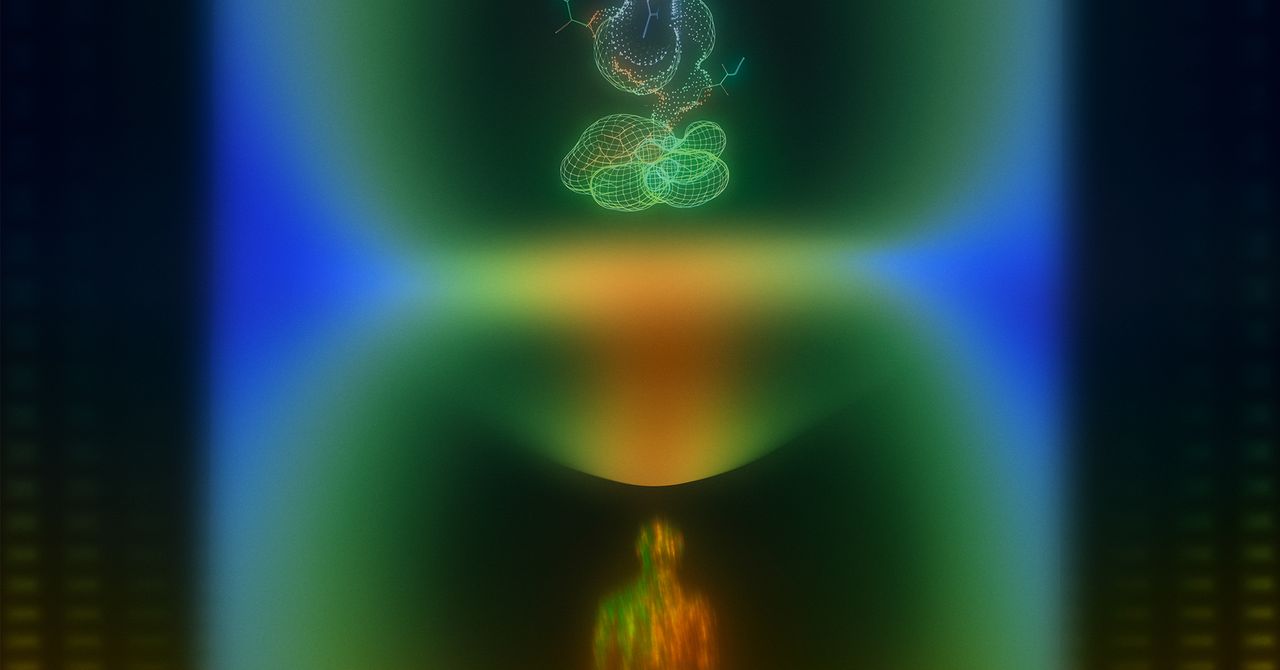
    The desire to stop your own tragedies from happening to someone else may be a strong motivator. But the process of drug discovery has always been grindingly, gruelingly slow. First, chemists like Ray zero in on their target—usually a protein, a long string of amino acids coiled and folded upon itself. They call up a model of it on their computer screen and watch it turn in a black void. They note the curves and declivities in its surface, places where a molecule, sailing through the darkness like a spaceship, could dock. Then, atom by atom, they try to build the spaceship.

    Animation: Balarama Heller

    When the new molecule is ready, the chemists pass it along to the biologists, who test it on living cells in warm rooms. More tragedy: Many cells die, for reasons that are not always clear. Biology is complex, and the new drug doesn’t work as expected. The chemists will have to create another, and another, tweaking, adjusting, often for years. One biologist, Keith Mikule of Insilico Medicine, told me of his experience at a different drug company. After five years of work, their best molecule had unforeseen, dangerous side effects that meant they could take it no further. “There was a large team of chemists, a large team of biologists, thousands of molecules made, and no real progress,” he said.

    If a team is very lucky, they get a molecule that, in mice, does what it’s supposed to. They get a chance to give it to a small group of healthy human volunteers, a phase I trial. If the volunteers stay healthy, then they give it to more people, including those with the disease in question, in a phase II. If the sick people don’t get sicker, they get a chance—phase III—to give it to more sick people, as many as they can find, as diverse a group as possible.

    At each stage, for reasons few people understand and fewer can predict, great rafts of drugs drop out. More than 90 percent of hopefuls fail along the way. When you meet drug hunters, you might ask them, cautiously, tenderly, if they’ve ever had a drug make it. “It’s very rare,” says Mikule, who has one drug (niraparib, for ovarian cancer) to his name. “We’re unicorns.”

    drugs
    Share. Facebook Twitter Pinterest LinkedIn Tumblr Email
    Previous ArticleErmittlern gelingt Schlag gegen prorussische Hacker
    Next Article This $300 Windows PC gives the Mac mini a run for its money
    Techurz
    • Website

    Related Posts

    AI

    How we feel about AI friends, OpenAI’s money, and vibe coding

    September 13, 2025
    AI

    Your Powerbeats Pro 2 are getting a serious upgrade – but there’s a catch

    September 13, 2025
    AI

    Tucker Carlson asks Sam Altman if an OpenAI employee was murdered ‘on your orders’

    September 13, 2025
    Add A Comment
    Leave A Reply Cancel Reply

    Top Posts

    College social app Fizz expands into grocery delivery

    September 3, 20252,288 Views

    A Former Apple Luminary Sets Out to Create the Ultimate GPU Software

    September 25, 202516 Views

    The Reason Murderbot’s Tone Feels Off

    May 14, 202512 Views
    Stay In Touch
    • Facebook
    • YouTube
    • TikTok
    • WhatsApp
    • Twitter
    • Instagram
    Latest Reviews

    Subscribe to Updates

    Get the latest tech news from FooBar about tech, design and biz.

    Most Popular

    College social app Fizz expands into grocery delivery

    September 3, 20252,288 Views

    A Former Apple Luminary Sets Out to Create the Ultimate GPU Software

    September 25, 202516 Views

    The Reason Murderbot’s Tone Feels Off

    May 14, 202512 Views
    Our Picks

    Delve whistleblower strikes again, with alleged receipts about ‘fake compliance’

    March 31, 2026

    Popular AI gateway startup LiteLLM ditches controversial startup Delve

    March 30, 2026

    What we’re looking for in Startup Battlefield 2026 and how to put your best application forward

    March 30, 2026

    Subscribe to Updates

    Get the latest creative news from FooBar about art, design and business.

    Facebook X (Twitter) Instagram Pinterest
    • About Us
    • Contact Us
    • Privacy Policy
    • Terms and Conditions
    • Disclaimer
    © 2026 techurz. Designed by Pro.

    Type above and press Enter to search. Press Esc to cancel.