
Close Menu
TechurzTechurz

    Subscribe to Updates

    Get the latest creative news from FooBar about art, design and business.

    What's Hot

    Didero lands $30M to put manufacturing procurement on ‘agentic’ autopilot

    February 12, 2026

    Eclipse backs all-EV marketplace Ever in $31M funding round

    February 12, 2026

    Complyance raises $20M to help companies manage risk and compliance

    February 12, 2026
    Facebook X (Twitter) Instagram
    Trending
    • Didero lands $30M to put manufacturing procurement on ‘agentic’ autopilot
    • Eclipse backs all-EV marketplace Ever in $31M funding round
    • Complyance raises $20M to help companies manage risk and compliance
    • Meridian raises $17 million to remake the agentic spreadsheet
    • 2026 Joseph C. Belden Innovation Award nominations are open
    • AI inference startup Modal Labs in talks to raise at $2.5B valuation, sources say
    • Who will own your company’s AI layer? Glean’s CEO explains
    • How to get into a16z’s super-competitive Speedrun startup accelerator program
    Facebook X (Twitter) Instagram Pinterest Vimeo
    TechurzTechurz
    • Home
    • AI
    • Apps
    • News
    • Guides
    • Opinion
    • Reviews
    • Security
    • Startups
    TechurzTechurz
    Home»Security»175 Malicious npm Packages with 26,000 Downloads Used in Credential Phishing Campaign
    Security

    175 Malicious npm Packages with 26,000 Downloads Used in Credential Phishing Campaign

    TechurzBy TechurzOctober 11, 2025No Comments3 Mins Read
    Share Facebook Twitter Pinterest LinkedIn Tumblr Reddit Telegram Email
    175 Malicious npm Packages with 26,000 Downloads Used in Credential Phishing Campaign
    Share
    Facebook Twitter LinkedIn Pinterest Email


    Oct 10, 2025Ravie LakshmananCybercrime / Malware

    Cybersecurity researchers have flagged a new set of 175 malicious packages on the npm registry that have been used to facilitate credential harvesting attacks as part of an unusual campaign.

    The packages have been collectively downloaded 26,000 times, acting as an infrastructure for a widespread phishing campaign codenamed Beamglea targeting more than 135 industrial, technology, and energy companies across the world, according to Socket.

    “While the packages’ randomized names make accidental developer installation unlikely, the download counts likely include security researchers, automated scanners, and CDN infrastructure analyzing the packages after disclosure,” security researcher Kush Pandya said.

    The packages have been found to use npm’s public registry and unpkg.com’s CDN to host redirect scripts that route victims to credential harvesting pages. Some aspects of the campaign were first flagged by Safety’s Paul McCarty late last month.

    Specifically, the library comes fitted with a Python file named “redirect_generator.py” to programmatically create and publish an npm package with the name “redirect-xxxxxx,” where “x” refers to a random alphanumeric string. The script then injects a victim’s email address and custom phishing URL into the package.

    Once the package is live on the npm registry, the “malware” proceeds to create an HTML file with a reference to the UNPKG CDN associated with the newly published package (e.g., “unpkg[.]com/redirect-xs13nr@1.0.0/beamglea.js”). The threat actor is said to be taking advantage of this behavior to distribute HTML payloads that, when opened, load JavaScript from the UNPKG CDN and redirect the victim to Microsoft credential harvesting pages.

    The JavaScript file “beamglea.js” is a redirect script that includes the victim’s email address and the URL to which the victim is navigated in order to capture their credentials. Socket said it found more than 630 HTML files that masquerade as purchase orders, technical specifications, or project documents.

    In other words, the npm packages are not designed to execute malicious code upon installation. Instead, the campaign leverages npm and UNPKG for hosting the phishing infrastructure. It’s currently not clear how the HTML files are distributed, although it’s possible they are propagated via emails that trick recipients into launching the specially crafted HTML files.

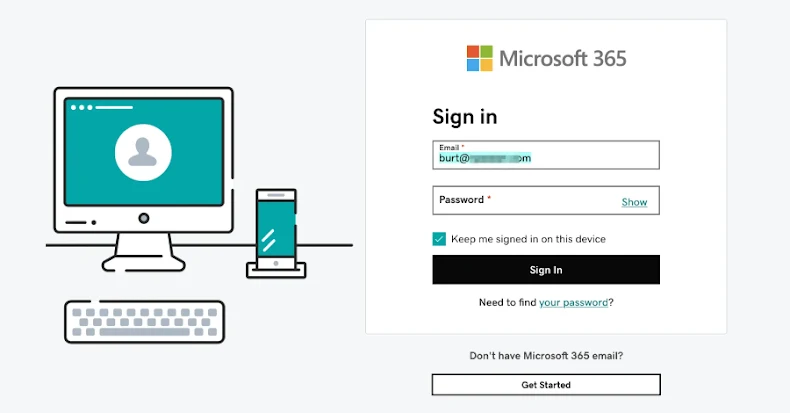
    “When victims open these HTML files in a browser, the JavaScript immediately redirects to the phishing domain while passing the victim’s email address via URL fragment,” Socket said.

    “The phishing page then pre-fills the email field, creating a convincing appearance that the victim is accessing a legitimate login portal that already recognizes them. This pre-filled credential significantly increases the attack’s success rate by reducing victim suspicion.”

    The findings once again highlight the ever-evolving nature of threat actors who are constantly adapting their techniques to stay ahead of defenders, who are also constantly developing new techniques to detect them. In this case, it underscores the abuse of legitimate infrastructure at scale.

    “The npm ecosystem becomes unwitting infrastructure rather than a direct attack vector,” Pandya said. “Developers who install these packages see no malicious behavior, but victims opening specially crafted HTML files are redirected to phishing sites.”

    “By publishing 175 packages across 9 accounts and automating victim-specific HTML generation, the attackers created a resilient phishing infrastructure that costs nothing to host and leverages trusted CDN services. The combination of npm’s open registry, unpkg.com’s automatic serving, and minimal code creates a reproducible playbook that other threat actors will adopt.”

    campaign credential Downloads Malicious npm packages phishing
    Share. Facebook Twitter Pinterest LinkedIn Tumblr Email
    Previous ArticleSonicWall data breach affects all cloud backup customers
    Next Article Get T-Mobile 5G home internet for $30/month when you bundle with a phone line – here’s how
    Techurz
    • Website

    Related Posts

    Opinion

    ‘College dropout’ has become the most coveted startup founder credential

    January 1, 2026
    Security

    AI is becoming introspective – and that ‘should be monitored carefully,’ warns Anthropic

    November 3, 2025
    Security

    Perplexity’s new AI tool lets you search patents with natural language – and it’s free

    November 3, 2025
    Add A Comment
    Leave A Reply Cancel Reply

    Top Posts

    College social app Fizz expands into grocery delivery

    September 3, 20251,536 Views

    A Former Apple Luminary Sets Out to Create the Ultimate GPU Software

    September 25, 202514 Views

    The Reason Murderbot’s Tone Feels Off

    May 14, 202511 Views
    Stay In Touch
    • Facebook
    • YouTube
    • TikTok
    • WhatsApp
    • Twitter
    • Instagram
    Latest Reviews

    Subscribe to Updates

    Get the latest tech news from FooBar about tech, design and biz.

    Most Popular

    College social app Fizz expands into grocery delivery

    September 3, 20251,536 Views

    A Former Apple Luminary Sets Out to Create the Ultimate GPU Software

    September 25, 202514 Views

    The Reason Murderbot’s Tone Feels Off

    May 14, 202511 Views
    Our Picks

    Didero lands $30M to put manufacturing procurement on ‘agentic’ autopilot

    February 12, 2026

    Eclipse backs all-EV marketplace Ever in $31M funding round

    February 12, 2026

    Complyance raises $20M to help companies manage risk and compliance

    February 12, 2026

    Subscribe to Updates

    Get the latest creative news from FooBar about art, design and business.

    Facebook X (Twitter) Instagram Pinterest
    • About Us
    • Contact Us
    • Privacy Policy
    • Terms and Conditions
    • Disclaimer
    © 2026 techurz. Designed by Pro.

    Type above and press Enter to search. Press Esc to cancel.