


Cybersecurity researchers have flagged a new set of 175 malicious packages on the npm registry that have been used to facilitate credential harvesting attacks as part of an unusual campaign.
The packages have been collectively downloaded 26,000 times, acting as an infrastructure for a widespread phishing campaign codenamed Beamglea targeting more than 135 industrial, technology, and energy companies across the world, according to Socket.
“While the packages’ randomized names make accidental developer installation unlikely, the download counts likely include security researchers, automated scanners, and CDN infrastructure analyzing the packages after disclosure,” security researcher Kush Pandya said.
The packages have been found to use npm’s public registry and unpkg.com’s CDN to host redirect scripts that route victims to credential harvesting pages. Some aspects of the campaign were first flagged by Safety’s Paul McCarty late last month.
Specifically, the library comes fitted with a Python file named “redirect_generator.py” to programmatically create and publish an npm package with the name “redirect-xxxxxx,” where “x” refers to a random alphanumeric string. The script then injects a victim’s email address and custom phishing URL into the package.
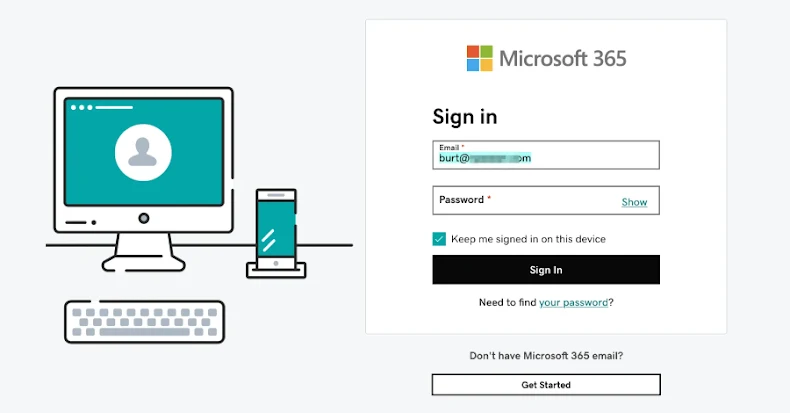
Once the package is live on the npm registry, the “malware” proceeds to create an HTML file with a reference to the UNPKG CDN associated with the newly published package (e.g., “unpkg[.]com/redirect-xs13nr@1.0.0/beamglea.js”). The threat actor is said to be taking advantage of this behavior to distribute HTML payloads that, when opened, load JavaScript from the UNPKG CDN and redirect the victim to Microsoft credential harvesting pages.
The JavaScript file “beamglea.js” is a redirect script that includes the victim’s email address and the URL to which the victim is navigated in order to capture their credentials. Socket said it found more than 630 HTML files that masquerade as purchase orders, technical specifications, or project documents.
In other words, the npm packages are not designed to execute malicious code upon installation. Instead, the campaign leverages npm and UNPKG for hosting the phishing infrastructure. It’s currently not clear how the HTML files are distributed, although it’s possible they are propagated via emails that trick recipients into launching the specially crafted HTML files.
“When victims open these HTML files in a browser, the JavaScript immediately redirects to the phishing domain while passing the victim’s email address via URL fragment,” Socket said.
“The phishing page then pre-fills the email field, creating a convincing appearance that the victim is accessing a legitimate login portal that already recognizes them. This pre-filled credential significantly increases the attack’s success rate by reducing victim suspicion.”
The findings once again highlight the ever-evolving nature of threat actors who are constantly adapting their techniques to stay ahead of defenders, who are also constantly developing new techniques to detect them. In this case, it underscores the abuse of legitimate infrastructure at scale.
“The npm ecosystem becomes unwitting infrastructure rather than a direct attack vector,” Pandya said. “Developers who install these packages see no malicious behavior, but victims opening specially crafted HTML files are redirected to phishing sites.”
“By publishing 175 packages across 9 accounts and automating victim-specific HTML generation, the attackers created a resilient phishing infrastructure that costs nothing to host and leverages trusted CDN services. The combination of npm’s open registry, unpkg.com’s automatic serving, and minimal code creates a reproducible playbook that other threat actors will adopt.”
