

Close Menu
TechurzTechurz

    Subscribe to Updates

    Get the latest creative news from FooBar about art, design and business.

    What's Hot

    Why top talent is walking away from OpenAI and xAI

    February 13, 2026

    Fusion startup Helion hits blistering temps as it races toward 2028 deadline

    February 13, 2026

    AI burnout, billion-dollar bets, and Silicon Valley’s Epstein problem

    February 13, 2026
    Facebook X (Twitter) Instagram
    Trending
    • Why top talent is walking away from OpenAI and xAI
    • Fusion startup Helion hits blistering temps as it races toward 2028 deadline
    • AI burnout, billion-dollar bets, and Silicon Valley’s Epstein problem
    • Score, the dating app for people with good credit, is back
    • Didero lands $30M to put manufacturing procurement on ‘agentic’ autopilot
    • Eclipse backs all-EV marketplace Ever in $31M funding round
    • Complyance raises $20M to help companies manage risk and compliance
    • Meridian raises $17 million to remake the agentic spreadsheet
    Facebook X (Twitter) Instagram Pinterest Vimeo
    TechurzTechurz
    • Home
    • AI
    • Apps
    • News
    • Guides
    • Opinion
    • Reviews
    • Security
    • Startups
    TechurzTechurz
    Home»AI»China begins assembling its supercomputer in space
    AI

    China begins assembling its supercomputer in space

    TechurzBy TechurzMay 18, 2025No Comments2 Mins Read
    Share Facebook Twitter Pinterest LinkedIn Tumblr Reddit Telegram Email
    China begins assembling its supercomputer in space
    Share
    Facebook Twitter LinkedIn Pinterest Email

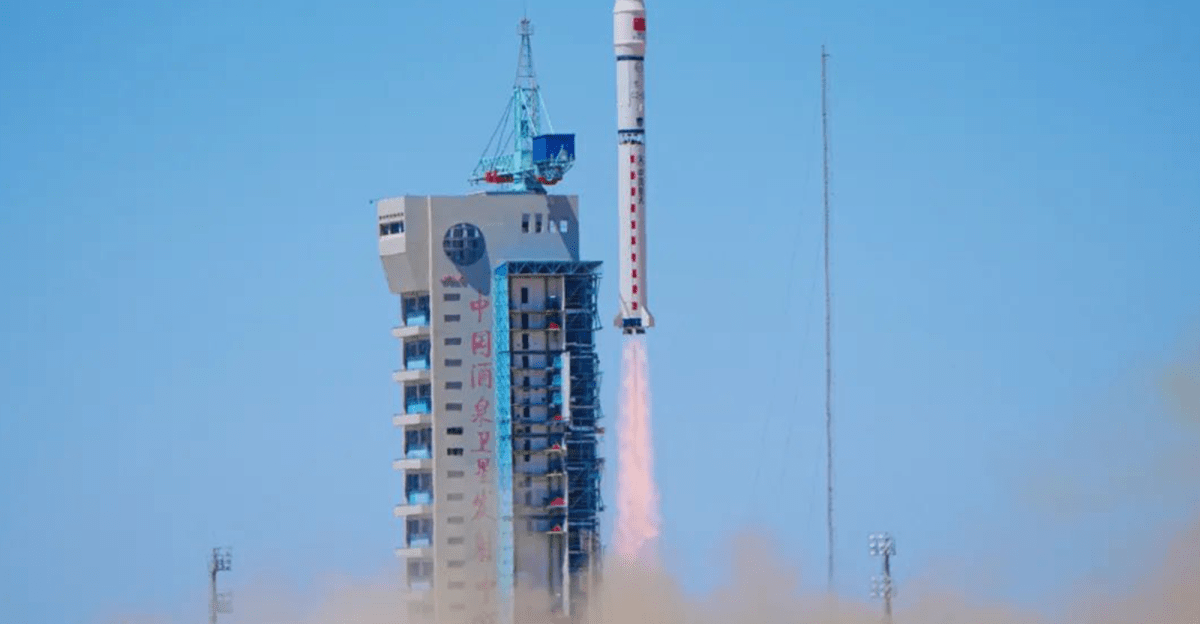
    China has launched the first 12 satellites of a planned 2,800-strong orbital supercomputer satellite network, reports Space News. The satellites, created by the company ADA Space, Zhijiang Laboratory, and Neijang High-Tech Zone, will be able to process the data they collect themselves, rather than relying on terrestrial stations to do it for them, according to ADA Space’s announcement (machine-translated).

    The satellites are part of ADA Space’s “Star Compute” program and the first of what it calls the “Three-Body Computing Constellation,” the company writes. Each of the 12 satellites has an onboard 8-billion parameter AI model and is capable of 744 tera operations per second (TOPS) — a measure of their AI processing grunt — and, collectively, ADA Space says they can manage 5 peta operations per second, or POPS. That’s quite a bit more than, say, the 40 TOPS required for a Microsoft Copilot PC. The eventual goal is to have a network of thousands of satellites that achieve 1,000 POPs, according to the Chinese government.

    The satellites communicate with each other at up-to-100Gbps using lasers, and share 30 terabytes of storage between them, according to Space News. The 12 launched last week carry scientific payloads, including an X-ray polarization detector for picking up brief cosmic phenomena such as gamma-ray bursts. The satellites also have the capability to create 3D digital twin data that can be used for purposes like emergency response, gaming, and tourism, ADA Space says in its announcement.

    The benefits of having a space-based supercomputer go beyond saving communications time, according to South China Morning Post. The outlet notes that traditional satellite transmissions are slow, and that “less than 10 per cent” of satellite data makes it to Earth, due to things like limited bandwidth and ground station availability. And Jonathan McDowell, a space historian and astronomer at Harvard University, told the outlet, “Orbital data centres can use solar power and radiate their heat to space, reducing the energy needs and carbon footprint.” He said both the US and Europe could carry out similar projects in the future, writes SCMP.

    assembling begins China Space Supercomputer
    Share. Facebook Twitter Pinterest LinkedIn Tumblr Email
    Previous ArticleEvery macOS version in order: from the first public beta to macOS 15
    Next Article Activision is abandoning Call of Duty: Warzone Mobile
    Techurz
    • Website

    Related Posts

    Opinion

    Northwood Space secures a $100M Series B and a $50M Space Force contract

    January 27, 2026
    Opinion

    This startup will send 1,000 people’s ashes to space — affordably — in 2027

    January 23, 2026
    Opinion

    Overview Energy wants to beam energy from space to existing solar farms

    December 10, 2025
    Add A Comment
    Leave A Reply Cancel Reply

    Top Posts

    College social app Fizz expands into grocery delivery

    September 3, 20251,585 Views

    A Former Apple Luminary Sets Out to Create the Ultimate GPU Software

    September 25, 202514 Views

    The Reason Murderbot’s Tone Feels Off

    May 14, 202511 Views
    Stay In Touch
    • Facebook
    • YouTube
    • TikTok
    • WhatsApp
    • Twitter
    • Instagram
    Latest Reviews

    Subscribe to Updates

    Get the latest tech news from FooBar about tech, design and biz.

    Most Popular

    College social app Fizz expands into grocery delivery

    September 3, 20251,585 Views

    A Former Apple Luminary Sets Out to Create the Ultimate GPU Software

    September 25, 202514 Views

    The Reason Murderbot’s Tone Feels Off

    May 14, 202511 Views
    Our Picks

    Why top talent is walking away from OpenAI and xAI

    February 13, 2026

    Fusion startup Helion hits blistering temps as it races toward 2028 deadline

    February 13, 2026

    AI burnout, billion-dollar bets, and Silicon Valley’s Epstein problem

    February 13, 2026

    Subscribe to Updates

    Get the latest creative news from FooBar about art, design and business.

    Facebook X (Twitter) Instagram Pinterest
    • About Us
    • Contact Us
    • Privacy Policy
    • Terms and Conditions
    • Disclaimer
    © 2026 techurz. Designed by Pro.

    Type above and press Enter to search. Press Esc to cancel.