

Close Menu
TechurzTechurz
    What's Hot

    AI labs want to pump the brakes, but Amazon and SpaceX are still blasting off

    July 31, 2026

    Smallest.ai raises $13M to build ultra-fast voice AI that sounds genuinely human

    July 31, 2026

    Repeat founder Ryan Williams raises $10M seed for an AI startup for private credit managers

    July 31, 2026
    X (Twitter) Pinterest YouTube LinkedIn WhatsApp
    Tech Pulse
    • AI labs want to pump the brakes, but Amazon and SpaceX are still blasting off
    • Smallest.ai raises $13M to build ultra-fast voice AI that sounds genuinely human
    • Repeat founder Ryan Williams raises $10M seed for an AI startup for private credit managers
    • Fusion power darling Commonwealth Fusion Systems raises another $1B
    • When will fusion power startup Commonwealth Fusion Systems go public?
    X (Twitter) Pinterest YouTube LinkedIn WhatsApp
    TechurzTechurz
    • Home
    • Tech Pulse
    • Future Tech
    • AI Systems
    • Cyber Reality
    • Disruption Lab
    • Signals
    TechurzTechurz
    Home - News - Scientists Discover the Key to Axolotls’ Ability to Regenerate Limbs
    News

    Scientists Discover the Key to Axolotls’ Ability to Regenerate Limbs

    TechurzBy TechurzJune 17, 2025Updated:May 11, 2026No Comments3 Mins Read
    Share Facebook Twitter Pinterest LinkedIn Tumblr Reddit Telegram Email
    Scientists Discover the Key to Axolotls’ Ability to Regenerate Limbs
    Share
    Facebook Twitter LinkedIn Pinterest Email

    In his current research, there are still gaps to be filled: how the CYP26B1 gradient is regulated, how retinoic acid connects to the Shox gene, and what downstream factors determine the formation of specific structures, such as the humerus or radius bones.

    From Healing to Regeneration

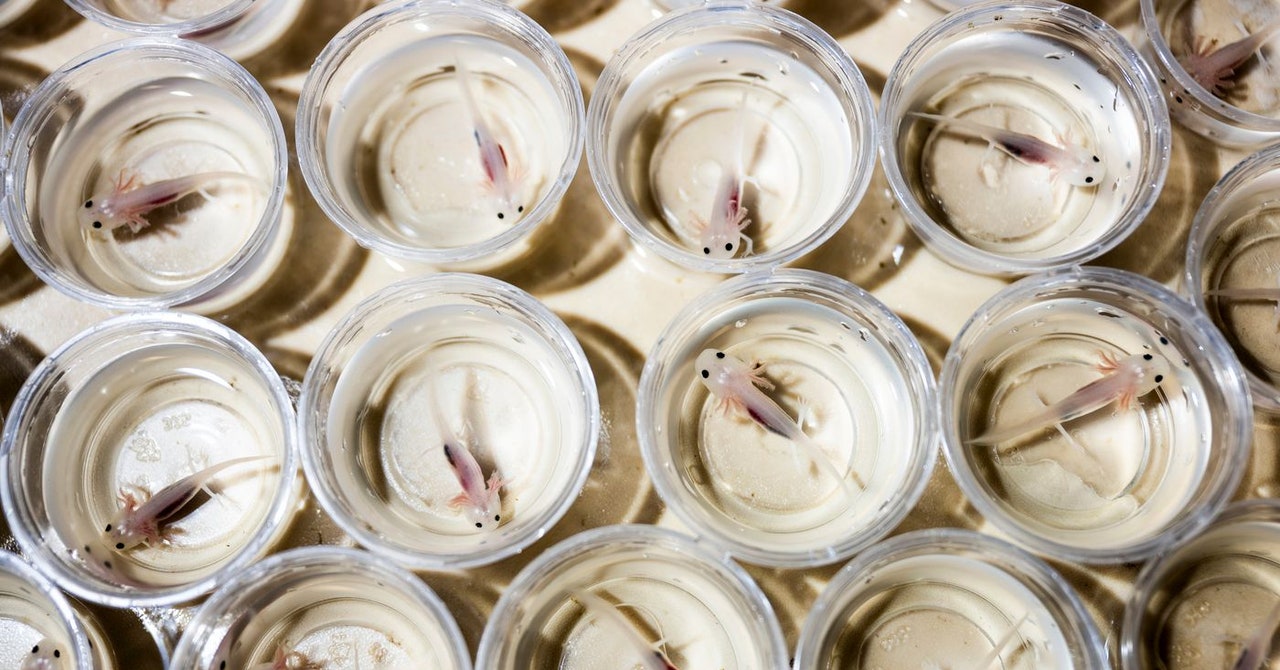
    Monaghan explains that axolotls do not possess a “magic gene” for regeneration, but share the same fundamental genes as humans. “The key difference lies in the accessibility of those genes. While an injury in humans activates genes that induce scarring, in salamanders there is cell de-differentiation: the cells return to an embryonic-like state, where they can respond to signals such as retinoic acid. This ability to return to a ‘developmental state’ is the basis of their regeneration,” explains the researcher.

    So, if humans have the same genes, why can’t we regenerate? “The difference is that the salamander can reaccess that [developmental] program after injury.” Humans cannot—they only access this development pathway during initial growth before birth. “We’ve had selective pressure to shut down and heal,” Monaghan says. “My dream, and the community’s dream, is to understand how to make the transition from scar to blastema.”

    James Monaghan.Photograph: Alyssa Stone/Northeastern University

    Monaghan says that, in theory, it would not be necessary to modify human DNA to induce regeneration, but to intervene at the right time and place in the body with regulatory molecules. For example, the molecular pathways that signal a cell to be located in the elbow on the pinky side—and not the thumb—could be reactivated in a regenerative environment using technologies such as Crispr. “This understanding could be applied in stem cell therapies. Currently, laboratory-grown stem cells do not know ‘where they are’ when they are transplanted. If they can be programmed with precise positional signals, they could integrate properly into damaged tissues and contribute to structural regeneration, such as forming a complete humerus,” says the researcher.

    After years of work, understanding the role of retinoic acid—studied since 1981—is a source of deep satisfaction for Monaghan. The scientist imagines a future where a patch placed on a wound can reactivate developmental programs in human cells, emulating the regenerative mechanism of the salamander. Although not immediate, he believes that cell engineering to induce regeneration is a goal already within the reach of science.

    He reflects on how the axolotl has had a second scientific life. “It was a dominant model a hundred years ago, then fell into disuse for decades, and has now reemerged thanks to modern tools such as gene editing and cell analysis. The team can study any gene and cell during the regenerative process. In addition, the axolotl has become a cultural icon of tenderness and rarity.”

    This story originally appeared on WIRED en Español and has been translated from Spanish.

    Ability Axolotls Discover Key Limbs Regenerate Scientists
    Share. Facebook Twitter Pinterest LinkedIn Tumblr Email
    Previous ArticleAmazon Prime Day Swells to a 4-Day Event, With Tariffs Still Looming Large
    Next Article Audio-Technica’s new wireless earbuds have a genuinely mind-blowing upgrade that leaves my AirPods feeling utterly inadequate
    Techurz
    • Website

    Related Posts

    Opinion

    AccessGrid raises $4.4M to help turn phones into key fobs

    October 28, 2025
    Cyber Reality

    Computer mice can eavesdrop on private conversations, researchers discover

    October 8, 2025
    Cyber Reality

    7 Key Workflows for Maximum Impact

    October 2, 2025
    Add A Comment
    Latest Tech Pulse

    College social app Fizz expands into grocery delivery

    September 3, 20252,290

    12 Father’s Day E-Card Sites That Are Actually Good

    June 4, 202523

    SolarSquare in talks to raise up to $60M as India’s rooftop solar market draws major VC interest

    May 23, 202622
    Stay In Touch
    • YouTube
    • WhatsApp
    • Twitter
    • Pinterest
    • LinkedIn

    Techurz helps readers stay ahead of digital change with clear, practical, future focused technology intelligence written today,searched tomorrow.

    X (Twitter) Pinterest YouTube LinkedIn WhatsApp
    Company
    • About Us
    • Contact Us
    • Our Authors / Editorial Team
    • Write For Us
    • Advertise
    Policy
    • Editorial Policy
    • Privacy Policy
    • Terms and Conditions
    • Affiliate Disclosure
    • Cookie Policy
    • Disclaimer
    • DMCA
    Explore
    • AI Systems
    • Cyber Reality
    • Future Tech
    • Disruption Lab
    • Signals
    • Tech Pulse
    • Sitemap

    Join the Techurz Brief

    The future does not arrive suddenly.
    Stay ahead with fast, sharp tech signals.

    Type above and press Enter to search. Press Esc to cancel.