


Sudden equipment failures. Supply chain surprises. Retaining staff as the goalposts move in real time. These aren’t challenges I’ve faced as a tech founder—but I have faced them running restaurants.
Twenty years ago, I cofounded a conveyor belt sushi concept that grew over 10 years across 12 units and six states. And if I’ve learned one thing from over two decades of operating restaurants, it’s that they require more discipline than any startup, with far less margin for error.
On paper, hospitality and tech don’t seem to overlap. Yet, many of my current practices as a leader were forged in a restaurant’s back of house, where staying close to the numbers and the customer experience was key to survival.
A master class in leading under pressure
I didn’t expect my time running a sushi chain to influence how I run my software company. But the leadership fundamentals that were critical in the restaurant business turned out to be the same ones needed in tech.
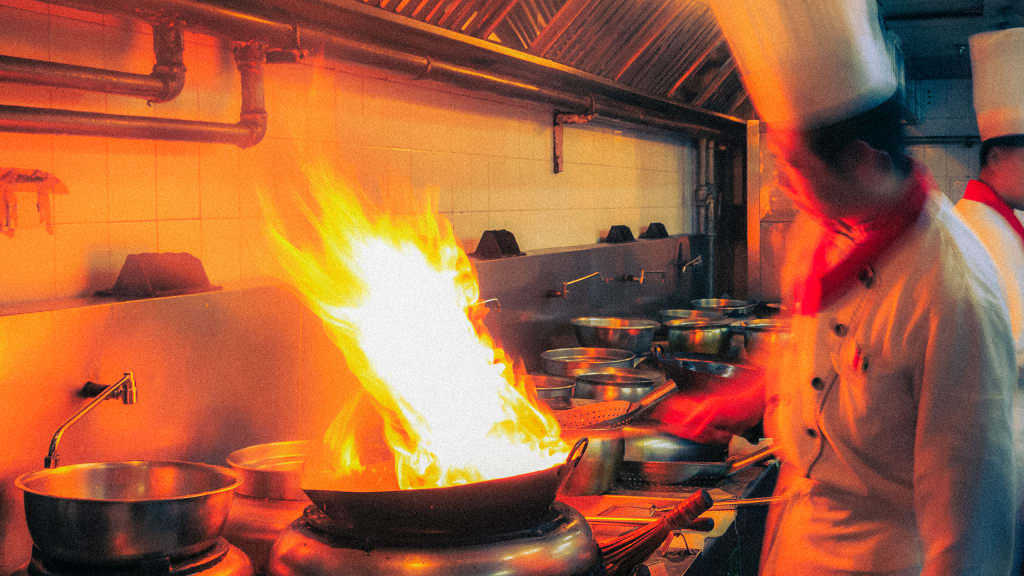
“Putting out fires” in tech usually means resolving a bug. At a restaurant, there could be a literal fire. Once, during a lunch rush at one of my restaurant chain’s Washington, D.C., locations, our hood system failed. As teriyaki chicken smoke filled the HVAC system and forced a 14-story building to evacuate, we scrambled to fix it without stopping the line.
Even when the crisis isn’t so dramatic, leaders have to rally the team quickly. Staff and customers depend on you in person, so you think on your feet to handle any challenge at hand.
As you juggle priorities on the floor, you’re also protecting razor-thin margins behind the scenes. Unlike in tech, there’s no bridge round to float you through a rough quarter. It’s your job to monitor costs and adjust staffing or procurement to keep things stable.
Anyone who’s worked in a restaurant knows that it’s a unique type of chaos. But the instincts the environment encourages can also drive resilient tech companies.
3 restaurant rules that tech leaders should borrow
Restaurants don’t have the luxury of recurring subscription payments—they have to fight every day for every dollar of revenue. That reality pushed me to be data-driven and relentlessly hands-on. While some lessons didn’t feel obvious at the time, they guide how I lead in tech today. For example:
1. Be actually customer obsessed
Well-run restaurants are maniacal about customer service. If you need proof, look to restaurateur Will Guidara’s concept of “unreasonable hospitality:” creating extraordinary experiences by exceeding customers’ expectations.
In this mindset, every touchpoint during a meal matters, from the first greeting to how the check arrives. Staff are expected to embody that service culture, no matter their role.
Tech companies love to say they’re customer-centric, but how often does that ethos extend across the org? If customer experience is siloed to success or support teams, you limit your ability to build with empathy.
Tech leaders should take a page from restaurants and make it everyone’s job to surprise and delight customers. It can be as simple as a program that lets team members nominate partners and clients to receive curated gifts—whether they’re celebrating a win or going through a difficult time. Real customer obsession shows up when service is a shared culture, not a siloed department.
2. Your unit economics matter
I could go on about how restaurants’ profit margins force you to get the math right. But one habit it encourages is a laser focus on unit level costs. If any element of a takeout order, from packaging to ingredients, is out of balance, your margin disappears. Before you know it, your profit & loss statements have red at the bottom.
Tech companies often overlook unit economics, but getting back to the basics of cost structure helps prevent unnecessary burn. Metrics like customer acquisition cost and lifetime value let you stay laser-focused on profitability and ensure you’re building a business that can sustain itself.
It’s surprising to me how many tech entrepreneurs will claim success when they have early clients with “strong usage metrics” but little or no revenue. If you can’t charge for it, is it really adding value? Rigor at the unit level lets you scale responsibly and course-correct as the market shifts.
3. Break down silos and build a culture of teamwork
Imagine if the kitchen and front-of-house staff stopped talking during a dinner rush. Orders would back up, wait times would spike, and customers would walk out before their food hit the table.
Since coordination is make-or-break in a restaurant, leaders are wired to instill a culture of teamwork. Front-of-house and back-of-house employees don’t point fingers at each other, they solve issues together.
In tech, building that instinct to collaborate means giving teams visibility into each other’s work. Engineers listen in on customer support calls and product managers shadow the QA team. When staff realizes how their work ladders toward the same goals, people start offering support without being asked.
In fact, we are so focused on hospitality for our customers that we often see too many people running toward the same problem. But that’s the better issue to have—it means teamwork is the norm, not an anomaly.
Bringing restaurant discipline to the startup world
When margins are tight, customer expectations are high, and every dollar of revenue takes real work, success depends on rallying employees with a culture of shared ownership. That’s the kind of leadership restaurant operators practice every day—why should startups be any different?
The stakes are distinct, but the playbook holds: get close to your customer, know your numbers inside and out, and build a team that solves problems shoulder to shoulder.
The sooner tech leaders embrace this discipline, the better their odds of scaling something that lasts.
The super-early-rate deadline for Fast Company’s Most Innovative Companies Awards is Friday, July 25, at 11:59 p.m. PT. Apply today.
