


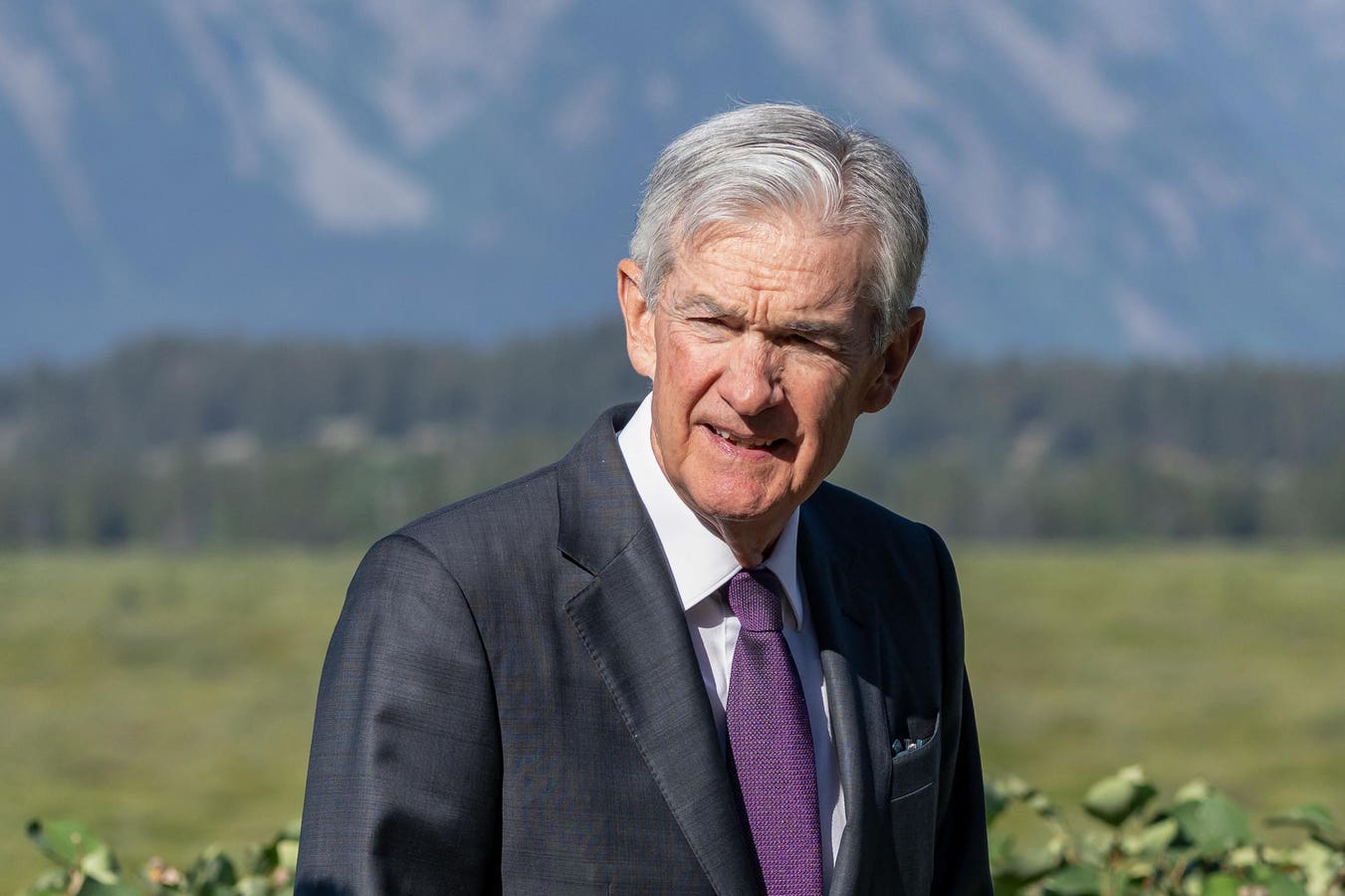
Chairman Powell carefully opened the door to an interest-rate cut in September, pointing to rising risks for the labor market.
© 2025 Bloomberg Finance LP
As the United States heads into Labor Day on September 1, the conversation about AI and jobs is moving from speculation to the center of policy. Federal Reserve Chair Jerome Powell used Jackson Hole to signal that a softer job market now sits alongside stubborn inflation in the Fed’s risk calculus. Markets heard an opening for rate cuts and soared. Workers want to know what that means for hiring, wages, and how AI will shape both.
AI and Jobs: The Moment Shaping the Fed’s Judgment
The monetary policy backdrop is crowded. There is pressure on the Fed to lower rates as growth cools and job gains get revised down. At Jackson Hole on August 22, Powell acknowledged that the balance of risks has shifted toward the labor side, which investors read as a modest pivot.
Stocks rallied on the view that the door is open to easing as soon as September if incoming jobs and inflation data cooperate.
The situation is unusual. Unemployment is low but maintained through a fragile balance with little sign of widespread layoffs, though hiring remains slow. Any rise in separations, including those driven by AI-powered productivity improvements, could disrupt that balance.
At the same time, the administration’s AI Action Plan looks at artificial intelligence as a driver of productivity, investment, and opportunity. The plan emphasizes acceleration, infrastructure, and skills, with agencies directed to track labor impacts as deployment scales. That policy stance matters because it encourages firms to adopt AI in ways that would lift output while improving efficiency.
On the data front, inflation may be edging up near term, including some of the one-time impact of tariffs. The personal consumption expenditures price index (PCE) excluding food and energy had its fastest increase in five months, up 2.9% in July from a year earlier.
That contrast explains the Fed’s careful tone. A weakening job market is not the same as a recession, but it argues for risk management.
AI and Jobs: What Jackson Hole Told Us
Jackson Hole is where central bankers step back and connect near-term choices to long-run themes. This year’s traditional Kansas City Fed-hosted gathering of central bankers focused on “Labor Markets in Transition: Demographics, Productivity and Macroeconomic Policy” from August 21 to 23. The meeting agenda says it all: tight demographics, technology diffusion and productivity are now core to policy.
Inside the AI and jobs discussion, one message stood out: AI is driving job reallocation, not mass displacement. Laura Veldkamp, professor of finance and economics at Columbia Business School, presented her research, concluding that only a small share of roles (4%) rely on AI for most tasks today. Where firms adopt AI, internal mobility rises, with almost twice the number of employees (15% v 8%) reporting changing jobs internally in the last twelve months when comparing AI adopter and non-adopter firms. Simultaneously, the perception of employee job security does not fall between adopter and non-adopter companies. These trends support a more measured view of near-term disruption. For the Fed, this data argues against assuming an immediate AI-driven surge in unemployment and for watching how adoption interacts with productivity and wages over time.
Public sentiment is shifting. Ruth Porat, president and chief investment officer at Alphabet and Google, speaking at the event, shared the changes to the profile of Google queries over the past two years. Initially, “many searches focused on the potential downside (‘will AI replace…’). Now people are focusing on the upside opportunities — more searches asking, ‘How can I?’ How can I capture it, use it, benefit from it?”
The Fed’s dual mandate forces it to balance parallel risks: if inflation remains sticky while hiring slows, policy needs to minimize the chance that weakness in jobs turns into a broader downturn. That is why markets heard that cuts are possible and why we need to keep a close eye on the next jobs and inflation prints.
The chairman’s speech signaled that, instead of a victory on prices, job market worries may be the path towards a cut. Powell’s framing is critical, and any near-term easing in interest rates will likely be linked to labor conditions rather than a wholesale shift in the inflation outlook. If AI productivity gains materialize unevenly, wage bargaining could look different across sectors, which the Fed will watch closely.
AI and Jobs: What to Watch Into Fall
Looking ahead to the fall, three factors matter most. First, AI and jobs will stay central to the Fed’s communication. Expect officials to monitor whether AI-enabled efficiency shows up in output per hour and whether that helps cool unit labor costs without a material rise in unemployment. If that mix holds, the Fed can justify a gradual easing path tied to labor risk management rather than an emergency response.
Second, track how AI use spreads inside firms. Early evidence suggests adopters are moving people rather than cutting them. That points to a reallocation period where internal transfers and upskilling carry as much weight as new headcount.
Third, watch how national policy shapes investment. The AI Action Plan’s acceleration agenda will amplify capital spending and deployment, which is helpful for growth if labor supply and training keep pace. The risk is uneven bargaining power if market concentration lets a few firms hold onto most of the gains. The Fed does not set competition policy, but it must assess how these dynamics contribute to prices and wages.
As we observe Labor Day, the Fed is working to keep inflation on track while avoiding unnecessary errors in the job market. The focus has shifted toward employment risk, and AI and jobs might be a common theme in speeches, projections, and press conferences in the upcoming weeks. Expect a cautious approach, reliance on clear data, and an ongoing test of how quickly AI adoption can boost output gains without leaving workers behind.
