

Close Menu
TechurzTechurz
    What's Hot

    IQM, Europe’s first public quantum company, admits the future of the tech is uncertain

    July 2, 2026

    Indian tech tycoon bets $30M of his own money to build AI alternative to Microsoft Office

    July 2, 2026

    Bending Spoons defies SaaS slump, surges 40% on first day of trading

    July 1, 2026
    X (Twitter) Pinterest YouTube LinkedIn WhatsApp
    Tech Pulse
    • IQM, Europe’s first public quantum company, admits the future of the tech is uncertain
    • Indian tech tycoon bets $30M of his own money to build AI alternative to Microsoft Office
    • Bending Spoons defies SaaS slump, surges 40% on first day of trading
    • Humble Robotics’ CEO says the tech finally caught up to the vision for autonomous vehicles
    • Autonomous vehicle hype is back, and Humble Robotics is bringing it to freights
    X (Twitter) Pinterest YouTube LinkedIn WhatsApp
    TechurzTechurz
    • Home
    • Tech Pulse
    • Future Tech
    • AI Systems
    • Cyber Reality
    • Disruption Lab
    • Signals
    TechurzTechurz
    Home - Cyber Reality - SlopAds Fraud Ring Exploits 224 Android Apps to Drive 2.3 Billion Daily Ad Bids
    Cyber Reality

    SlopAds Fraud Ring Exploits 224 Android Apps to Drive 2.3 Billion Daily Ad Bids

    TechurzBy TechurzSeptember 16, 2025Updated:May 10, 2026No Comments3 Mins Read
    Share Facebook Twitter Pinterest LinkedIn Tumblr Reddit Telegram Email
    SlopAds Fraud Ring Exploits 224 Android Apps to Drive 2.3 Billion Daily Ad Bids
    Share
    Facebook Twitter LinkedIn Pinterest Email


    Sep 16, 2025Ravie LakshmananAd Fraud / Mobile Security

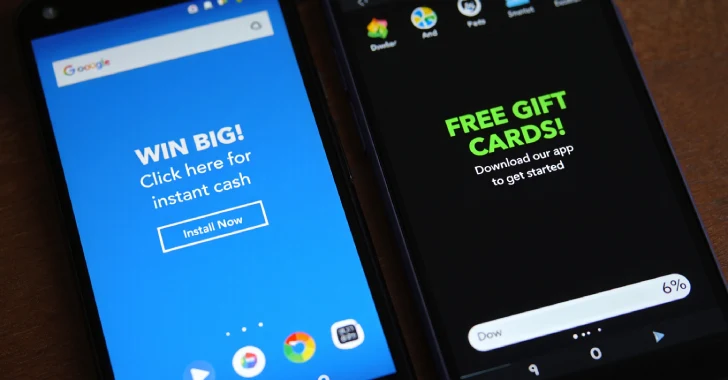
    A massive ad fraud and click fraud operation dubbed SlopAds ran a cluster of 224 apps, collectively attracting 38 million downloads across 228 countries and territories.

    “These apps deliver their fraud payload using steganography and create hidden WebViews to navigate to threat actor-owned cashout sites, generating fraudulent ad impressions and clicks,” HUMAN’s Satori Threat Intelligence and Research Team said in a report shared with The Hacker News.

    The name “SlopAds” is a nod to the likely mass-produced nature of the apps and the use of artificial intelligence (AI)-themed services like StableDiffusion, AIGuide, and ChatGLM hosted by the threat actor on the command-and-control (C2) server.

    The company said the campaign accounted for 2.3 billion bid requests a day at its peak, with traffic from SlopAds apps mainly originating from the U.S. (30%), India (10%), and Brazil (7%). Google has since removed all the offending apps from the Play Store, effectively disrupting the threat.

    What makes the activity stand out is that when a SlopAds-associated app is downloaded, it queries a mobile marketing attribution SDK to check if it was downloaded directly from the Play Store (i.e., organically) or if it was the result of a user clicking on an ad that redirected them to the Play Store listing (i.e., non-organically).

    The fraudulent behavior is initiated only in scenarios where the app was downloaded following an ad click, causing it to download the ad fraud module, FatModule, from the C2 server. On the other hand, if it was originally installed, the app behaves as advertised on the app store page.

    “From developing and publishing apps that only commit fraud under certain circumstances to adding layer upon layer of obfuscation, SlopAds reinforces the notion that threats to the digital advertising ecosystem are only growing in sophistication,” HUMAN researchers said.

    “This tactic creates a more complete feedback loop for the threat actors, triggering fraud only if they have reason to believe the device isn’t being examined by security researchers. It blends malicious traffic into legitimate campaign data, complicating detection.”

    The FatModule is delivered by means of four PNG image files that conceal the APK, which is then decrypted and reassembled to gather device and browser information, as well as conduct ad fraud using hidden WebViews.

    “One cashout mechanism for SlopAds is through HTML5 (H5) game and news websites owned by the threat actors,” HUMAN researchers said. “These game sites show ads frequently, and since the WebView in which the sites are loaded is hidden, the sites can monetize numerous ad impressions and clicks before the WebView closes.”

    Domains promoting SlopAds apps have been found to link back to another domain, ad2[.]cc, which serves as the Tier-2 C2 server. In all, an estimated 300 domains advertising such apps have been identified.

    The development comes a little over two months after HUMAN flagged another set of 352 Android apps as part of an ad fraud scheme codenamed IconAds.

    “SlopAds highlights the evolving sophistication of mobile ad fraud, including stealthy, conditional fraud execution and rapid scaling capabilities,” Gavin Reid, CISO at HUMAN, said.

    Android apps Bids billion Daily drive exploits Fraud Ring SlopAds
    Share. Facebook Twitter Pinterest LinkedIn Tumblr Email
    Previous ArticleWarning: Hackers have inserted credential-stealing code into some npm libraries
    Next Article US Tech Giants Race to Spend Billions in UK AI Push
    Techurz
    • Website

    Related Posts

    Opinion

    Robotaxis drive miles just to get cleaned and charged; this new startup wants to fix that

    June 26, 2026
    Opinion

    Beyond Instagram: Introducing the next generation of social apps

    June 6, 2026
    Cyber Reality

    Digital Identity Protection: 7 Hidden Risks Most Users Miss

    May 25, 2026
    Add A Comment
    Latest Tech Pulse

    College social app Fizz expands into grocery delivery

    September 3, 20252,290

    12 Father’s Day E-Card Sites That Are Actually Good

    June 4, 202523

    SolarSquare in talks to raise up to $60M as India’s rooftop solar market draws major VC interest

    May 23, 202622
    Stay In Touch
    • YouTube
    • WhatsApp
    • Twitter
    • Pinterest
    • LinkedIn

    Techurz helps readers stay ahead of digital change with clear, practical, future focused technology intelligence written today,searched tomorrow.

    X (Twitter) Pinterest YouTube LinkedIn WhatsApp
    Company
    • About Us
    • Contact Us
    • Our Authors / Editorial Team
    • Write For Us
    • Advertise
    Policy
    • Editorial Policy
    • Privacy Policy
    • Terms and Conditions
    • Affiliate Disclosure
    • Cookie Policy
    • Disclaimer
    • DMCA
    Explore
    • AI Systems
    • Cyber Reality
    • Future Tech
    • Disruption Lab
    • Signals
    • Tech Pulse
    • Sitemap

    Join the Techurz Brief

    The future does not arrive suddenly.
    Stay ahead with fast, sharp tech signals.

    Type above and press Enter to search. Press Esc to cancel.