


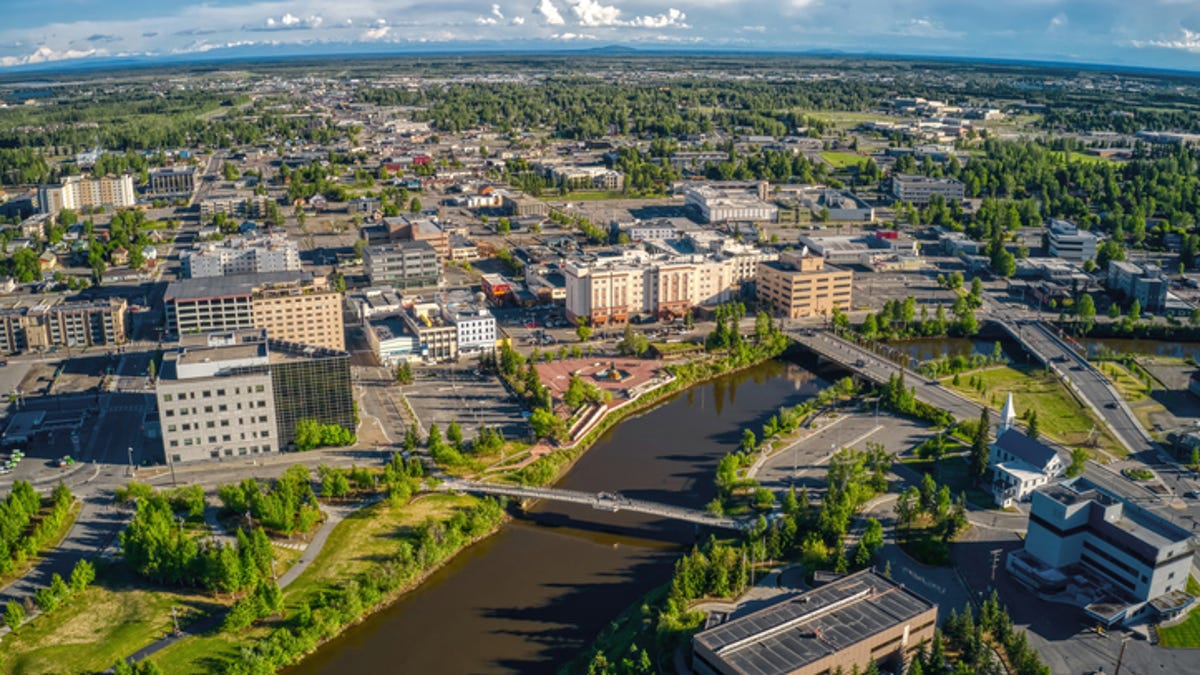
Alaska just crossed a first off its bucket list with the first-ever heat advisory for Sunday, June 15. Temperatures in central Alaska are expected to reach 86 degrees Fahrenheit (that’s 30 Celsius) through the weekend and into the week of June 16.
It’s not as if Alaska never gets hot in the summer. However, as Jason Laney, a warning coordination meteorologist with the National Weather Service in Fairbanks, Alaska, told CNET, “The frequency with which the heat is coming up is starting to be a bit of a concern.”
This heat advisory seems pretty big, especially for an area where most people don’t have air conditioners. But there’s an important caveat to keep in mind.
While this is the first heat advisory for Alaska issued by the National Weather Service, it’s not the first time that Alaska has seen high temperatures. This is simply the first time heat advisories were an option for offices in Fairbanks and Alaska’s capital city of Juneau. Before a change that took effect on June 2, the National Weather Service announced heat risks through special weather statements. According to a statement, this change will allow offices in Fairbanks and Juneau to communicate heat information more effectively. Anchorage, Alaska’s largest city, has opted out for now.
Residents of Fairbanks and surrounding areas need to prepare for these temperatures because this is a significant jump in heat, around 15 degrees above the area’s average.
How hot is it going to get?
The average temperature for Fairbanks, central Alaska, is in the low 70s through the bulk of the summer. The forecast for the next few days predicts temperatures in the mid-to-upper 80s. While some parts of the US may not bat an eye at the mid-80s (stop laughing, Arizona), Alaska is different. Many places don’t have air conditioners, and many buildings are designed to trap heat to get through cold winters. That means serious heat-related risks are associated with these temperatures, even indoors
The criteria for a heat advisory in Alaska range between 75 to 85 degrees Fahrenheit, depending on the location. Fairbanks’s limit is 85 degrees, and the forecast exceeds that limit.
That number was picked intentionally. Laney and the National Weather Service team worked with the state climatologist in Alaska to look at the last 10 to 20 years of temperatures, noting how frequently temperatures rose. Laney told me that it was important that the criteria temperature was met no more than three times a year.
“We wanted it to come out when it meant something,” Laney said.
Although the criteria are final, Laney said it has the potential to change.
“If we end up issuing too many of these things this year, then we know we set our criteria too low,” he said.
A flood watch was also issued on June 12 to warn people about river flooding from rapid snow melting.
Despite the heat advisory, these are not Alaska’s highest temperatures. In June 1969, Fairbanks’ record high was 96 degrees. Temperatures in Fairbanks generally rise to the mid-80s two to three times each year, though depending on how many days temperatures remain in the 80s, it could be one of the longest hot streaks on record for the area. The longest consecutive streak for the area was in 1991 with 14 days.
Alaskan weather deals in extremes
Alaska is an area of extremes. Winter is six months of snow on the ground with subfreezing temperatures but spring hits just as hard — and fast. According to Laney, it only takes four to six weeks to melt about three feet of snow. Trees turn green in 48 to 72 hours.
“The issue is that the body takes a while to acclimate to this,” Laney said. “Because the swing is so rapid, most people who spend a winter in Alaska aren’t used to the heat just yet.”
Another thing to remember is that official temperatures are reported in the shade, not the sunlight. This brings us to a unique quirk of Alaska: the sunshine lasts 20 to 21 hours a day at this time of year. Only about 2% of houses have AC, Laney told me, and many have larger windows that let in as much sunlight as possible in the winter. This can backfire in the summer when they let in that sunlight, and the six- to eight-inch-thick walls that accommodate extra insulation trap in the heat.
Alaska is warming faster than other places
The climate is warming because of emissions from fossil fuels and extreme heat is becoming more common. The World Meteorological Organization predicts that global heat will only worsen over the next five years. There’s roughly an 80% chance that in the next five years, we’ll surpass 2024, the hottest year ever recorded.
The effects of climate change are felt everywhere. Alaska, however, is warming two to three times faster than the rest of the globe, resulting in permafrost thawing, glaciers shrinking and transformations in Alaska’s ecosystems.
The statewide average air temperature has increased by 3 degrees in the past 60 years, and winter temperatures are up 6 degrees. If global emissions continue at the current rate, annual precipitation is also expected to grow 15% to 30%.
It’s challenging to quantify Alaska’s rapid warming’s impacts because they affect everything from people to roads to biodiversity in wildlife. For example, the permafrost soil under about 85% of Alaska’s surface could shift or shrink as it thaws because of continued extreme temperatures. In the long run, this could damage everything from pipelines to buildings, sewer systems and the water supply. And the change will be especially tough on groups more vulnerable to extreme temperatures, whether because of socioeconomic or medical conditions.
Heat safety tips to keep in mind
Per the heat advisory from the National Weather Service, “Individuals and pets not accustomed to these unusually hot temperatures for this region may experience heat-related concerns.”
It’s essential to prepare where you can for the heat, especially because many people won’t be able to escape the high temperatures. Small changes can go a long way.
Simple tips to use when it’s hot outside:
Signs of heat-related illness, such as heat exhaustion or heatstroke, include confusion, heavy sweating, nausea, muscle cramps, a fast pulse and cold and clammy skin.
