


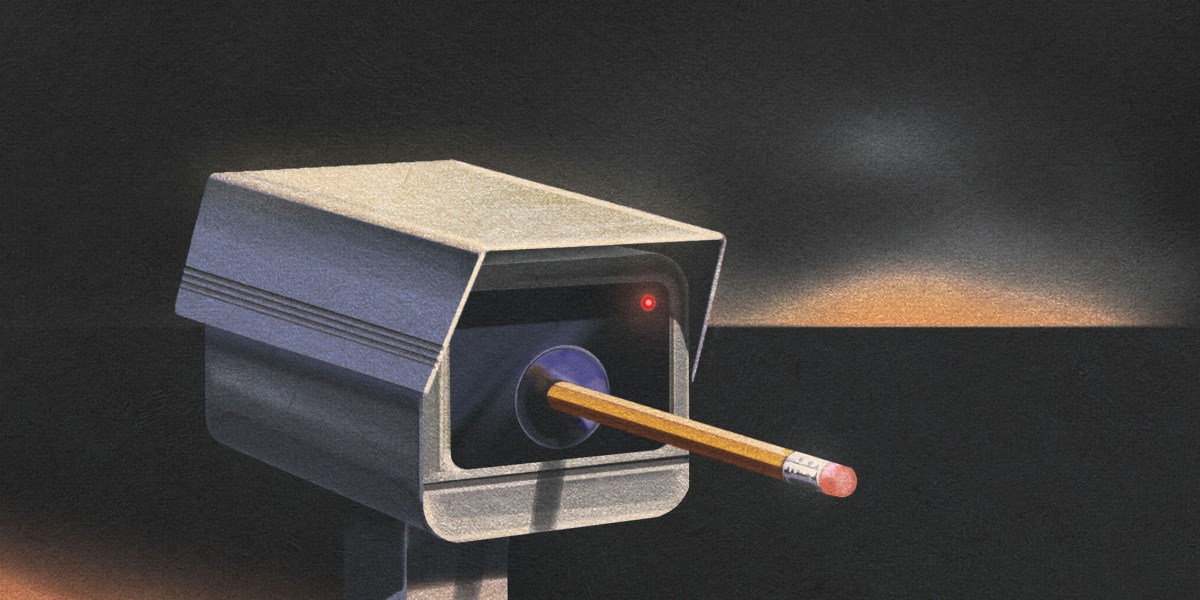
As another new book makes clear, this conversation also needs to include student data. Lindsay Weinberg’s Smart University: Student Surveillance in the Digital Age reveals how the motivations and interests of Big Tech are transforming higher education in ways that are increasingly detrimental to student privacy and, arguably, education as a whole.
Smart University: Student Surveillance in the Digital Age
Lindsay Weinberg
JOHNS HOPKINS UNIVERSITY PRESS, 2024
By “smart university,” Weinberg means the growing number of public universities across the country that are being restructured around “the production and capture of digital data.” Similar in vision and application to so-called “smart cities,” these big-data-pilled institutions are increasingly turning to technologies that can track students’ movements around campus, monitor how much time they spend on learning management systems, flag those who seem to need special “advising,” and “nudge” others toward specific courses and majors. “What makes these digital technologies so seductive to higher education administrators, in addition to promises of cost cutting, individualized student services, and improved school rankings, is the notion that the integration of digital technology on their campuses will position universities to keep pace with technological innovation,” Weinberg writes.
Readers of Smart University will likely recognize a familiar logic at play here. Driving many of these academic tracking and data-gathering initiatives is a growing obsession with efficiency, productivity, and convenience. The result is a kind of Silicon Valley optimization mindset, but applied to higher education at scale. Get students in and out of university as fast as possible, minimize attrition, relentlessly track performance, and do it all under the guise of campus modernization and increased personalization.
Under this emerging system, students are viewed less as self-empowered individuals and more as “consumers to be courted, future workers to be made employable for increasingly smart workplaces, sources of user-generated content for marketing and outreach, and resources to be mined for making campuses even smarter,” writes Weinberg.
At the heart of Smart University seems to be a relatively straightforward question: What is an education for? Although Weinberg doesn’t provide a direct answer, she shows that how a university (or society) decides to answer that question can have profound impacts on how it treats its students and teachers. Indeed, as the goal of education becomes less to produce well-rounded humans capable of thinking critically and more to produce “data subjects capable of being managed and who can fill roles in the digital economy,” it’s no wonder we’re increasingly turning to the dumb idea of smart universities to get the job done.
If books like Means of Control and Smart University do an excellent job exposing the extent to which our privacy has been compromised, commodified, and weaponized (which they undoubtedly do), they can also start to feel a bit predictable in their final chapters. Familiar codas include calls for collective action, buttressed by a hopeful anecdote or two detailing previously successful pro-privacy wins; nods toward a bipartisan privacy bill in the works or other pieces of legislation that could potentially close some glaring surveillance loophole; and, most often, technical guides that explain how each of us, individually, might better secure or otherwise take control and “ownership” of our personal data.
The motivations behind these exhortations and privacy-centric how-to guides are understandable. After all, it’s natural for readers to want answers, advice, or at least some suggestion that things could be different—especially after reading about the growing list of degradations suffered under surveillance capitalism. But it doesn’t take a skeptic to start to wonder if they’re actually advancing the fight for privacy in the way that its advocates truly want.
