


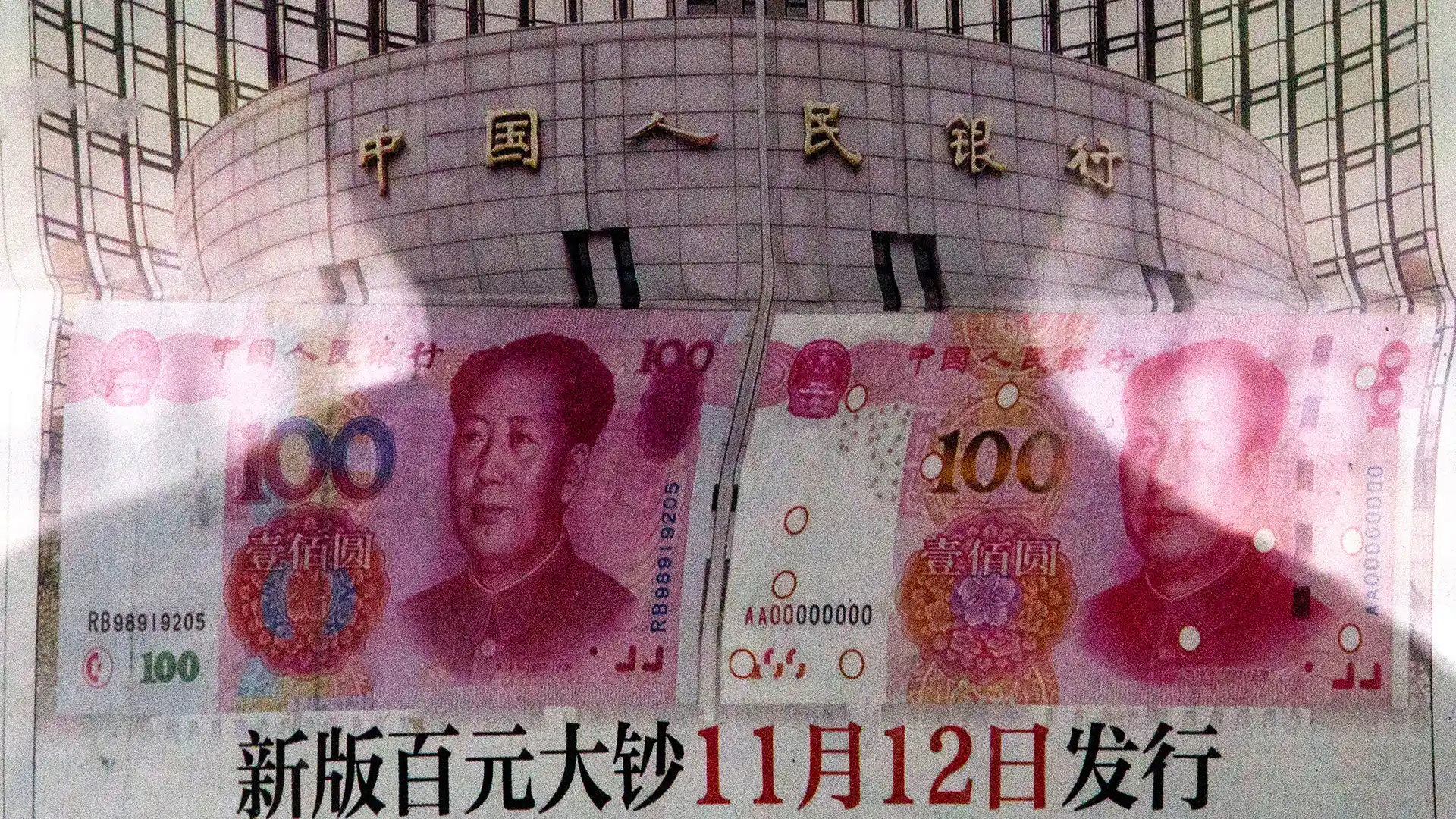
China has been expanding the use of digital currencies as it promotes wider use of its yuan, or renminbi, to reflect its status as the world’s second-largest economy and challenge the overwhelming sway of the U.S. dollar in international trade and finance.
However, restrictions on access to Chinese financial markets and limits on convertibility of the yuan, or “people’s money,” are big obstacles blocking its global use.
Still, Hong Kong already has stablecoin regulations and some Chinese experts are pushing for regulations to prepare for a possible stablecoin pegged to the yuan.
Officials at the People’s Bank of China and State Council Information Office in Beijing did not immediately respond to requests for comment on a Reuters report that the State Council, or Cabinet, is preparing to issue a plan for internationalizing the yuan that might include a yuan stablecoin.
In the U.S., President Donald Trump has made cryptofriendly policies a priority for his administration. He signed a law, the GENIUS Act, last month regulating stablecoins.
How stablecoins work
Stablecoins are digital currencies whose value is linked to a specific currency such as the U.S. dollar. They can be used as a substitute in situations where currency transactions might be difficult or costly. They are different from cryptocurrencies like Bitcoin in that their only purpose is to be a means of payment, not an investment meant to be traded to gain value.
Dollar stablecoins are typically bought and sold for $1 each. They are based on a reserve equal to their value, but are issued by private institutions, not central banks like the U.S. Federal Reserve.
Stablecoins are not Digital Central Bank Currencies, which are digital versions of currencies issued by central banks. They are based on blockchain-based distributed ledgers. They are “stable” in the sense that their value is anchored to the currency they are based on.
Critics of stablecoins say that since they are essentially a proxy for ordinary currencies that can bypass banking systems and safeguards set up to manage traditional financial transactions, they may be most useful for illegal purposes.
China inches toward using digital currencies
China launched its own digital yuan, the e-CNY issued by its central bank, on a trial basis in 2019, and McDonalds was an early participant in that project. Chinese regulators have banned mining, trading and other dealings in private, decentralized digital currencies like Bitcoin, while encouraging use of the digital yuan.
The nearly universal use of electronic payments has facilitated use of the e-CNY in the Chinese mainland, with some cities using it to pay wages of civil servants. State media reported that as of July 2024, there were 7.3 trillion yuan worth of transactions using the currency in areas where it is being used on a trial basis.
China has also been promoting use of e-CNY in Africa, as it expands business dealings on the continent.
But e-CNY are not stablecoins. Experts say regulations are needed to safely manage use of stablecoins and to ensure they could be used smoothly with bank accounts and payment systems.
Hong Kong’s role in digital currencies
Hong Kong, a former British colony that has its own financial markets, currency and partly autonomous legal system, enacted a stablecoin law that took effect on Aug. 1.
Aimed at attracting wealthy investors who want to use digital currencies and other financial products, it requires that a stablecoin linked to the Hong Kong dollar must be equal to the Hong Kong dollar reserves for that digital currency.
As a global duty-free port and financial hub, Hong Kong has often served as a base for trying out paths toward liberalizing Chinese financial markets. But new regulations specifically governing yuan stablecoin would be needed if such a digital currency were issued for use in Hong Kong, Liu Xiaochun, deputy director of the Shanghai Institute of New Finance, recently wrote in a report on the Chinese financial website Yicai.com.
China’s limits on cross-border dealings
China’s currency is not freely convertible in world financial markets and its stringent controls on foreign exchange are the biggest hindrance toward making the yuan a global currency, experts say.
According to the Society for Worldwide Interbank Financial Telecommunication, or SWIFT, as of June, the yuan was the sixth most active currency for global payments by value, with a share of 2.88%. Its use peaked in July 2024 at about 4.7%.
It’s used more often in trade financing, where it accounts for nearly 6% of such dealings, according to that report.
The lion’s share of yuan transactions take place in Hong Kong.
The U.S. dollar’s share as a global payment currency was over 47% as of June, followed by the euro, the British pound, the Canadian dollar and the Japanese yen, the report said.
—Elaine Kurtenbach, AP business writer
AP Researcher Shihuan Chen contributed.
The early-rate deadline for Fast Company’s Most Innovative Companies Awards is Friday, September 5, at 11:59 p.m. PT. Apply today.
