


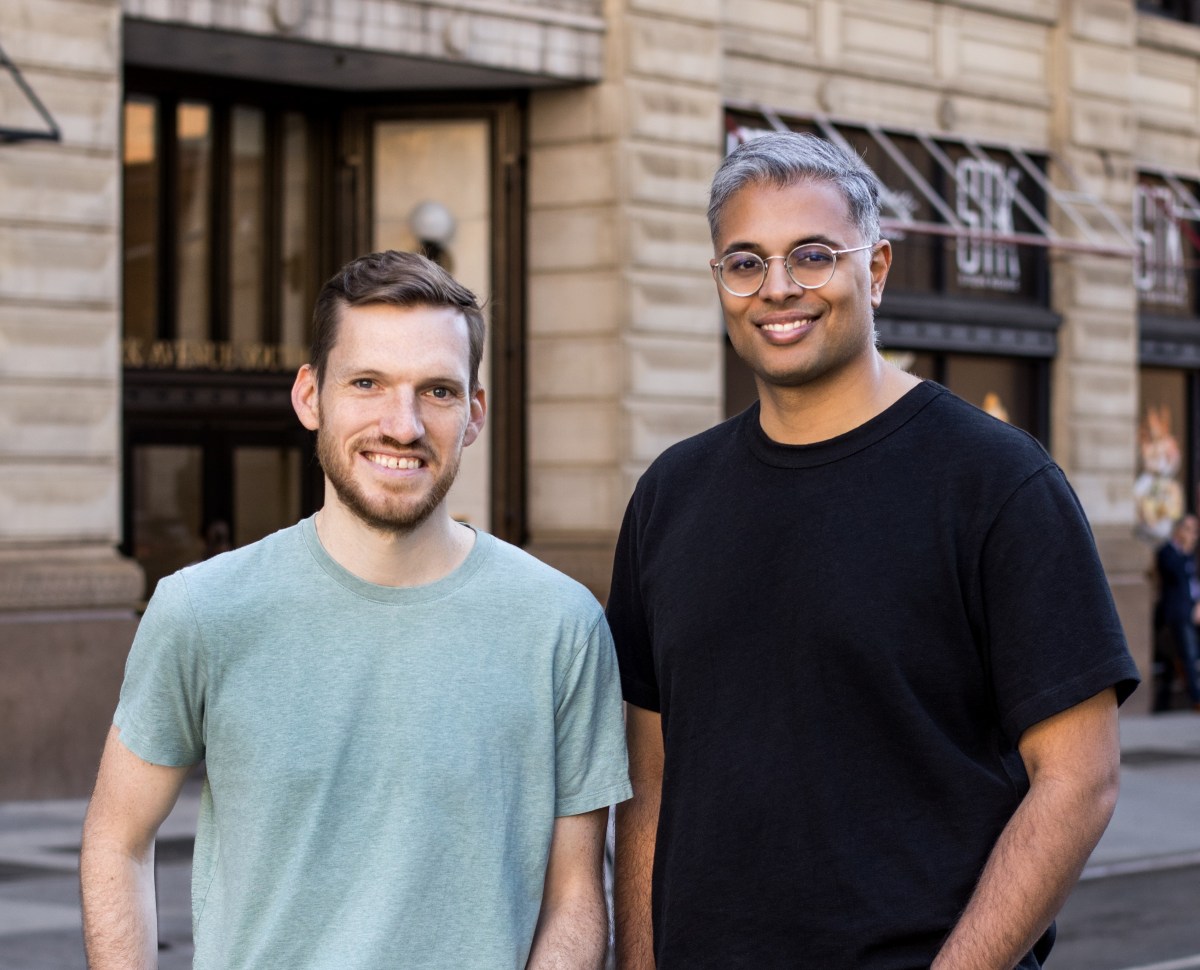
AI coding agent startup Niteshift has raised a $7 million seed round led by Greylock’s Jerry Chen. That’s a modest sum by AI standards, but the startup, founded by two former early Datadog engineers, has attracted some big-name angels like Reid Hoffman, Datadog’s Olivier Pomel and Alexis Lê-Quôc, Ankur Goyal of Braintrust, and Misha Laskin of Reflection AI.
Founded by Sajid Mehmood and Conor Branagan, who helped grow Datadog from its early days to a multi-billion valuation, the company has entered the crowded AI coding space with a compelling idea: Why would any company trust its most sensitive assets — code that runs its products — directly to model makers like OpenAI and Anthropic, given that those companies are constantly “killing” startups and businesses by launching competing apps?
Mehmood, who is CEO, likens it to Datadog’s early growth, when the monitoring company won e-commerce customers who refused to build on Amazon Web Services. It was a reasonable concern, given that Amazon was simultaneously putting many of those same retail stores out of business in what became known as the “retail apocalypse.”
The AI equivalent, as Mehmood sees it, is already underway. Anthropic, OpenAI, and others are moving fast into vertical software markets — what some are calling the SaaSpocalypse.
“At Datadog we saw this clearly,” Mehmood said. “A big part of our multicloud business came from e-commerce businesses who did not want to run on Amazon, right? … We are absolutely going to see the same dynamic as Anthropic goes to compete in legal and healthcare and finance and whatever else.”
The bet is that companies will increasingly seek infrastructure that separates the coding model from all the other orchestration needed to ensure AI-generated code is properly vetted and maintained (and that they’ll want a vendor without a competing agenda).
To be clear, Niteshift isn’t replacing Claude Code or Codex, the two most popular coding agents. It argues that it reduces dependence on them.
Niteshift’s AI coding cloud will route between those models — along with open source options and others — based on the needs of each project.
“Being able to switch between GPT and cloud models is important,” Mehmood said, “Everybody’s worried about getting stepped on by these giants.”
That idea is what got Greylock’s Chen to bite.
“As the frontier labs move up the stack, there’s an opportunity to offer customers an alternate path: unbundling their agents from the infrastructure they run on,” Chen told TechCrunch. “Niteshift is building the platform that enables this for coding agents, letting customers invest deeply in their developer tooling without locking themselves into a single model or agent vendor.”
More than that, Niteshift isn’t selling tokens. It sells infrastructure, charging like a cloud provider, with per-minute usage rates.
“Everybody else is selling labor replacement intelligence,” Mehmood said. “We’re selling software to agents, as opposed to humans — but we’re still out here selling software.”
Even so, Niteshift is entering a crowded market of AI coding tools. Model independence isn’t a novel idea, and Niteshift’s competitors have a massive head start. That includes Cursor, though it could soon be gobbled up by SpaceX; Cognition, which just raised $1 billion at a $26 billion valuation; Amazon Bedrock; and AI gateway platform OpenRouter, which just raised $113 million at a $1.3 billion valuation. The list goes on.
Mehmood’s answer to all of that is the founding team’s depth. Mehmood and Branagan didn’t just study these problems — they lived them, scaling Datadog through the exact growing pains that large engineering organizations now face with AI-generated code. Teams, he said, need to run, test, and verify software autonomously in their real production environments, and they need infrastructure built by people who’ve done it at scale.
When you purchase through links in our articles, we may earn a small commission. This doesn’t affect our editorial independence.
