

Close Menu
TechurzTechurz
    What's Hot

    Arena, the AI leaderboard everyone uses, is now a $100M business

    June 29, 2026

    Omen AI’s plan to optimize data centers is all wet

    June 29, 2026

    Asian AI startups launch Mythos-like models as Anthropic’s export ban drags on

    June 27, 2026
    X (Twitter) Pinterest YouTube LinkedIn WhatsApp
    Tech Pulse
    • Arena, the AI leaderboard everyone uses, is now a $100M business
    • Omen AI’s plan to optimize data centers is all wet
    • Asian AI startups launch Mythos-like models as Anthropic’s export ban drags on
    • Corgi, the buzzy Y Combinator-backed insurance tech startup, says it didn’t steal an open source product
    • OpenAI poaches Uber India chief to lead its biggest market outside the US
    X (Twitter) Pinterest YouTube LinkedIn WhatsApp
    TechurzTechurz
    • Home
    • Tech Pulse
    • Future Tech
    • AI Systems
    • Cyber Reality
    • Disruption Lab
    • Signals
    TechurzTechurz
    Home - Security - Encryption Made for Police and Military Radios May Be Easily Cracked
    Security

    Encryption Made for Police and Military Radios May Be Easily Cracked

    TechurzBy TechurzAugust 8, 2025No Comments3 Mins Read
    Share Facebook Twitter Pinterest LinkedIn Tumblr Reddit Telegram Email
    Encryption Made for Police and Military Radios May Be Easily Cracked
    Share
    Facebook Twitter LinkedIn Pinterest Email

    For this reason, Murgatroyd noted that purchasers of TETRA-based radios are free to deploy other solutions for end-to-end encryption on their radios, but he acknowledges that the one produced by the TCCA and endorsed by ETSI “is widely used as far as we can tell.”

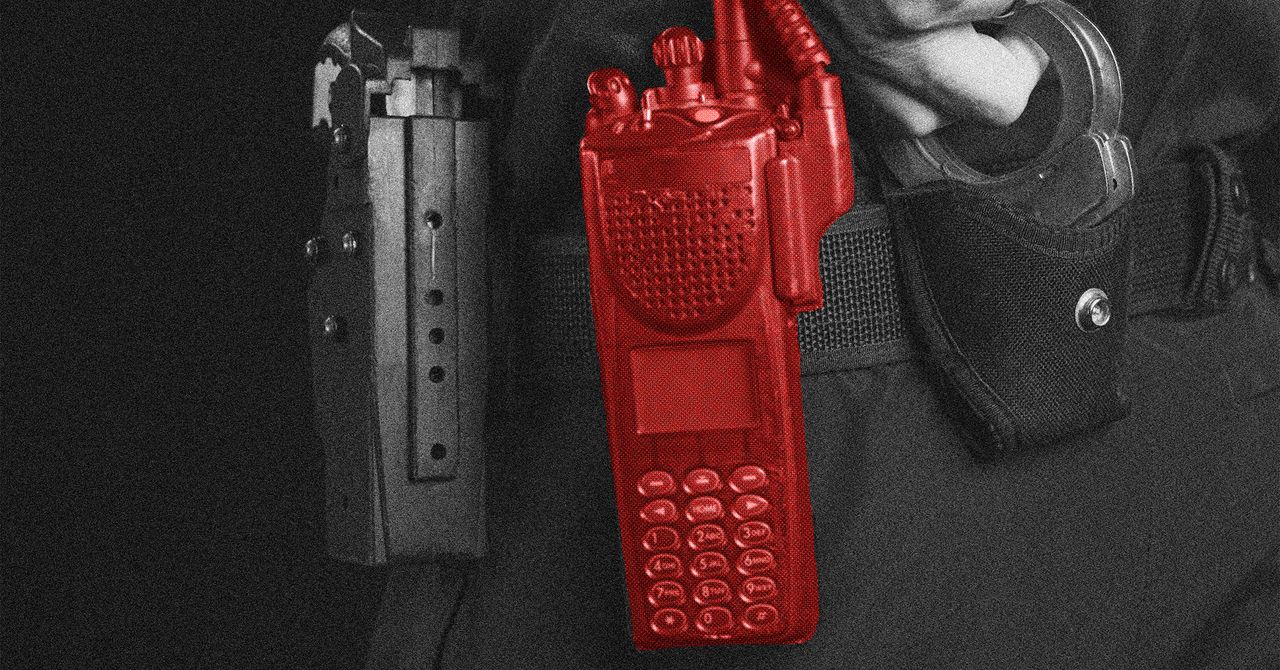
    Although TETRA-based radio devices are not used by police and military in the US, the majority of police forces around the world do use them. These include police forces in Belgium and Scandinavian countries, as well as East European countries like Serbia, Moldova, Bulgaria, and Macedonia, and in the Middle East in Iran, Iraq, Lebanon, and Syria. The Ministries of Defense in Bulgaria, Kazakhstan, and Syria also use them, as do the Polish military counterintelligence agency, the Finnish defense forces, and Lebanon and Saudi Arabia’s intelligence services. It’s not clear, however, how many of these also deploy end-to-end decryption with their radios.

    The TETRA standard includes four encryption algorithms—TEA1, TEA2, TEA3 and TEA4—that can be used by radio manufacturers in different products, depending on the intended customer and usage. The algorithms have different levels of security based on whether the radios will be sold in or outside Europe. TEA2, for example, is restricted for use in radios used by police, emergency services, military, and intelligence agencies in Europe. TEA3 is available for police and emergency services radios used outside Europe but only in countries deemed “friendly” to the EU. Only TEA1 is available for radios used by public safety agencies, police agencies, and militaries in countries deemed not friendly to Europe, such as Iran. But it’s also used in critical infrastructure in the US and other countries for machine-to-machine communication in industrial control settings such as pipelines, railways, and electric grids.

    All four TETRA encryption algorithms use 80-bit keys to secure communication. But the Dutch researchers revealed in 2023 that TEA1 has a feature that causes its key to get reduced to just 32 bits, which allowed the researchers to crack it in less than a minute.

    In the case of the E2EE, the researchers found that the implementation they examined starts with a key that is more secure than ones used in the TETRA algorithms, but it gets reduced to 56 bits, which would potentially let someone decrypt voice and data communications. They also found a second vulnerability that would let someone send fraudulent messages or replay legitimate ones to spread misinformation or confusion to personnel using the radios.

    The ability to inject voice traffic and replay messages affects all users of the TCCA end-to-end encryption scheme, according to the researchers. They say this is the result of flaws in the TCCA E2EE protocol design rather than a particular implementation. They also say that “law enforcement end users” have confirmed to them that this flaw is in radios produced by vendors other than Sepura.

    But the researchers say only a subset of end-to-end encryption users are likely affected by the reduced-key vulnerability because it depends how the encryption was implemented in radios sold to various countries.

    cracked Easily encryption Military police Radios
    Share. Facebook Twitter Pinterest LinkedIn Tumblr Email
    Previous ArticleTrump Is Undermining Trust in Official Economic Statistics. China Shows Where That Path Can Lead
    Next Article OpenAI unveils GPT-5 model, featuring improved coding and problem-solving chops
    Techurz
    • Website

    Related Posts

    Opinion

    This startup’s super metals could soon be in military drones, luxury watches, and chef’s knives

    June 16, 2026
    Opinion

    Quantum Space’s military SPAC is trying to catch SpaceX’s IPO wave

    June 11, 2026
    Opinion

    A former Thiel fellow’s startup just launched a drone it says can replace police helicopters

    March 25, 2026
    Add A Comment
    Latest Tech Pulse

    College social app Fizz expands into grocery delivery

    September 3, 20252,290

    SolarSquare in talks to raise up to $60M as India’s rooftop solar market draws major VC interest

    May 23, 202622

    Future of Digital Privacy and Security: 7 Truths Nobody Tells You

    May 25, 202619
    Stay In Touch
    • YouTube
    • WhatsApp
    • Twitter
    • Pinterest
    • LinkedIn

    Techurz helps readers stay ahead of digital change with clear, practical, future focused technology intelligence written today,searched tomorrow.

    X (Twitter) Pinterest YouTube LinkedIn WhatsApp
    Company
    • About Us
    • Contact Us
    • Our Authors / Editorial Team
    • Write For Us
    • Advertise
    Policy
    • Editorial Policy
    • Privacy Policy
    • Terms and Conditions
    • Affiliate Disclosure
    • Cookie Policy
    • Disclaimer
    • DMCA
    Explore
    • AI Systems
    • Cyber Reality
    • Future Tech
    • Disruption Lab
    • Signals
    • Tech Pulse
    • Sitemap

    Join the Techurz Brief

    The future does not arrive suddenly.
    Stay ahead with fast, sharp tech signals.

    Type above and press Enter to search. Press Esc to cancel.