


ZDNET’s key takeaways
- The LG Gram 17 (2025) is available now for $1,699.
- You won’t find a thinner, lighter 17-inch laptop out there, and the Intel “Lunar Lake” processor is a big upgrade from last year’s model.
- The touchscreen is wobbly, the black matte finish attracts fingerprints, and I wish it had a haptic trackpad.
more buying choices
Follow ZDNET: Add us as a preferred source on Google.
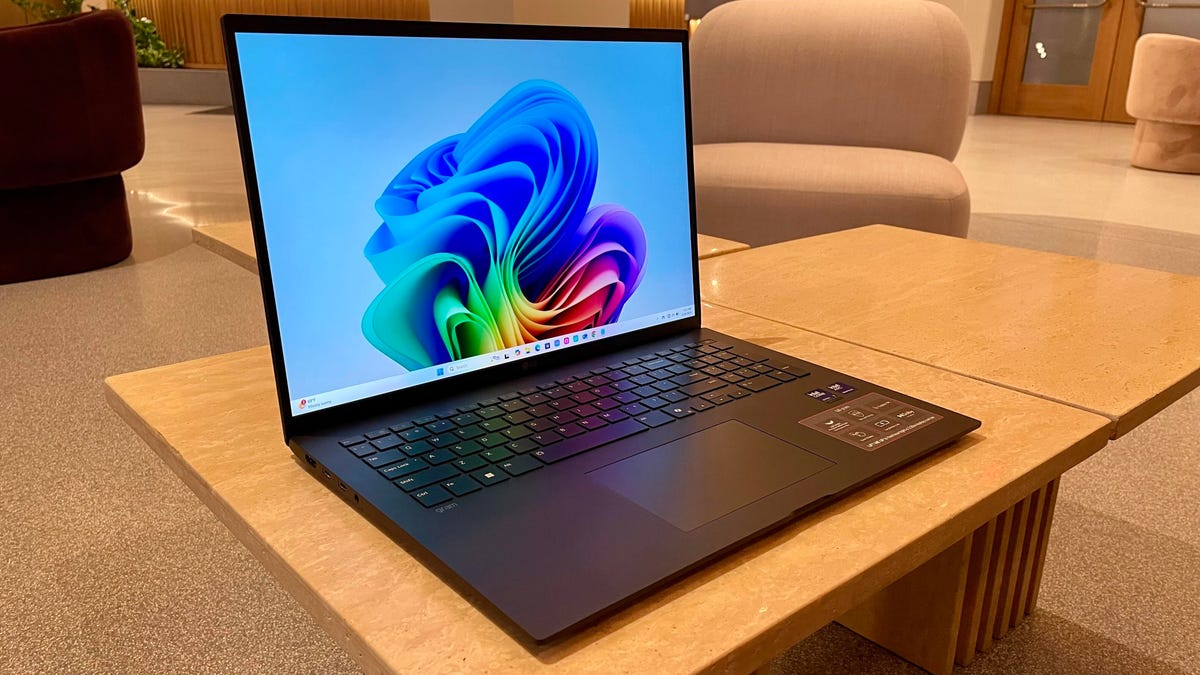
So you like a big screen, 17-inch laptop, but you want to carry it around without breaking your back? I got you. LG’s Gram 17 lives up to its name as the lightest, thinnest 17-inch laptop you’ve likely laid your eyes on.
We’ve gone hands-on with multiple models from LG’s Gram series over the past few years, such as 2024’s Gram Pro 17 and the Gram Pro 16 2-in-1. Luckily, the new Gram 17 has some improvements over last year’s model, and honestly, the differences between the base model and the Pro aren’t as prominent as you might expect.
Also: I’ve tested dozens of ultralight laptops this year, but I keep coming back to this one
The Gram 17 is an exceedingly light laptop for its size, measuring just 0.74 inches thin and weighing 3.2 pounds. For reference, this is lighter than many 16, 14, or even some 13-inch laptops, and it doesn’t sacrifice hardware to get there.
The Gram 17 is equipped with an Intel Core Ultra 7 “Lunar Lake” processor, 32GB of RAM, and a terabyte of storage, putting it in line with other competitive mid-to-upper-tier laptops in the same price range.
Where it stands out from the crowd, however, is its form. The record-holding lightness results in a laptop that’s easy to carry around, especially if you are a hybrid worker who commutes to the office. I took this laptop with me everywhere for over a week and barely noticed it in my bag.
Also: I found a Lenovo laptop that I wouldn’t mind ditching my MacBook Pro for
Further, the 17-inch touchscreen display is everything you’d expect from a WQXGA (2560×1600) IPS: it’s bright, crisp, and mitigates glare very well. I’m not a huge touchscreen person (I almost always prefer a mouse), but the sheer size of the screen on this laptop invites the user to interact with it in a way that’s slightly different than other laptops, and I found myself using it more often than expected.
Kyle Kucharski/ZDNET
That said, the very thin screen is rather wobbly and flexes back and forth with each press, which will peeve some users.
The other physical components of the laptop are sleek and well-designed. The full-size keyboard is rather standard, with comparatively flat keys that aren’t quite as premium as some of the other laptops I’ve tested recently, like HP’s Elitebook X G1a, but it’s functional.
Also: How to clear the cache on your Windows 11 PC (and why you shouldn’t wait to do it)
Similarly, the touchpad is large and responsive, although I have to say that I wish there were a haptic option. Also, the laptop’s overall size results in a wrist rest area that is quite expansive. Typing on the Gram 17 means your entire hand, and — depending on the size of your arms — mid forearms will be resting on the laptop. You will also need proper desk space, with the bottom half of the clamshell measuring 15 inches in length and 10 inches deep.
Kyle Kucharski/ZDNET
LG continues to produce its Gram series with a black matte finish that is, unfortunately, a bit of a fingerprint magnet. Depending on what kind of lighting you’re in, the laptop’s surface can show smudges and prints, and if you care about that sort of thing, it might be a bit distracting.
As far as other hardware on board goes, I/O is robust, with an HDMI port, two USB-Cs (both with power delivery and support for Thunderbolt 4 and DisplayPort), two USB-As, a headphone jack, and a Kensington lock slot. The speakers aren’t particularly good, sounding on the shallow side (influenced by the device’s ultrathin form, no doubt) but about what you’d expect from a mid-tier laptop.
The real power behind this laptop is internal, however. The addition of the Intel Core Ultra 7 (Series 2) “Lunar Lake” processor upgrades it to a truly competitive device rather than just an engineering showboat.
As with other laptops with Intel’s “Lunar Lake” series of processors, such as the Asus Zenbook S14, battery drain slows to a trickle when it’s idle, allowing for multi-day use without worrying about the charger.
Focused, sustained use, however, results in the kind of battery drain you’d expect, with about a full eight-hour day’s worth of work on one charge, skewing on the longer end — up to 10 hours, depending on how hard you push it. That’s to say, the battery life on this is very good, especially considering it’s powering a 17-inch display.
Also: This Dell laptop is my top choice for both work and travel – and it’s on sale
So, how does the Gram 17 differ from the Pro? First, the Pro has more horsepower, with a 16-core Intel Core Ultra 7, as opposed to the same chip but with eight cores on the base model. The Pro also has a bigger 90Wh battery compared to the base model’s 77Wh, meaning it can stay unplugged longer.
Despite the power, the Gram Pro 17 is also slightly thinner and lighter, as you’re paying for a more premium design. But side by side, the two laptops look nearly identical.
Neither 17-inch version comes with an OLED display (you’ll have to go down to the Gram Pro 16 for that), but the Pro does have a 144Hz refresh rate, unlike the base model, which caps out at 60Hz.
Kyle Kucharski/ZDNET
Other than that, with the same I/O selection, color, and design scheme, the difference here is relatively subtle, despite a $380 price jump to the Pro version with 16GB of RAM. Conversely, the Gram 17 base model with 32GB of RAM is cheaper, starting at $1,699.
For that reason, I recommend the LG Gram 17 over the Pro version unless you’re absolutely intent on pushing the form factor as far as it can go in terms of battery life and power.
Speaking of battery life, I did a bit of gaming on this laptop, and after a handful of updates, it performed well, but the battery life does take a hit. I also got a few graphical glitches (tearing, polygons) over the course of testing it, but the Intel Arc GPU holds its own, especially for titles that aren’t particularly demanding.
Also: How much RAM does your PC really need in 2025? I did the math for Windows and Mac users
The “Lunar Lake” Intel chip results in a cool-running laptop. Even with the fans cranking, it never really heats up to uncomfortable temperatures, especially considering how hot I remember last year’s Gram Pro 16 getting.
Lastly, I’ll mention the Gram’s on-device AI, “Gram Chat”, which is LG’s proprietary AI-driven assistant that is supposed to help the user find solutions to common issues like locating files or troubleshooting. I will say that for very basic requests, it works, but it doesn’t understand conversational prompts, much less more vague ones.
On-device AI is something that different manufacturers are trying, but as most users will admit, results are mixed, at least for now. LG’s Gram Chat may be useful for some, but I didn’t find myself going back after my first few attempts yielded uninspiring results.
ZDNET’s buying advice
LG’s Gram 17 is an incredibly thin and light laptop, and the addition of the Intel Core Ultra 7 “Lunar Lake” processor completes the picture with a direct improvement in ways consumers will care about.
The $1,700 price point is on the high end, but this laptop is an engineering statement. You will not find a thinner, lighter, 17-inch laptop out there. The LG Gram Pro 17 will cost around $400 more, but it offers a more powerful processor, a bigger battery, and a more premium build. Just for clarity, that means it is over the $2,000 mark. For most users, however, the base model Gram 17 is a solid choice for consumers who love a big display and impressive form factor.
Looking for the next best product? Get expert reviews and editor favorites with ZDNET Recommends.
