

Close Menu
TechurzTechurz
    What's Hot

    Silicon Valley loves young founders. Until it doesn’t.

    July 31, 2026

    AI labs want to pump the brakes, but Amazon and SpaceX are still blasting off

    July 31, 2026

    Smallest.ai raises $13M to build ultra-fast voice AI that sounds genuinely human

    July 31, 2026
    X (Twitter) Pinterest YouTube LinkedIn WhatsApp
    Tech Pulse
    • Silicon Valley loves young founders. Until it doesn’t.
    • AI labs want to pump the brakes, but Amazon and SpaceX are still blasting off
    • Smallest.ai raises $13M to build ultra-fast voice AI that sounds genuinely human
    • Repeat founder Ryan Williams raises $10M seed for an AI startup for private credit managers
    • Fusion power darling Commonwealth Fusion Systems raises another $1B
    X (Twitter) Pinterest YouTube LinkedIn WhatsApp
    TechurzTechurz
    • Home
    • Tech Pulse
    • Future Tech
    • AI Systems
    • Cyber Reality
    • Disruption Lab
    • Signals
    TechurzTechurz
    Home - Startups - First Ever ‘Fake’ Total Solar Eclipse Created In Space
    Startups

    First Ever ‘Fake’ Total Solar Eclipse Created In Space

    TechurzBy TechurzJune 18, 2025No Comments5 Mins Read
    Share Facebook Twitter Pinterest LinkedIn Tumblr Reddit Telegram Email
    First Ever ‘Fake’ Total Solar Eclipse Created In Space
    Share
    Facebook Twitter LinkedIn Pinterest Email

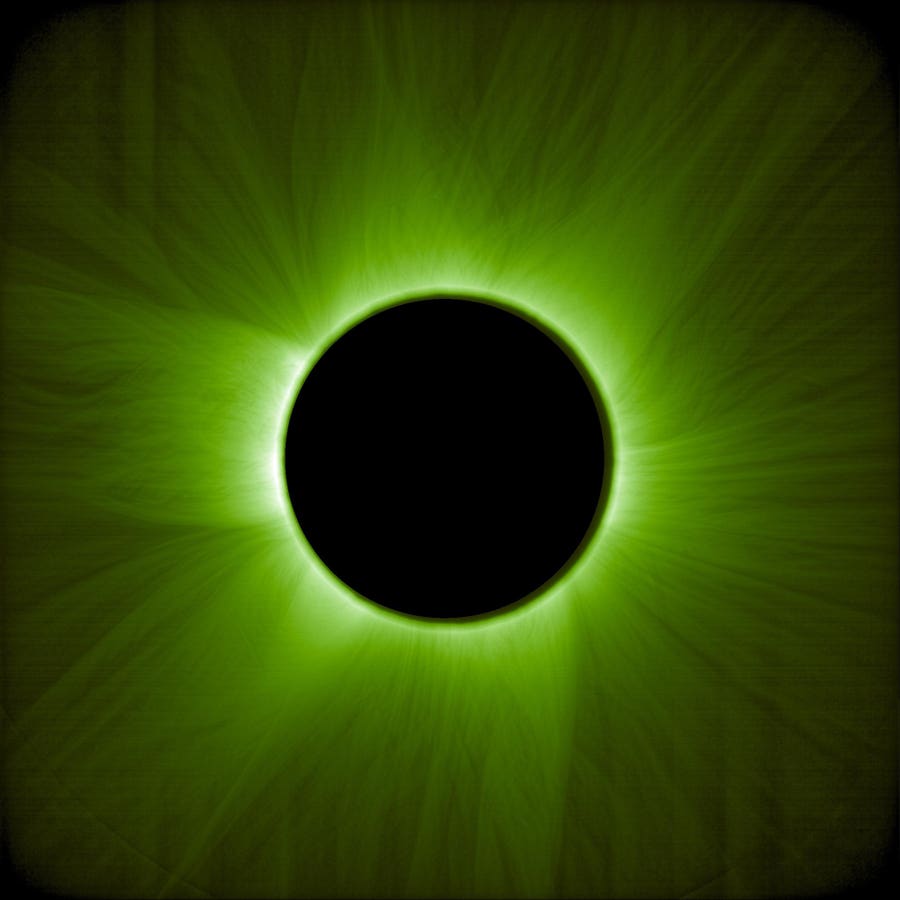
    The Sun’s inner corona appears greenish in this image taken on 23 May 2025 by the ASPIICS … More coronagraph aboard Proba-3, ESA’s formation-flying mission capable of creating artificial total solar eclipses in orbit. This image, captured in the visible light spectrum, shows the solar corona similarly to how a human eye would see it during an eclipse through a green filter. The hair-like structures were revealed using a specialised image processing algorithm.

    ESA/Proba-3/ASPIICS/WOW algorithm

    The European Space Agency has published the first spectacular images of an artificial solar eclipse created in orbit. The pioneering images are from its Proba-3 mission, which features two satellites that fly in formation with millimeter precision, allowing scientists to study the sun’s corona without waiting for rare natural eclipses. It’s also the world’s first precision formation flying mission.

    Launched on December 5, 2024, from India, Proba-3 is a two-year mission during which a total solar eclipse will be created for six hours in every 19.6-hour orbit. “Our ‘artificial eclipse’ images are comparable with those taken during a natural eclipse,” said Andrei Zhukov, Principal Investigator for ASPIICS at the Royal Observatory of Belgium.

    The Sun’s inner corona, coloured artificially to appear violet, in an image taken on 23 May 2025 by … More the ASPIICS coronagraph aboard Proba-3, ESA’s formation-flying mission capable of creating artificial total solar eclipses in orbit. This image shows the corona in polarised white light, captured using a special technique which allows scientists to separate the hot corona’s polarized light from the light scattered by interplanetary dust.

    ESA/Proba-3/ASPIICS

    “The difference is that we can create our eclipse once every 19.6-hour orbit, while total solar eclipses only occur naturally around once, very rarely twice a year. On top of that, natural total eclipses only last a few minutes, while Proba-3 can hold its artificial eclipse for up to 6 hours.”

    One satellite, the Occulter, acts as an artificial moon, blocking the sun’s light using a 1.4-meter-diameter disc. It flies exactly 150 meters in front of the Coronagraph satellite, covering the bright disc of the sun and casting an 8 cm shadow across onto its imager — mimicking how a total solar eclipse works on Earth.

    The Sun’s inner corona, coloured artificially to appear dark green, in an image taken on 23 May 2025 … More by the ASPIICS coronagraph aboard Proba-3, ESA’s formation-flying mission capable of creating artificial total solar eclipses in orbit. The ASPIICS instrument captures the solar corona in two different ‘spectral lines’, each line corresponding to a different element contained in the coronal gases. This image shows observations in the coronal green line – a spectral line emitted by iron atoms that lost half of their electrons due to extremely high temperatures. This allows us to see the hottest contents of the corona, at up to 2 million degrees. On the upper left side, a hot loop can be seen extending from the Sun’s surface into the corona, a structure which generally appears following a solar flare.

    ESA/Proba-3/ASPIICS

    Such a feat of engineering is essential to capture images of the sun’s corona — the outer atmosphere of the sun. Only during a total solar eclipse can the corona be glimpsed from Earth’s surface, and even then, only for a few minutes from any one location.

    The solar corona is a mysterious place. It reaches temperatures of over two million degrees Fahrenheit, significantly hotter than the sun’s surface. Understanding this mysterious layer is essential for solar physicists because it’s the origin of solar wind and space weather that can impact Earth’s communications and power systems.

    The two spacecraft of Proba-3 fly in precise formation about 150 m apart to form an external … More coronagraph in space, one spacecraft eclipsing the Sun to allow the second to study the otherwise invisible solar corona.

    ESA-P. Carril

    The mission is based on some remarkable engineering. The Proba-3 satellites follow a highly elliptical 19.6-hour orbit ranging from 373 miles (600 km) at perigee to 37,000 miles (60,000 km) at apogee, flying in precision formation only near apogee. At apogee, they’re as far away from Earth’s gravitational force and atmospheric drag, enabling them to fly in formation autonomously, achieving eclipse-like conditions for six hours.

    The images you see here are created from three exposures and were processed by the ASPIICS Science Operations Centre at Belgium’s Royal Observatory. “Each full image – covering the area from the occulted sun all the way to the edge of the field of view – is actually constructed from three images,” said Zhukov. “The difference between those is only the exposure time, which determines how long the coronagraph’s aperture is exposed to light. Combining the three images gives us the full view of the corona.”

    The paired Proba-3 satellites will have a highly elliptical orbit with an apogee (or top of orbit) … More of around 60 000 km and perigee of 600 km. Coronagraph observation based on forming an artificial eclipse between the two satellites as well as active formation flying experiments taking place towards apogee, with passive formation flying taking place as the satellites circle closer to Earth.

    ESA – P. Carril, 2013

    ESA has an open data policy, with all uncalibrated data and images available online to scientists and eclipse enthusiasts alike. Proba-3’s mission will last two years, during which approximately 1,000 hours of solar corona images will be gathered. Once it runs out of propellant, it will de-orbit and burn up in Earth’s atmosphere.

    Wishing you clear skies and wide eyes.

    created Eclipse Fake solar Space Total
    Share. Facebook Twitter Pinterest LinkedIn Tumblr Email
    Previous ArticleTurning Your Green Thumb Blue
    Next Article Today’s NYT Strands Hints, Answer and Help for June 18 #472
    Techurz
    • Website

    Related Posts

    Opinion

    Former OpenAI exec Kevin Weil is now on the board of Stoke Space

    July 8, 2026
    Opinion

    SolarSquare in talks to raise up to $60M as India’s rooftop solar market draws major VC interest

    May 23, 2026
    Opinion

    India’s first space tech unicorn emerges as Skyroot gears up for orbital launch

    May 7, 2026
    Add A Comment
    Latest Tech Pulse

    College social app Fizz expands into grocery delivery

    September 3, 20252,290

    12 Father’s Day E-Card Sites That Are Actually Good

    June 4, 202523

    SolarSquare in talks to raise up to $60M as India’s rooftop solar market draws major VC interest

    May 23, 202622
    Stay In Touch
    • YouTube
    • WhatsApp
    • Twitter
    • Pinterest
    • LinkedIn

    Techurz helps readers stay ahead of digital change with clear, practical, future focused technology intelligence written today,searched tomorrow.

    X (Twitter) Pinterest YouTube LinkedIn WhatsApp
    Company
    • About Us
    • Contact Us
    • Our Authors / Editorial Team
    • Write For Us
    • Advertise
    Policy
    • Editorial Policy
    • Privacy Policy
    • Terms and Conditions
    • Affiliate Disclosure
    • Cookie Policy
    • Disclaimer
    • DMCA
    Explore
    • AI Systems
    • Cyber Reality
    • Future Tech
    • Disruption Lab
    • Signals
    • Tech Pulse
    • Sitemap

    Join the Techurz Brief

    The future does not arrive suddenly.
    Stay ahead with fast, sharp tech signals.

    Type above and press Enter to search. Press Esc to cancel.