


Summary
- AAA games cost too much due to high production costs, leading to a lack of risk-taking and appeal to broader audiences.
- AAA games focus more on filler content over meaningful gameplay, with distraction-filled gameplay loops becoming the norm.
- High levels of additional monetization in AAA games drive extensive grinding and pay-to-win mechanics.
AAA games are meant to represent the pinnacle of what’s possible in video games when you have virtually limitless money and access to all the best talent. Yet, with every new AAA release, I find these high-budget games less and less compelling.
Instead, I’m putting hours into the AAA games of the past, as well as the AA and Indie games of the present. Looking at data from Steam (as reported by our colleagues at Game Rant), the majority of players prefer to spend time playing older games. So, I know I’m not alone in this. I’ve been giving modern AAA games a pass for a while now, and honestly I’ve never been happier as a player. Why? The reasons—no surprise—are many.
They Cost Too Much Now
Rockstar Games
When I say that AAA games cost too much now, I don’t just mean the constant increase in the price that you have to pay to play. $70? $80? $90? It just keeps going up, but a much bigger problem is the actual amount of money (and time) these games cost to produce.
With Grand Theft Auto VI reportedly having a budget measured in billions rather than millions, and the typical AAA game running up a tab in the hundreds of millions, it doesn’t feel particularly sustainable.
Perhaps the bigger issue is that, because these games cost so much to make, they have to appeal to as many people as possible and take as few risks as possible. Which is probably why we’ve seen this general shift to open-world games with a little bit of everything in them. That makes them samey and uninteresting, with no character.
Related
Burned Out on Open-World Games? Try Playing Games with Less Choice
Miles of map, inches of fun.
Light on Gameplay, Heavy on Filler and Narrative
Rockstar Games
Rockstar
I love stories, and I’m not one of those people who thinks that the story in a video game doesn’t matter at all or even that there shouldn’t be any story in games. However, the main reason I play video games is to, well, play.
AAA games are becoming lighter and lighter on actual gameplay. The gameplay that is there is often shallow, and feels like it just exists, so that technically, this movie game can be called a video game. Some developers are great at weaving story into the gameplay, and limiting the amount of time you’re staring at a cutscene untily our controller turns itself off to save power—but most sadly aren’t.
That’s a separate issue from all the filler activity games are stuffed with now. Instead of focusing on the main game loop, it’s like you’re walking through a casino or amusement park where everyone’s trying to get you to waste time on often pointless busywork. Collecting baubles for a trophy? Check. Hours spent polishing your guns in Red Dead Redemption 2? Been there, done that.
Obviously, it’s fine for games to have some extra stuff you can do optionally. It’s not the mere existence of this filler that rubs me the wrong way, it’s the sheer volume of it. Also, don’t forget that any resources spent on this stuff is development and polish that could have gone into making the meat of the game better.
Related
10 Video Game Terms You’re Using Wrong
Words don’t come easy.
Absurd Levels of Monetization
All the things I’ve mentioned so far culminate in the absolutely bonkers levels of additional monetization that modern AAA games have. There seems to be no price tag high enough to give us a game that doesn’t try to nickel and dime more money from you as if it’s a free-to-play gacha title.
Related
7 Signs It’s Time to Quit a Mobile Gacha Game
Don’t let your cost sink even further
A lot of that distracting filler really only exists to provide another way for the publisher to ask your for more money. Absurdly, there are AAA games where you can pay for “time savers” so you can skip the grind to collect items, find weapons and armor, or even level up your character. Grind, mind you, that the developer put in there on purpose. So they are incentivized to make the gameplay loop unpleasant enough so that you’ll pay them not to play. I’d be impressed if it didn’t gross me out so much.
There are rare exceptions. Baldur’s Gate 3 is a complete game with a once-off price, hundreds of hours in unique content and gameplay experiences, and there is no monetization after you’ve bought the game. Nothing. Likewise, Kingdom Come: Deliverance 2 is a complete game, though there is DLC you can buy after the fact, but no microtransactions.
Stories With Little to No Appeal
Cianna Garrison / How-To Geek
If you’re going to have a story in a game, it should either be minimal (e.g. DOOM 1993) or it should be really, really compelling. Some genres of game, RPGs in particular, are, of course, supposed to be heavy on intricate branching stories—because in an RPG the narrative is gameplay. However, I’m finding that the stories in modern AAA games are suffering for the same reasons everything else in them is in a downward spiral.
That same desire to play it safe, to appeal to everyone, and offend no one leaves us with stories that have no lasting impact. While games like The Last of Us have stories that can be divisive, no one can argue that it’s boring or poorly written.
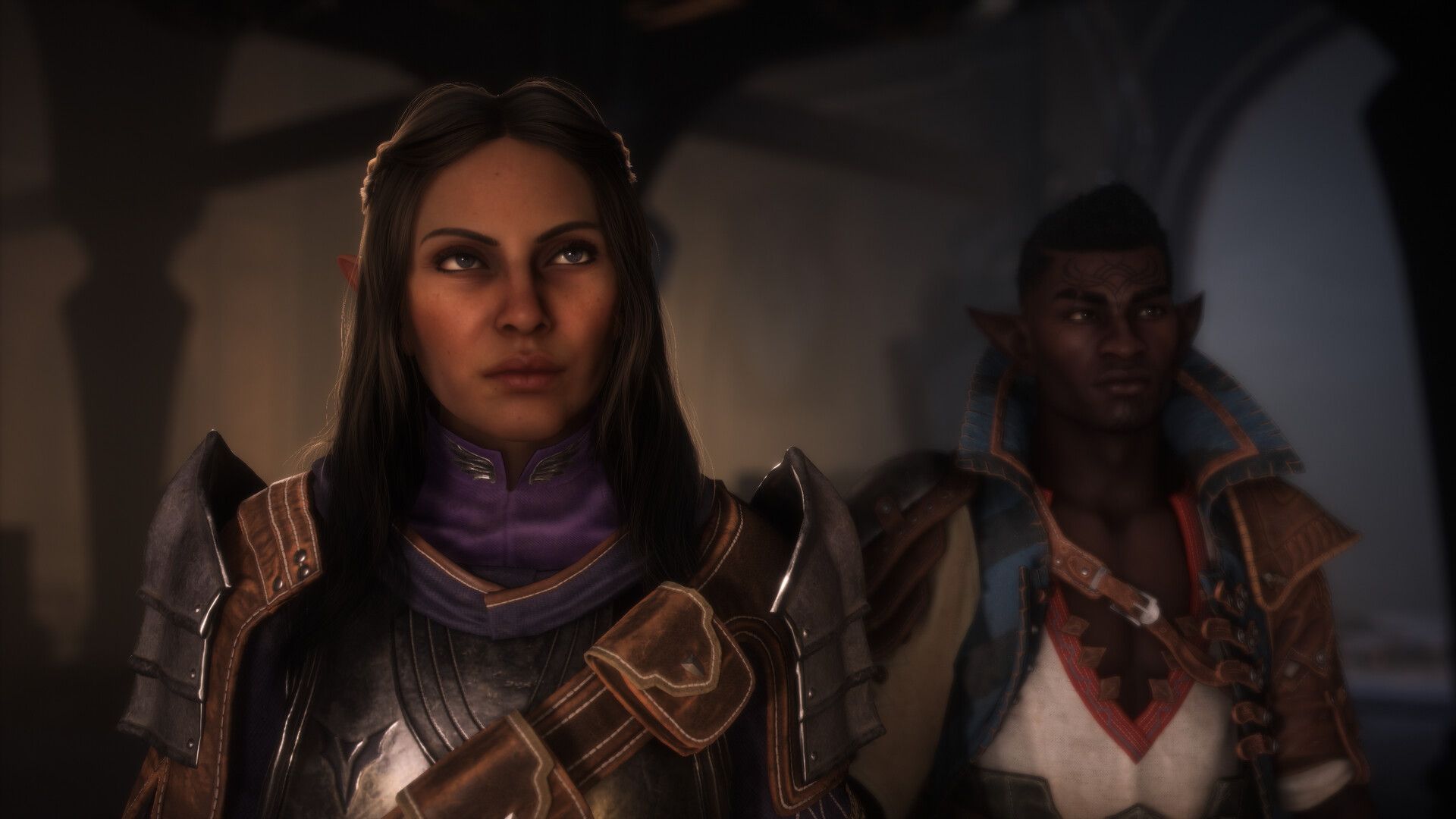
The poster child for this is perhaps Dragon Age; The Veilguard, a very PG-13 installment in the dark fantasy series that raised the bar for video game storytelling back in 2009.
Instead, the best stories in games these days are in the Indie and AA realm, with games like Clair Obscur: Expedition 33, Disco Elysium, A Plague Tale: Innocence, and other lower-budget fare that strip away the bloat and have a clear narrative that works in service of the gameplay. When’s the last time you cared about the story in an Assassin’s Creed game?
Too Much Focus on Graphics Technology
As someone who loves computer graphics and has spent years trying to experience the best gaming visuals I can afford, it might seem strange to say that AAA game developers are focusing too much on the technology in their games. However, there’s certainly a point of diminishing returns where the cost and effort you’ve put into how a game looks could be better spent on its story and gameplay, or getting it to perform well at launch.
Related
Why Photorealistic Graphics Aren’t The Endgame for Video Games.
Reality is boring.
Modern AAA games are so visually noisy now, and often spend their performance budget on visual details that don’t have much impact on the overall look of the game, most players don’t notice, and add nothing to the game. People seem perfectly happy to play games with simpler graphics and distinct art direction, and I am definitely one of them.
The video game industry seems to be heading towards a fork in the road: down one path is a crash, as AAA games collapse under their own weight in a crowded market that’s oversupplied and has customers that don’t have the time and money to buy what you’re selling.
Down the other road, we see a scaling back of AAA budgets, to make more focused premium games with less financial risk. You can make two or three focused and more linear games for the price of one massive live-service or open-world game, after all.
I hope we go down the second road, but something tells me someone has to crash and burn on the other path first before that happens.
