

Close Menu
TechurzTechurz
    What's Hot

    Harvey hits $15.5B valuation, months after reaching $11B

    September 9, 2026

    Uber invests $10M in Indian fleet operator Carrum at $168M valuation

    September 9, 2026

    Sequoia doubles down on Cymphony as AI agents create new enterprise security risks

    September 9, 2026
    X (Twitter) Pinterest YouTube LinkedIn WhatsApp
    Tech Pulse
    • Harvey hits $15.5B valuation, months after reaching $11B
    • Uber invests $10M in Indian fleet operator Carrum at $168M valuation
    • Sequoia doubles down on Cymphony as AI agents create new enterprise security risks
    • CloudNC raises $20M to automate manufacturing’s most pressing bottlenecks
    • Cognition hits $48B valuation, signaling investors believe AI coding is far from a winner-take-all market
    X (Twitter) Pinterest YouTube LinkedIn WhatsApp
    TechurzTechurz
    • Home
    • Tech Pulse
    • Future Tech
    • AI Systems
    • Cyber Reality
    • Disruption Lab
    • Signals
    TechurzTechurz
    Home - News - Inside the secret EV tech powering Google’s monster AI data centers with 400VDC and liquid cooling
    News

    Inside the secret EV tech powering Google’s monster AI data centers with 400VDC and liquid cooling

    TechurzBy TechurzMay 18, 2025Updated:May 11, 2026No Comments3 Mins Read
    Share Facebook Twitter Pinterest LinkedIn Tumblr Reddit Telegram Email
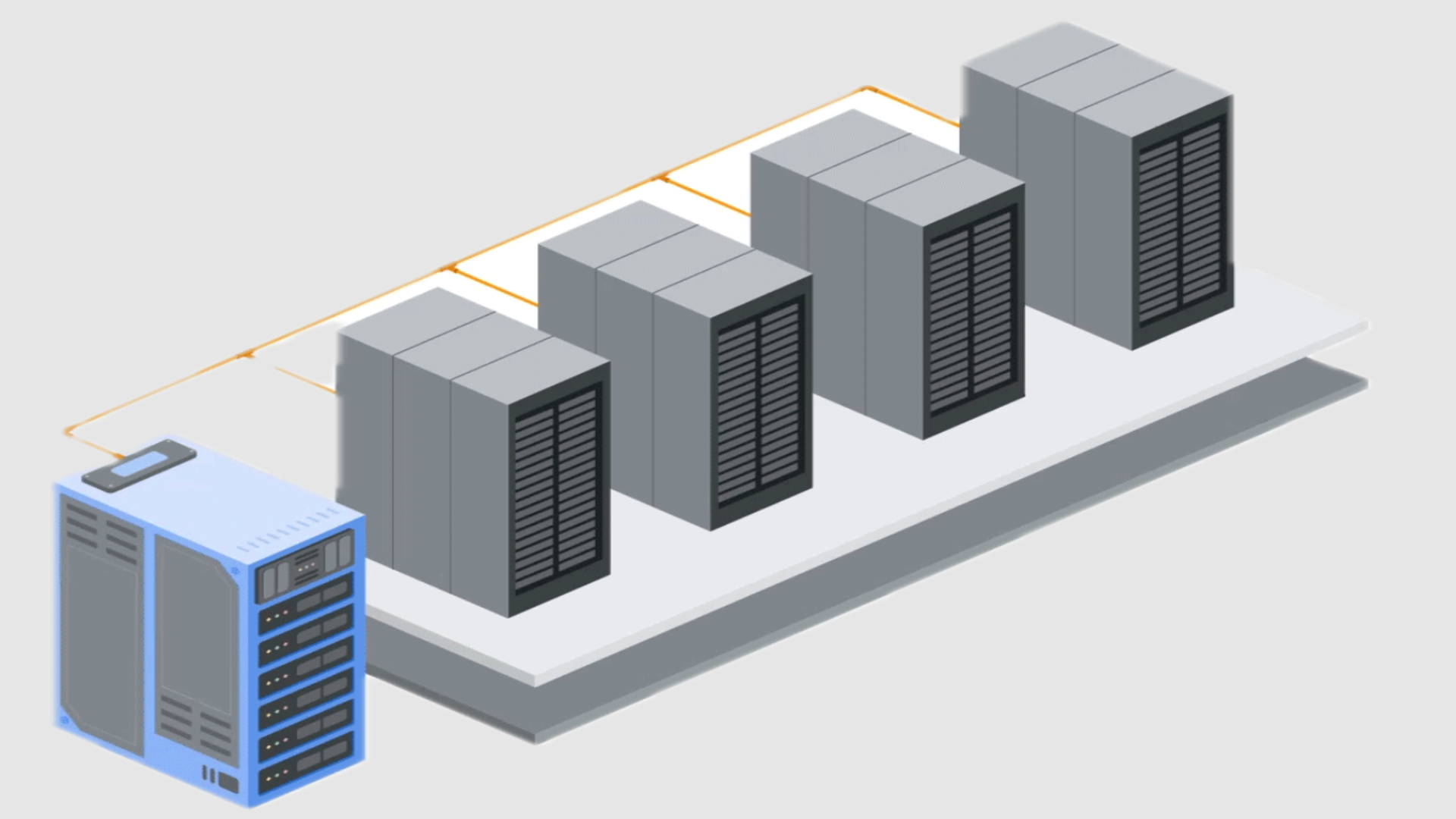
    +/-400VDC power delivery: AC-to-DC sidecar power rack
    Share
    Facebook Twitter LinkedIn Pinterest Email


    • Liquid cooling isn’t optional anymore, it’s the only way to survive AI’s thermal onslaught
    • The jump to 400VDC borrows heavily from electric vehicle supply chains and design logic
    • Google’s TPU supercomputers now run at gigawatt scale with 99.999% uptime

    As demand for artificial intelligence workloads intensifies, the physical infrastructure of data centers is undergoing rapid and radical transformation.

    The likes of Google, Microsoft, and Meta are now drawing on technologies initially developed for electric vehicles (EVs), particularly 400VDC systems, to address the dual challenges of high-density power delivery and thermal management.

    The emerging vision is of data center racks capable of delivering up to 1 megawatt of power, paired with liquid cooling systems engineered to manage the resulting heat.


    You may like

    Borrowing EV technology for data center evolution

    The shift to 400VDC power distribution marks a decisive break from legacy systems. Google previously championed the industry’s move from 12VDC to 48VDC, but the current transition to +/-400VDC is being enabled by EV supply chains and propelled by necessity.

    The Mt. Diablo initiative, supported by Meta, Microsoft, and the Open Compute Project (OCP), aims to standardize interfaces at this voltage level.

    Google says this architecture is a pragmatic move that frees up valuable rack space for compute resources by decoupling power delivery from IT racks via AC-to-DC sidecar units. It also improves efficiency by approximately 3%.

    Cooling, however, has become an equally pressing issue. With next-generation chips consuming upwards of 1,000 watts each, traditional air cooling is rapidly becoming obsolete.

    Sign up to the TechRadar Pro newsletter to get all the top news, opinion, features and guidance your business needs to succeed!

    Liquid cooling has emerged as the only scalable solution for managing heat in high-density compute environments.

    Google has embraced this approach with full-scale deployments; its liquid-cooled TPU pods now operate at gigawatt scale and have delivered 99.999% uptime over the past seven years.

    These systems have replaced large heatsinks with compact cold plates, effectively halving the physical footprint of server hardware and quadrupling compute density compared to previous generations.

    Yet, despite these technical achievements, skepticism is warranted. The push toward 1MW racks is based on the assumption of continuously rising demand, a trend that may not materialize as expected.

    While Google’s roadmap highlights AI’s growing power needs – projecting more than 500 kW per rack by 2030 – it remains uncertain whether these projections will hold across the broader market.

    It’s also worth noting that the integration of EV-related technologies into data centers brings not only efficiency gains but also new complexities, particularly concerning safety and serviceability at high voltages.

    Nonetheless, the collaboration between hyperscalers and the open hardware community signals a shared recognition that existing paradigms are no longer sufficient.

    Via Storagereview

    You might also like

    400VDC centers cooling data Googles liquid monster Powering secret tech
    Share. Facebook Twitter Pinterest LinkedIn Tumblr Email
    Previous ArticleToday’s NYT Strands Hints, Answer and Help for May 18 #441
    Next Article 5 Lawn Mowing Mistakes That Are Easy to Fix
    Techurz
    • Website

    Related Posts

    Opinion

    Hearing tech startup Legato emerges from stealth with $12M and a peek at its AI hearing glasses

    August 26, 2026
    Opinion

    Japanese space tech startup Letara expands beyond satellite thrusters with $16M

    August 22, 2026
    Opinion

    Starcloud raises $250 million for orbital data centers as launch options dry up

    August 21, 2026
    Add A Comment
    Latest Tech Pulse

    College social app Fizz expands into grocery delivery

    September 3, 20252,291

    12 Father’s Day E-Card Sites That Are Actually Good

    June 4, 202523

    SolarSquare in talks to raise up to $60M as India’s rooftop solar market draws major VC interest

    May 23, 202622
    Stay In Touch
    • YouTube
    • WhatsApp
    • Twitter
    • Pinterest
    • LinkedIn

    Techurz helps readers stay ahead of digital change with clear, practical, future focused technology intelligence written today,searched tomorrow.

    X (Twitter) Pinterest YouTube LinkedIn WhatsApp
    Company
    • About Us
    • Contact Us
    • Our Authors / Editorial Team
    • Write For Us
    • Advertise
    Policy
    • Editorial Policy
    • Privacy Policy
    • Terms and Conditions
    • Affiliate Disclosure
    • Cookie Policy
    • Disclaimer
    • DMCA
    Explore
    • AI Systems
    • Cyber Reality
    • Future Tech
    • Disruption Lab
    • Signals
    • Tech Pulse
    • Sitemap

    Join the Techurz Brief

    The future does not arrive suddenly.
    Stay ahead with fast, sharp tech signals.

    Type above and press Enter to search. Press Esc to cancel.