


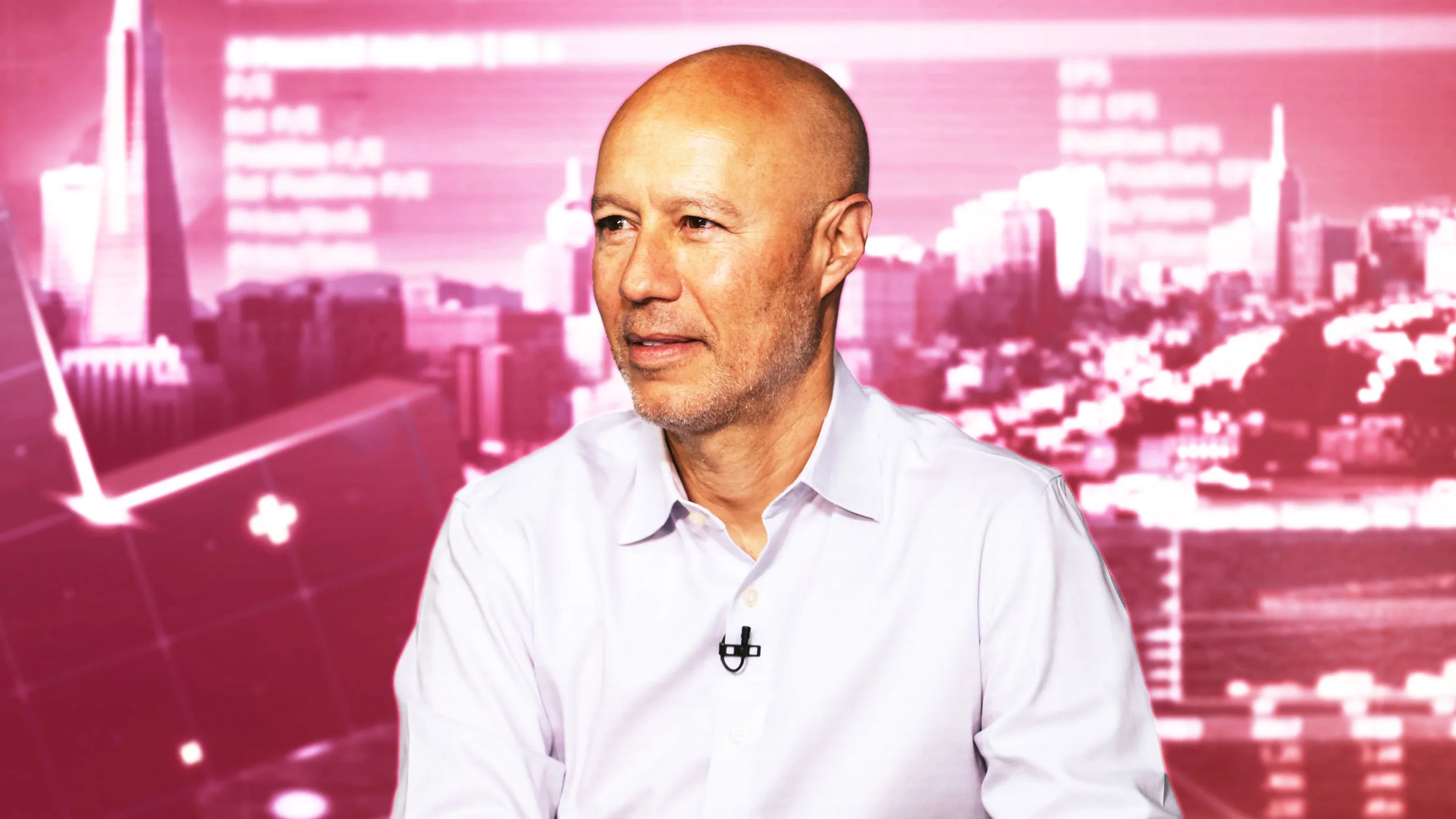
The rideshare market has reached a crossroads. Autonomous vehicles are on the rise, driver unrest is mounting, and customers are questioning everything from pricing to trust and safety. In the midst of it all, Lyft is mounting a comeback. CEO David Risher, who came into the role at Lyft two years ago, is taking a bird’s-eye view on the operation and pushing to reposition the company squarely against their competitor, Uber—with faster execution, bold new programs, and Lyft’s biggest international acquisition to date.
This is an abridged transcript of an interview from Rapid Response, hosted by the former editor-in-chief of Fast Company Bob Safian. From the team behind the Masters of Scale podcast, Rapid Response features candid conversations with today’s top business leaders navigating real-time challenges. Subscribe to Rapid Response wherever you get your podcasts to ensure you never miss an episode.
[A recent letter you wrote to shareholders] includes this phrase “falcon mode,” which has also sparked a bunch of interest. I wanted to ask you to explain, what is falcon mode?
So falcons fly thousands of feet in the air. But of course, they can’t stay up there always because they’ve got to eat. So falcons have adapted to become extremely perceptive at seeing very small things on the ground and then being able to dive down very, very quickly, grab the mouse or whatever it is, and then go back up to cruising altitude.
I use that kind of figurative language to help my team actually understand my job, which is to try to stay up at the high level. I mean, a CEO doesn’t hopefully need to be in the details every single day, but I have never found a successful CEO, and I’ve worked for some very successful CEOs, I’m very lucky in that way, who doesn’t also judiciously decide when to come down and to go really, really deep into the things, to get to the point where you’re literally saying, “You know what, I think this language on the screen isn’t quite doing the job,” as an example.
How much of that is about you identifying something that’s strategic that you could have seen at 30,000 feet that maybe others are missing versus pointing to your team that this is the way you want them to act?
I think if you never do it yourself, if all you’re doing is telling your team, “Go look at this, go look at this, go look at this, go look at this,” I think the chance of you having good intuition on that, where to actually go deep, is low. But then on the other hand, hopefully they see you doing it, and they become comfortable themselves.
And again, I want to make a distinction: you haven’t mentioned the word micromanagement, but that’s a word that sometimes people say, “Well, doesn’t that sound like micromanagement?” And for me, the distinction I make is I try, again, sometimes unsuccessfully to be clear, but I try not to use it as a way to propose answers. Of course, sometimes I do. I’m a human being, I have ideas, but I try more to use it as a way to understand a problem space better.
A story I tell in the letter is you can understand the issue of surge pricing at a generic level. People don’t like prices that are unpredictable, and that gives you a certain amount of insight. But when I drove and I picked up a woman named Anne, and she said, “Sometimes the price is 20, sometimes it’s 30, sometimes it’s 40. When it’s 20, I take a Lyft. When it’s 40, I drive myself, but I’m really annoyed. I get up at six in the morning, just check the price every single morning.” You have these conversations, and you get so much more empathy and understanding for the contours of that problem and why it matters so much at an individual level.
And then you can go back to your team and say, “You know what, guys, I know we’ve been talking about trying to get rid of surge pricing or at least some of it for a while. Let me give you some examples that I’ve picked up by going deep that maybe help us understand both why this is a big problem for people and maybe understand, as I say, the contours of this space a little bit better as a result.”
And so this is why you get on the road and you drive a Lyft every six weeks for a day, so you’re close to the experience of both sides of your marketplace, the driver and the rider.
It’s exactly it. And it’s so interesting. I actually took my first drive, I think it was a week before I joined even. So it’s been a little bit over two years now. And at first what I really thought it was going to be is really understanding the driver app and the driver experience. And I learned a lot, but what it’s really taught me is how the rider experiences the ride. And it’s so different to look at the data versus talk to the riders and ask them, “Why did you choose Lyft today versus the other guys? What are some of the perceptions you have?”
And sometimes people talk about a credit card deal we have with Chase Sapphire Reserve, and sometimes people will talk about a bad experience they had on the other guys. Sometimes they’ll talk about how they think they like our values better or they like Women+ Connect, which is a service we have. So you get a sense of both sides of the marketplace, and it’s quite efficient. I mean, it’s only two or three hours, and gosh, you can learn a lot in two or three hours if you really, really focus on them.
You have more riders than ever, you have more drivers than ever, but you’re still far behind Uber, which has 75% of the market or something. I mean, we’ve heard a lot about the streaming wars in TV, and there’s arguably a ridesharing war going on. Do you have to beat Uber to become like Netflix in streaming, or is it just about staying competitive? You don’t have to be Netflix. If you can be BritBox, and that’s you, that’s okay.
So a couple of things I think about that, every year just in the U.S., so we’re not even talking about overseas, just in the U.S., people take about 160 billion rides in their own car, 160 billion. So every single one of those rides, they’re getting behind the wheel, their stress level is probably going up a little bit, hopefully they’re not texting, but they’re certainly tempted to text every time they come to a stoplight, they’re road rage sometimes, frustrated. At the very least, they’re not able to do very much else with their life, and then they got to park, and then they got to pay for parking, and all these different things.
So there are a lot of times where, you know what, it’s actually kind of nice to have someone else pick you up. You can do the texting, you can sit back, you can make a phone call if you want to, you can put on your makeup if you’re a woman, whatever it is, guy too, whoever. So the point is it’s a better experience, and we want to do it so reliably and at such a high service level that we move from, call it, 800 million rides a year, which is about what we do, to a billion to two billion to three billion to four billion.
So do I have to compete with someone else to do that? Not really. Now, we have to compete with private cars, and to a certain extent, with people staying at home on their couch. I mean, those are things I have to compete with, but I don’t really need to dominate the other guy.
Now, having said that, there is another guy in the marketplace. Our share when I joined was about 26% share. Now it’s about 31% share. So we’ve made nice progress there, and that’s hard. I mean, every single point of share you get over a bigger competitor is quite hard.
I’ll give you two stats that I’m very proud of. One is we pick you up about 30 seconds faster than they do. Second is for our drivers, we have a 23-point advantage, 23-point advantage in preference of dual-appers, people who use both apps. Who would you prefer to drive for?
So I consider those to be very good leading early indicators that we’re doing some things well. The share thing is a little bit of a trailing indicator. It’s just an interesting little thing to look at. Leading indicator is more to people like you more, you get better service. And over time, that tends to grow a business quite nicely.
The final deadline for Fast Company’s Brands That Matter Awards is Friday, May 30, at 11:59 p.m. PT. Apply today.
