


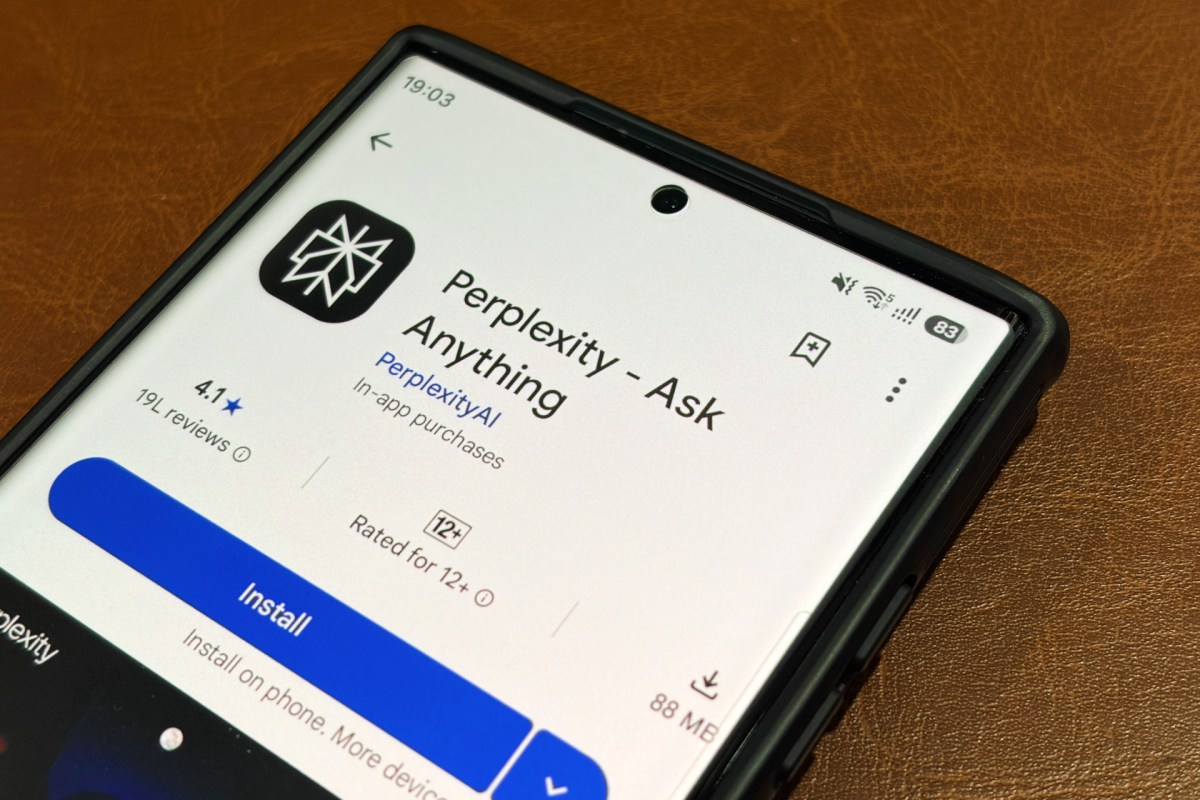
Perplexity spent the past year running one of the biggest AI growth experiments, giving its premium service away to customers of Indian telecom giant Airtel. Now, as the earliest of those free subscriptions expire, the results are starting to emerge, offering an early test of whether bundling paid AI services can create lasting users and revenue after the giveaway ends.
In July 2025, Perplexity partnered with Airtel, India’s second biggest telecom operator, to offer a free 12-month Perplexity Pro subscription, normally worth about $200, to the Indian carrier’s 360 million customers. New redemptions ended on January 16. However, because subscribers retained Pro for a year from activation, the earliest users began reaching the end of their free access last month and had to opt out of auto-renewal if they did not want to be charged.
Perplexity’s AI giveaway had an immediate impact, as it saw 5.9 million app downloads in India in July 2025, according to data Sensor Tower shared with TechCrunch. That was up 625% from the previous month and more downloads in a single month than the 5.4 million Perplexity had accumulated during the entire first half of the year.
This momentum was not limited to the launch month of the Perplexity offer but persisted well beyond it. Perplexity recorded 56 million downloads during the seven months that the offer was available to new users, more than nine times the preceding seven-month period, Sensor Tower estimated. Monthly active users more than doubled to 8.9 million in July and eventually peaked at 22 million in October.
Image Credits:Jagmeet Singh / TechCrunch
India has long been a massive market for downloads for global technology companies, thanks to its vast population, more than a billion internet subscribers, and relatively low mobile data costs. The country is the world’s second-largest smartphone market after China — with over 700 million users — and has similarly emerged as a major source of users for generative AI services. That scale has, however, proved considerably harder to translate into revenue.
Specifically for AI companies willing to subsidize access in pursuit of scale, India’s market dynamics have made it an attractive testing ground. Anthropic, Google, OpenAI, and others have increasingly chased Indian consumers with India-specific, lower-cost plans, free access, and distribution partnerships, aiming to eventually translate them into paying customers.
However, once the window to claim the free Airtel subscription closed in January, Perplexity’s downloads fell sharply. Sensor Tower estimates Perplexity was downloaded 3.3 million times in India between February and July, down more than 90% from the preceding six months.
What came after the download boom?
The users Perplexity had acquired did not disappear quite so quickly. Monthly active users, which peaked at about 22 million in October, stood at nearly 14 million in July — down 37% from that high but still more than five times the about 2.6 million monthly users Perplexity averaged in the first half of 2025, per Sensor Tower.
“While the time-sensitive nature of this promotion would naturally lead to a decline in adoption after the offer period, ongoing usage has remained resilient,” Abe Yousef, senior insights analyst at Sensor Tower, told TechCrunch. Perplexity, he added, has “significantly more users” in India than it did in the six months before the promotion.
Image Credits:Jagmeet Singh / TechCrunch
More strikingly, Perplexity’s drop in downloads has not been accompanied by a decline in spending. Sensor Tower estimates that Perplexity’s in-app purchase and subscription revenue in India between February and mid-August rose about 60% from the period when the Airtel offer was available to new users, despite downloads declined.
That trend has continued even as the earliest Airtel subscribers have started losing their free Perplexity Pro access. From around July 18 through August 12, Perplexity’s average daily in-app purchase revenue in India, per Sensor Tower, was 9% higher than during the preceding 30 days and 27% above the average for the first half of 2026.
The increase gives us an early indication that some users may be willing to pay after getting accustomed to the premium service for free. But of course, it does not confirm that Airtel users themselves are deliberately converting into paying subscribers.
The free subscriptions were set to auto-renew, requiring users who did not want to continue to cancel their service before the renewal date to avoid being charged. This makes it possible that some of the increase reflects users who did not cancel in time rather than those who actively chose to pay. Sensor Tower cannot distinguish between those scenarios or separate former Airtel subscribers from other paying customers.
Appfigures, another app intelligence firm, also found that the Airtel deal dramatically changed Perplexity’s trajectory in India. The data Appfigures shared with TechCrunch indicates the initial growth was specific to Perplexity rather than simply reflecting growing appetite for AI apps overall.
“I compared Perplexity’s downloads to ChatGPT and Claude to ensure it wasn’t more appetite for AI, and it wasn’t,” Appfigures co-founder and CEO Ariel Michaeli told TechCrunch.
In the week before the Airtel offer launched, Perplexity averaged about 11,200 downloads a day in India, per Appfigures. That jumped twentyfold to nearly 223,000 a day during the first week of the offer’s launch and continued climbing, hitting an average of about 305,000 a day between mid-September and mid-October. To compare, downloads of OpenAI’s ChatGPT and Anthropic’s Claude remained broadly stable.
Appfigures also sees signals that Perplexity emerged from the giveaway with a bigger business in India, even though the promotional download boom disappeared. Perplexity’s monthly net mobile revenue in the country, per Appfigures, grew from about $34,000 in January 2025 to $70,000 in December and reached $156,000 in July 2026. The AI company generated an estimated $878,000 in India in the first seven months of 2026, up 16% from all of 2025.
Michaeli cautioned against attributing all of that growth to Airtel users becoming paying customers. The enormous visibility generated by the promotion, he noted, may also have attracted paying users who were never part of the giveaway.
Perplexity’s experiment has since become part of a much broader wager by AI companies in India. In August 2025, OpenAI made its lower-priced ChatGPT Go plan free for a year in the country. Google also followed Perplexity with a deal to offer its AI Pro subscription free for 18 months to eligible Reliance Jio users.
That makes Perplexity an early test of whether the strategy can work. Its Airtel deal began months before the similar moves by OpenAI and Google. This also means that Perplexity users are among the first large cohort in India to reach the point where free premium AI turns into a product they may have to pay for.
India has already emerged as the world’s largest market for generative AI app downloads but remains difficult to monetize. AI companies have been willing to trade near-term revenue for users in this price-conscious market, striving to eventually turn that scale and habit into paying customers.
That said, the data cannot yet show how many of Perplexity’s newly acquired users will willingly pay once their free year runs out. That test will play out over the coming months as later cohorts of Airtel users reach their renewal dates.
Perplexity did not respond to a request for comment.
When you purchase through links in our articles, we may earn a small commission. This doesn’t affect our editorial independence.
