
Close Menu
TechurzTechurz

    Subscribe to Updates

    Get the latest creative news from FooBar about art, design and business.

    What's Hot

    Delve accused of misleading customers with ‘fake compliance’

    March 21, 2026

    AI startups are eating the venture industry and the returns, so far, are good

    March 20, 2026

    Bluesky announces $100M Series B after CEO transition

    March 19, 2026
    Facebook X (Twitter) Instagram
    Trending
    • Delve accused of misleading customers with ‘fake compliance’
    • AI startups are eating the venture industry and the returns, so far, are good
    • Bluesky announces $100M Series B after CEO transition
    • Consumer-focused privacy company Cloaked raises $375M as it expands to enterprise
    • Tools for founders to navigate and move past conflict
    • K2 to launch its first high-powered satellite for space compute
    • Anori, Alphabet’s new X spinout, is tackling one of the world’s most expensive bureaucratic nightmares
    • Arc expands into electric commercial and defense boats with $50M raise
    Facebook X (Twitter) Instagram Pinterest Vimeo
    TechurzTechurz
    • Home
    • AI
    • Apps
    • News
    • Guides
    • Opinion
    • Reviews
    • Security
    • Startups
    TechurzTechurz
    Home»Security»PhantomRaven Malware Found in 126 npm Packages Stealing GitHub Tokens From Devs
    Security

    PhantomRaven Malware Found in 126 npm Packages Stealing GitHub Tokens From Devs

    TechurzBy TechurzNovember 2, 2025No Comments3 Mins Read
    Share Facebook Twitter Pinterest LinkedIn Tumblr Reddit Telegram Email
    PhantomRaven Malware Found in 126 npm Packages Stealing GitHub Tokens From Devs
    Share
    Facebook Twitter LinkedIn Pinterest Email


    Oct 30, 2025Ravie LakshmananDevSecOps / Software Security

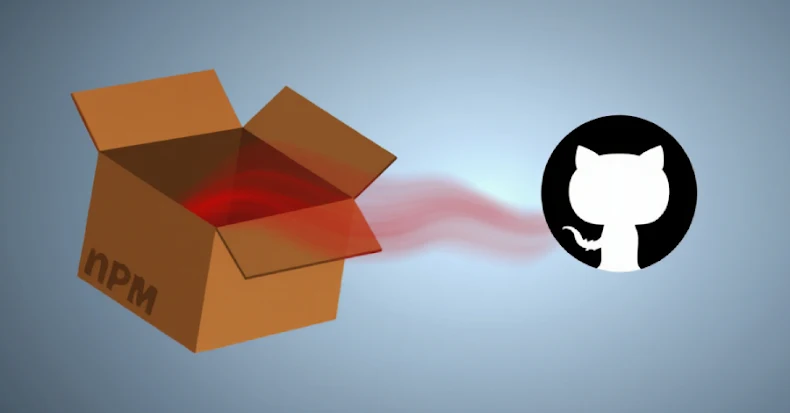
    Cybersecurity researchers have uncovered yet another active software supply chain attack campaign targeting the npm registry with over 100 malicious packages that can steal authentication tokens, CI/CD secrets, and GitHub credentials from developers’ machines.

    The campaign has been codenamed PhantomRaven by Koi Security. The activity is assessed to have begun in August 2025, when the first packages were uploaded to the repository. It has since ballooned to a total of 126 npm libraries, attracting more than 86,000 installs.

    Some of the packages have also been flagged by the DevSecOps company DCODX –

    • op-cli-installer (486 Downloads)
    • unused-imports (1,350 Downloads)
    • badgekit-api-client (483 Downloads)
    • polyfill-corejs3 (475 Downloads)
    • eslint-comments (936 Downloads)

    What makes the attack stand out is the attacker’s pattern of hiding the malicious code in dependencies by pointing to a custom HTTP URL, causing npm to fetch them from an untrusted website (in this case, “packages.storeartifact[.]com”) as opposed to npmjs[.]com each time a package is installed.

    “And npmjs[.]com doesn’t follow those URLs,” security researcher Oren Yomtov laid out in a report shared with The Hacker News. “Security scanners don’t fetch them. Dependency analysis tools ignore them. To every automated security system, these packages show ‘0 Dependencies.'”

    More worryingly, the fact that the URL is attacker-controlled means that it can be abused by the bad actor to tailor their payloads and serve any kind of malware, and make it more stealthy by initially serving completely harmless code before pushing a malicious version of the dependency after the package gains broader adoption.

    The attack chain kicks off as soon as a developer installs one of the “benign” packages, which, in turn, leads to the retrieval of the remote dynamic dependency (RDD) from the external server. The malicious package comes with a pre-install hook that triggers the execution of the main payload.

    The malware is designed to scan the developer environment for email addresses, gather information about the CI/CD environment, collect a system fingerprint, including the public IP address, and exfiltrate the results to a remote server.

    Koi Security said the choice of the package names is not random, and that the threat actor has resorted to capitalizing on a phenomenon called slopsquatting – where large language models (LLMs) hallucinate non-existent yet plausible-sounding package names – in order to register those packages.

    “PhantomRaven demonstrates how sophisticated attackers are getting [better] at exploiting blind spots in traditional security tooling,” Yomtov said. “Remote Dynamic Dependencies aren’t visible to static analysis. AI hallucinations create plausible-sounding package names that developers trust. And lifecycle scripts execute automatically, without any user interaction.”

    The development once again illustrates how threat actors are finding novel ways to hide malicious code in open-source ecosystems and fly under the radar.

    “The npm ecosystem allows easy publishing and low friction for packages,” DCODX said. “Lifecycle scripts (preinstall, install, postinstall) execute arbitrary code at install time, often without developer awareness.”

    Devs GitHub malware npm packages PhantomRaven stealing tokens
    Share. Facebook Twitter Pinterest LinkedIn Tumblr Email
    Previous ArticleThis AirPods hack is a game-changer for frequent flyers – how to find it in your iPhone settings
    Next Article This premium Android phone is $150 off before Black Friday – act fast since this deal won’t last
    Techurz
    • Website

    Related Posts

    Opinion

    Former GitHub CEO raises record $60M dev tool seed round at $300M valuation

    February 10, 2026
    Security

    AI is becoming introspective – and that ‘should be monitored carefully,’ warns Anthropic

    November 3, 2025
    Security

    Perplexity’s new AI tool lets you search patents with natural language – and it’s free

    November 3, 2025
    Add A Comment
    Leave A Reply Cancel Reply

    Top Posts

    College social app Fizz expands into grocery delivery

    September 3, 20252,288 Views

    A Former Apple Luminary Sets Out to Create the Ultimate GPU Software

    September 25, 202516 Views

    The Reason Murderbot’s Tone Feels Off

    May 14, 202512 Views
    Stay In Touch
    • Facebook
    • YouTube
    • TikTok
    • WhatsApp
    • Twitter
    • Instagram
    Latest Reviews

    Subscribe to Updates

    Get the latest tech news from FooBar about tech, design and biz.

    Most Popular

    College social app Fizz expands into grocery delivery

    September 3, 20252,288 Views

    A Former Apple Luminary Sets Out to Create the Ultimate GPU Software

    September 25, 202516 Views

    The Reason Murderbot’s Tone Feels Off

    May 14, 202512 Views
    Our Picks

    Delve accused of misleading customers with ‘fake compliance’

    March 21, 2026

    AI startups are eating the venture industry and the returns, so far, are good

    March 20, 2026

    Bluesky announces $100M Series B after CEO transition

    March 19, 2026

    Subscribe to Updates

    Get the latest creative news from FooBar about art, design and business.

    Facebook X (Twitter) Instagram Pinterest
    • About Us
    • Contact Us
    • Privacy Policy
    • Terms and Conditions
    • Disclaimer
    © 2026 techurz. Designed by Pro.

    Type above and press Enter to search. Press Esc to cancel.