


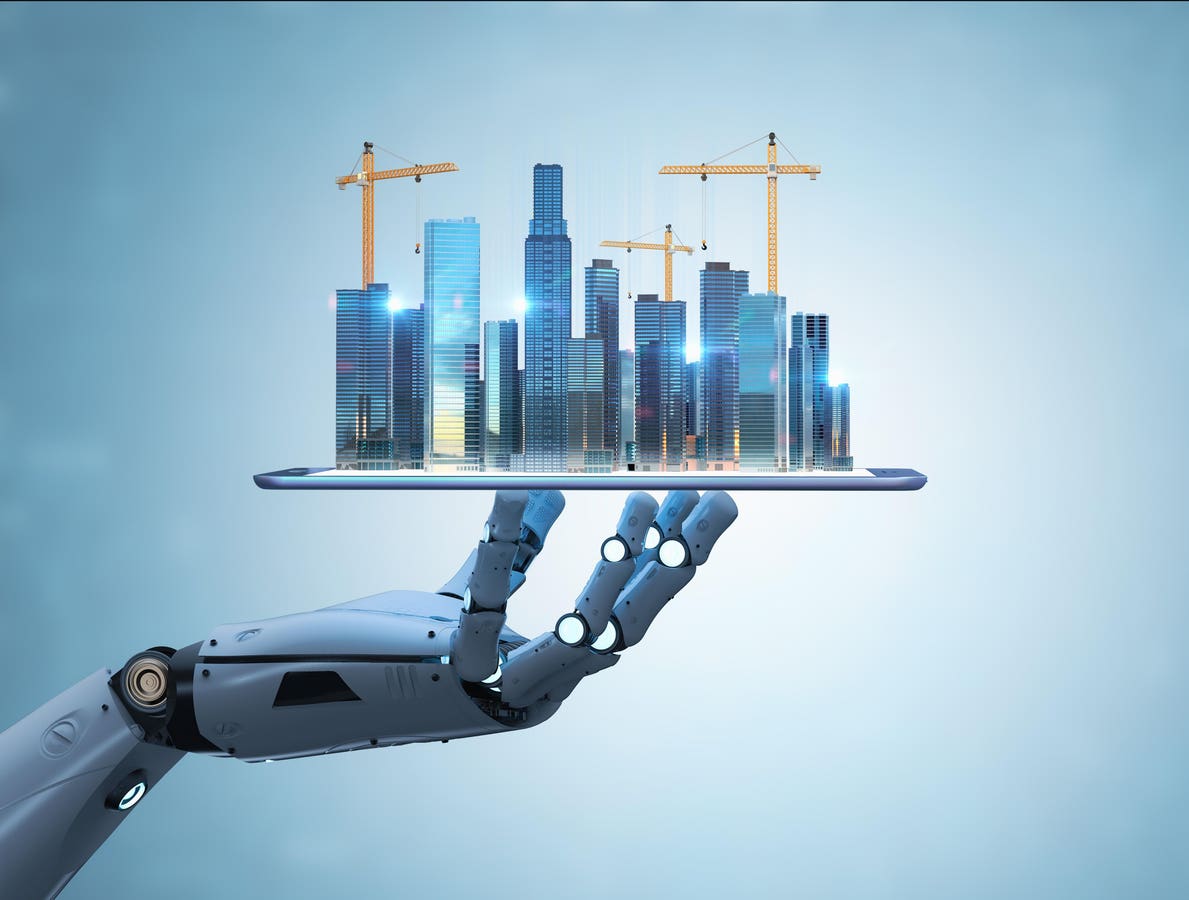
AI is helping reshape how buildings are designed, planned, and delivered which is making … More
getty
That building you just walked past—the one with the clean angles and light-filled interior? AI may have played a bigger role in the design than you think. It could’ve suggested the materials, simulated how sunlight would travel through the space, or optimized the layout for both beauty and energy efficiency.
Today’s architects aren’t just automating simple tasks with AI. Rather, they’re collaborating with AI. From the first sketch to the final walkthrough, AI is changing how we design, how we build, and how we think about the spaces around us.
From rough sketch to final output
Generative design tools allow architects to input overall goals, various constraints, and material specs. Then, taking all these various inputs into account, AI generates a variety of viable design options, far faster than human architects could generate. Some designs are expected. Others are wildly original. That’s the point.
AI is helping architects by handling some of the repetitive drafting tasks such as layouts, elevations, and floor plans, allowing architects to regain time for creativity. The augmented intelligence workflow, one where the human is not replaced but enhanced with AI tools, allows for fewer errors, faster iterations, and more time spent on concept and vision. This isn’t automation for automation’s sake. It’s about designing better buildings, faster, and with more insight than ever before.
Additionally, material selection gets smarter too. AI is able to evaluate a variety of factors such as durability, cost, sustainability, and aesthetic fit. It even identifies overlooked alternatives that hit the same marks but for less money or less environmental impact.
Smarter, safer, more strategic planning
Design is only one side of the blueprint. A building that stuns from the outside but leaks when it rains, traps heat in summer, or creates cracking in the foundation? That’s a liability. Looks matter of course, but function is non-negotiable.
AI-enhanced structural analysis is able to run simulations on wind loads, seismic activity, and other real-world stressors before the foundation is even poured. Weak points? Flagged. Reinforcements? Suggested. Risk? Reduced.
In addition to helping select the best location, AI is also being used to help with site planning. AI evaluates topography, zoning regulations, climate data, and environmental constraints to help identify the most feasible, the most strategic, and the most available locations for new builds. What once took weeks of manual review now happens in minutes, with greater precision and context. This results in buildings that aren’t just innovative, but resilient and responsive to their environment from day one.
Taking the guesswork out of forecasting
Cost overruns are a chronic problem in architecture. AI is helping to change that.
By analyzing historical pricing data, current market conditions, and material trends, AI tools are able to help deliver more accurate cost estimates from the earliest stages. And when scope shifts, as it unfortunately does for many construction projects, AI can adjust the forecast instantly, providing real-time feedback on how design changes will ripple through the budget.
It’s not just about controlling costs. It’s about having a clearer financial roadmap before breaking ground.
Sustainability by design: AI and energy-efficient architecture
Designing and building with sustainability in mind is no longer a niche priority but quickly becoming an expectation. And, AI is helping architects embed sustainability into the design process from the start.
AI tools are able to evaluate factors like natural light, insulation, airflow, and orientation to suggest modifications that reduce energy use without sacrificing design intent. AI tools are able to highlight material combinations that cut carbon impact. They can also spot opportunities for solar integration or passive cooling.
Sustainability, once an afterthought, becomes a design parameter. One the AI doesn’t forget.
Keeping architecture on time: how AI improves project management
AI isn’t just reshaping design—it’s redefining delivery.
Today’s project management tools are getting smarter. AI enhanced tools analyze schedules, flag potential delays, and reallocate resources before problems slow things down. Timelines become more reliable. Teams stay aligned. Cost overruns are spotted early, rather than after the budget’s blown.
When AI is Integrated into BIM platforms—those digital command centers for planning and managing buildings—AI acts like another check. It scans models for issues that might go unnoticed such as a pipe cutting through a beam, ductwork clashing with wiring, or systems misaligned behind the walls. It catches mistakes before they become major problems.
However, it’s not just about avoiding problems. AI streamlines how teams work together. It recommends more efficient workflows. It ensures that every stakeholder sees the most current version of the plan. Updates become automatic and communication becomes clearer.
The result? Fewer surprises, faster approvals, and projects that stay on track.
From early design exploration to final project delivery, AI is working with architects in many ways such as accelerating workflows, reducing risk, and elevating what’s possible. It’s not replacing architects. It’s making them more powerful, more efficient, and better equipped for what’s next.
