


The music industry’s nightmare came true in 2023, and it sounded a lot like Drake.
“Heart on My Sleeve,” a convincingly fake duet between Drake and The Weeknd, racked up millions of streams before anyone could explain who made it or where it came from. The track didn’t just go viral — it broke the illusion that anyone was in control.
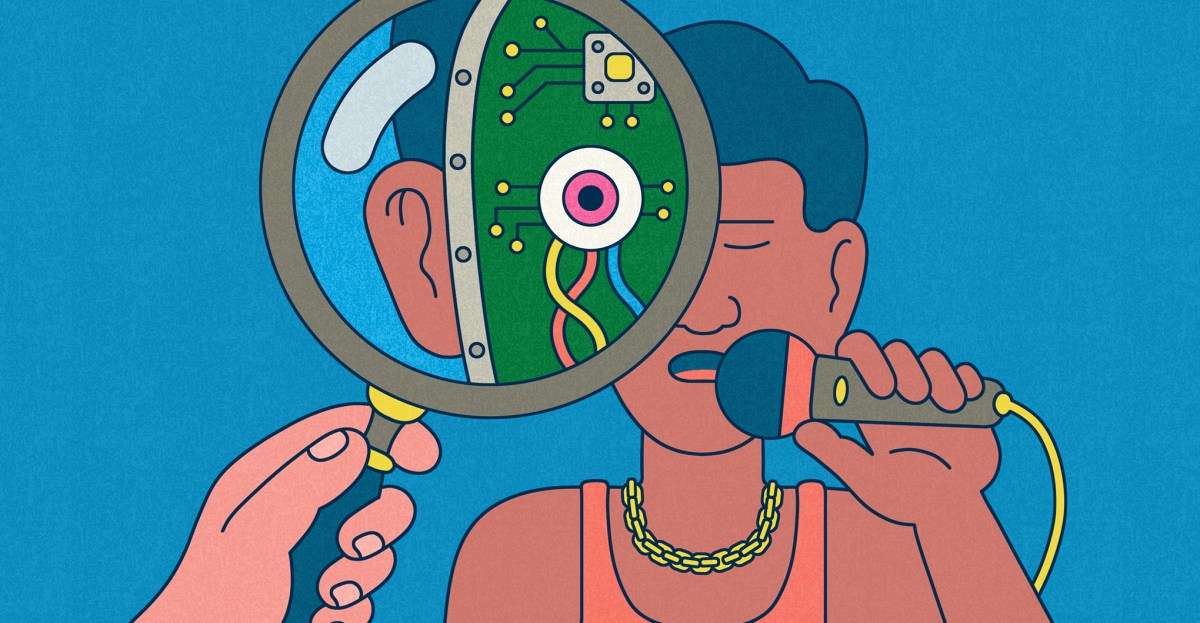
In the scramble to respond, a new category of infrastructure is quietly taking shape that’s built not to stop generative music outright, but to make it traceable. Detection systems are being embedded across the entire music pipeline: in the tools used to train models, the platforms where songs are uploaded, the databases that license rights, and the algorithms that shape discovery. The goal isn’t just to catch synthetic content after the fact. It’s to identify it early, tag it with metadata, and govern how it moves through the system.
“If you don’t build this stuff into the infrastructure, you’re just going to be chasing your tail,” says Matt Adell, cofounder of Musical AI. “You can’t keep reacting to every new track or model — that doesn’t scale. You need infrastructure that works from training through distribution.”
The goal isn’t takedowns, but licensing and control
Startups are now popping up to build detection into licensing workflows. Platforms like YouTube and Deezer have developed internal systems to flag synthetic audio as it’s uploaded and shape how it surfaces in search and recommendations. Other music companies — including Audible Magic, Pex, Rightsify, and SoundCloud — are expanding detection, moderation, and attribution features across everything from training datasets to distribution.
The result is a fragmented but fast-growing ecosystem of companies treating the detection of AI-generated content not as an enforcement tool, but as table-stakes infrastructure for tracking synthetic media.
Rather than detecting AI music after it spreads, some companies are building tools to tag it from the moment it’s made. Vermillio and Musical AI are developing systems to scan finished tracks for synthetic elements and automatically tag them in the metadata.
Vermillio’s TraceID framework goes deeper by breaking songs into stems — like vocal tone, melodic phrasing, and lyrical patterns — and flagging the specific AI-generated segments, allowing rights holders to detect mimicry at the stem level, even if a new track only borrows parts of an original.
The company says its focus isn’t takedowns, but proactive licensing and authenticated release. TraceID is positioned as a replacement for systems like YouTube’s Content ID, which often miss subtle or partial imitations. Vermillio estimates that authenticated licensing powered by tools like TraceID could grow from $75 million in 2023 to $10 billion in 2025. In practice, that means a rights holder or platform can run a finished track through TraceID to see if it contains protected elements — and if it does, have the system flag it for licensing before release.
“We’re trying to quantify creative influence, not just catch copies.”
Some companies are going even further upstream to the training data itself. By analyzing what goes into a model, their aim is to estimate how much a generated track borrows from specific artists or songs. That kind of attribution could enable more precise licensing, with royalties based on creative influence instead of post-release disputes. The idea echoes old debates about musical influence — like the “Blurred Lines” lawsuit — but applies them to algorithmic generation. The difference now is that licensing can happen before release, not through litigation after the fact.
Musical AI is working on a detection system, too. The company describes its system as layered across ingestion, generation, and distribution. Rather than filtering outputs, it tracks provenance from end to end.
“Attribution shouldn’t start when the song is done — it should start when the model starts learning,” says Sean Power, the company’s cofounder. “We’re trying to quantify creative influence, not just catch copies.”
Deezer has developed internal tools to flag fully AI-generated tracks at upload and reduce their visibility in both algorithmic and editorial recommendations, especially when the content appears spammy. Chief Innovation Officer Aurélien Hérault says that, as of April, those tools were detecting roughly 20 percent of new uploads each day as fully AI-generated — more than double what they saw in January. Tracks identified by the system remain accessible on the platform but are not promoted. Hérault says Deezer plans to begin labeling these tracks for users directly “in a few weeks or a few months.”
“We’re not against AI at all,” Hérault says. “But a lot of this content is being used in bad faith — not for creation, but to exploit the platform. That’s why we’re paying so much attention.”
Spawning AI’s DNTP (Do Not Train Protocol) is pushing detection even earlier — at the dataset level. The opt-out protocol lets artists and rights holders label their work as off-limits for model training. While visual artists already have access to similar tools, the audio world is still playing catch-up. So far, there’s little consensus on how to standardize consent, transparency, or licensing at scale. Regulation may eventually force the issue, but for now, the approach remains fragmented. Support from major AI training companies has also been inconsistent, and critics say the protocol won’t gain traction unless it’s governed independently and widely adopted.
“The opt-out protocol needs to be nonprofit, overseen by a few different actors, to be trusted,” Dryhurst says. “Nobody should trust the future of consent to an opaque centralized company that could go out of business — or much worse.”
