

Close Menu
TechurzTechurz
    What's Hot

    This startup’s super metals could soon be in military drones, luxury watches, and chef’s knives

    June 16, 2026

    Probably raises $9M to build a more reliable kind of AI

    June 16, 2026

    Payments startup Flutterwave hits $3.2B valuation, backed by Ripple

    June 16, 2026
    X (Twitter) Pinterest YouTube LinkedIn WhatsApp
    Tech Pulse
    • This startup’s super metals could soon be in military drones, luxury watches, and chef’s knives
    • Probably raises $9M to build a more reliable kind of AI
    • Payments startup Flutterwave hits $3.2B valuation, backed by Ripple
    • Malaysia’s AI agent-powered messaging app Respond.io raises $62.5M, eyes acquisitions
    • Sarvam becomes India’s newest AI unicorn with $234 million funding round led by HCLTech
    X (Twitter) Pinterest YouTube LinkedIn WhatsApp
    TechurzTechurz
    • Home
    • Tech Pulse
    • Future Tech
    • AI Systems
    • Cyber Reality
    • Disruption Lab
    • Signals
    TechurzTechurz
    Home - News - This Chinese Spacecraft Is Traveling to One of Earth’s Quasi-Moons
    News

    This Chinese Spacecraft Is Traveling to One of Earth’s Quasi-Moons

    TechurzBy TechurzJune 13, 2025Updated:May 11, 2026No Comments3 Mins Read
    Share Facebook Twitter Pinterest LinkedIn Tumblr Reddit Telegram Email
    This Chinese Spacecraft Is Traveling to One of Earth’s Quasi-Moons
    Share
    Facebook Twitter LinkedIn Pinterest Email

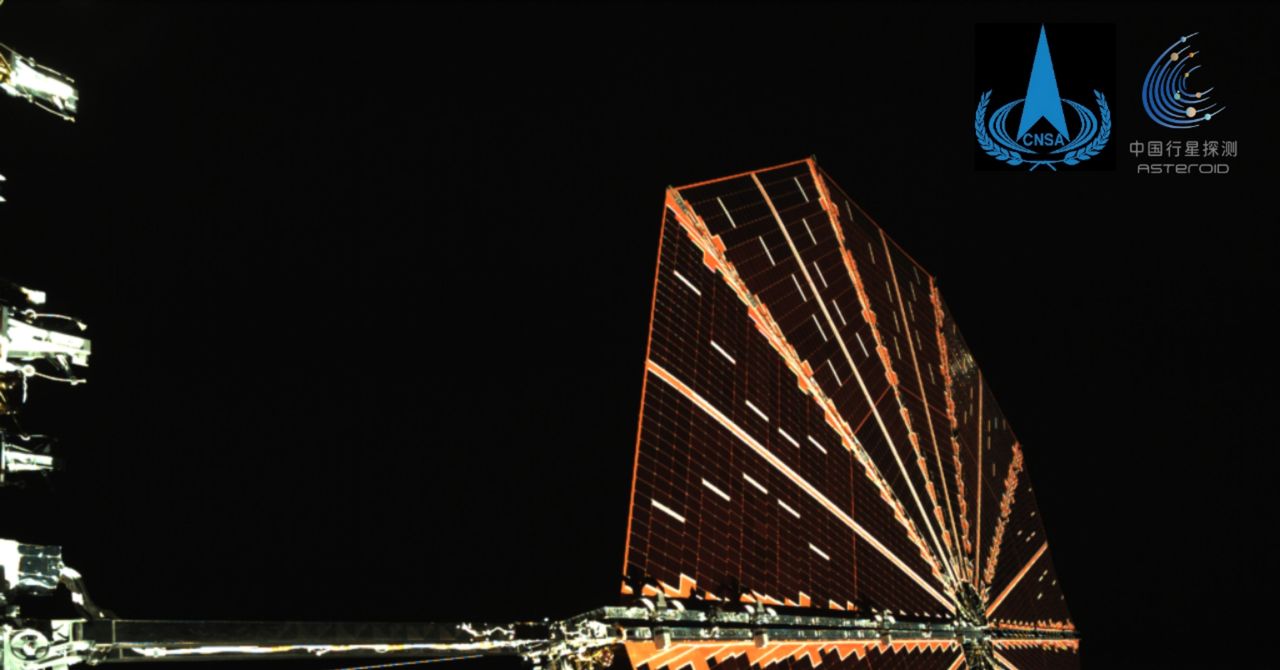
    The China National Space Administration has shared the first image from its Tianwen-2 probe, which is en route to Kamo’oalewa, a near-Earth asteroid.

    The image was captured by a camera onboard the probe, which is currently more than 3 million kilometers from Earth, and shows one of its wings with its solar panels deployed. It is also the first glimpse the CNSA has offered of its space probe, which launched on May 29 on a Long March 3B rocket from the Xichang Satellite Launch Center in Zeyuan Town, China. The design of Tianwen-2’s panels is similar in appearance to those on Lucy, NASA’s space probe that is exploring asteroids floating near Jupiter. These serve to meet the power demands required for the trip.

    Tianwen-2’s mission is to land on the surface of Kamo’oalewa, collect samples, and return to Earth. The spacecraft is scheduled to land on the asteroid’s surface in July 2026. Before then, it will spend several months studying Kamo’oalewa from a safe distance, to determine its sampling area, before proceeding with landing maneuvers, a particularly difficult task given the asteroid’s low gravity.

    Once the samples have been collected, Tianwen-2 will travel back to Earth and send its samples down to the surface in a capsule, before then attempting to use Earth’s gravity as a slingshot to head toward 311P/PanSTARRS, an unusual-looking asteroid beyond Mars that has some of the characteristics of a comet, including visible tails. Tianwen-2 is expected to conduct this mission until 2035.

    The Enigma of the Hawaiian Quasi-Moon

    Kamo’oalewa is one of Earth’s seven known quasi-moons—objects that appear to be orbiting our planet, but which aren’t actually gravitationally bound to Earth, and are actually asteroids circling the sun in an orbit similar to Earth’s.

    Discovered in 2016 by astronomers at the Haleakala Observatory in Hawaii, Kamo’oalewa—whose name means “oscillating celestial object” in Hawaiian—is located approximately 4.65 million kilometers from our planet, 12 times further away from Earth than the moon. Kamo’oalewa is estimated to be roughly 40 to 100 meters in diameter, has maintained its current orbit for 100 years, and will probably maintain it for 300 more.

    It’s hoped that Tianwen-2 can solve the mystery of Kamo’oalewa’s origin. One theory is that it’s a chunk of rock that broke off from the moon millions of years ago. The sampling mission will help multiple scientific investigations into the composition of rocky celestial bodies, as well as aid scientists in the search for clues about the formation of the solar system.

    Observational evidence and modeling suggest that Kamo’oalewa has been orbiting the sun for millions of years, albeit with an unstable trajectory. A direct exploration of this asteroid could, in addition, expand knowledge about nearby celestial objects that might potentially pose a threat to Earth.

    This story originally appeared on WIRED en Español and has been translated from Spanish.

    Chinese Earths QuasiMoons Spacecraft traveling
    Share. Facebook Twitter Pinterest LinkedIn Tumblr Email
    Previous ArticleThe best wireless chargers for 2025
    Next Article Arc Is Dead, but Its 9 Best Features Should Live On in Every Browser
    Techurz
    • Website

    Related Posts

    Opinion

    Chinese brain interface startup Gestala raises $21M just two months after launch

    March 12, 2026
    Cyber Reality

    Chinese hackers target Western diplomats using hard-to-patch Windows shortcut flaw

    October 31, 2025
    Cyber Reality

    Chinese Threat Actors Exploit ToolShell SharePoint Flaw Weeks After Microsoft’s July Patch

    October 22, 2025
    Add A Comment
    Latest Tech Pulse

    College social app Fizz expands into grocery delivery

    September 3, 20252,289

    SolarSquare in talks to raise up to $60M as India’s rooftop solar market draws major VC interest

    May 23, 202622

    Future of Digital Privacy and Security: 7 Truths Nobody Tells You

    May 25, 202619
    Stay In Touch
    • YouTube
    • WhatsApp
    • Twitter
    • Pinterest
    • LinkedIn

    Techurz helps readers stay ahead of digital change with clear, practical, future focused technology intelligence written today,searched tomorrow.

    X (Twitter) Pinterest YouTube LinkedIn WhatsApp
    Company
    • About Us
    • Contact Us
    • Our Authors / Editorial Team
    • Write For Us
    • Advertise
    Policy
    • Editorial Policy
    • Privacy Policy
    • Terms and Conditions
    • Affiliate Disclosure
    • Cookie Policy
    • Disclaimer
    • DMCA
    Explore
    • AI Systems
    • Cyber Reality
    • Future Tech
    • Disruption Lab
    • Signals
    • Tech Pulse
    • Sitemap

    Join the Techurz Brief

    The future does not arrive suddenly.
    Stay ahead with fast, sharp tech signals.

    Type above and press Enter to search. Press Esc to cancel.