

Close Menu
TechurzTechurz

    Subscribe to Updates

    Get the latest creative news from FooBar about art, design and business.

    What's Hot

    Netflix growing up, data center jet engines, and the circular AI economy

    December 12, 2025

    What most VCs won’t tell you about raising capital

    December 12, 2025

    Retro, a photo-sharing app for friends, lets you ‘time-travel’ through your camera roll

    December 12, 2025
    Facebook X (Twitter) Instagram
    Trending
    • Netflix growing up, data center jet engines, and the circular AI economy
    • What most VCs won’t tell you about raising capital
    • Retro, a photo-sharing app for friends, lets you ‘time-travel’ through your camera roll
    • The market has ‘switched’ and founders have the power now, VCs say
    • Capital is a commodity (but your investor relationships aren’t)
    • Harness hits $5.5B valuation with $240M raise to automate AI’s ‘after-code’ gap
    • On Me raises $6M to shake up the gift card industry
    • Interest in Spoor’s bird monitoring AI software is soaring
    Facebook X (Twitter) Instagram Pinterest Vimeo
    TechurzTechurz
    • Home
    • AI
    • Apps
    • News
    • Guides
    • Opinion
    • Reviews
    • Security
    • Startups
    TechurzTechurz
    Home»Security»US Border Agents Are Asking for Help Taking Photos of Everyone Entering the Country by Car
    Security

    US Border Agents Are Asking for Help Taking Photos of Everyone Entering the Country by Car

    TechurzBy TechurzMay 6, 2025No Comments3 Mins Read
    Share Facebook Twitter Pinterest LinkedIn Tumblr Reddit Telegram Email
    US Border Agents Are Asking for Help Taking Photos of Everyone Entering the Country by Car
    Share
    Facebook Twitter LinkedIn Pinterest Email

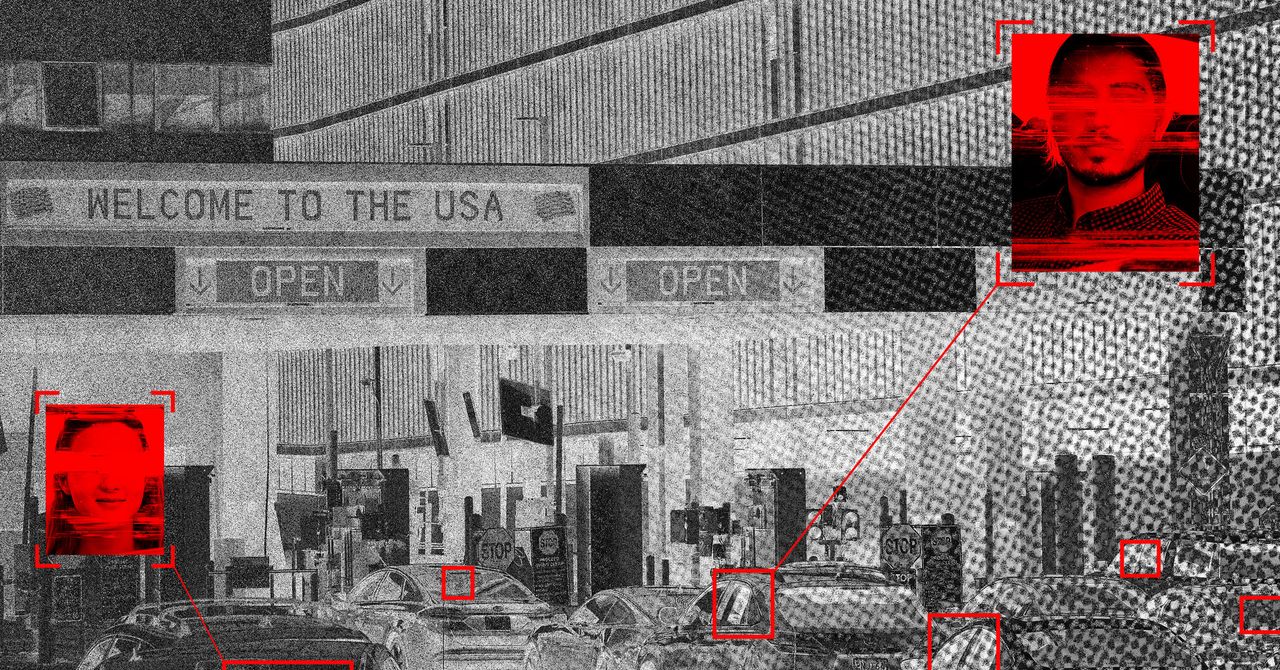
    United States Customs and Border Protection is asking tech companies to send pitches for a real-time facial recognition tool that would take photos of every single person in a vehicle at a border crossing, including anyone in the back seats, and match them to travel documents, according to a document posted in a federal register last week.

    The request for information, or RIF, says that CBP already has a facial recognition tool that takes a picture of a person at a port of entry and compares it to travel or identity documents that someone gives to a border officer, as well as other photos from those documents already “in government holdings.”

    “Biometrically confirmed entries into the United States are added to the traveler’s crossing record,” the document says.

    An agency under the Department of Homeland Security, CBP says that its facial recognition tool “is currently operating in the air, sea, and land pedestrian environments.” The agency’s goal is to bring it to “the land vehicle environment.” According to a page on CBP’s website updated last week, the agency is currently “testing” how to do so. The RIF says that these tests demonstrate that while this facial recognition tool has “improved,” it isn’t always able to get photos of every vehicle passenger, especially if they’re in the second or third row.

    “Human behavior, multiple passenger vehicle rows, and environmental obstacles all present challenges unique to the vehicle environment,” the document says. CBP says it wants a private vendor to provide it with a tool that would “augment the passenger images” and “capture 100% of vehicle passengers.”

    Dave Maass, director of investigations at the Electronic Frontier Foundation, received a document from CBP via public record request that reveals the results of a 152 day test the agency conducted on its port of entry facial recognition system from late 2021 to early 2022. The document Maass obtained was first reported by The Intercept.

    Maas said that what stood out to him was the error rates. Cameras at the Anzalduas border crossing at Mexico’s border with McAllen, Texas captured photos of everyone in the car just 76 percent of the time, and of those people, just 81 percent met the “validation requirements” for matching their face with their identification documents.

    The current iteration of the system matches a person’s photo to their travel documents in what’s known as one-to-one facial recognition. The primary risk here, Maas says, is the system failing to recognize that someone matches their own documents. This differs from one-to-many facial recognition, which police may use to identify a suspect based on a surveillance photo, where the primary risk is someone getting a false positive match and being falsely identified as a suspect.

    Maas says it’s unclear whether CBP’s error rates primarily have to do with the cameras or the matching system itself. “We don’t know what racial disparities, gender disparities, etc, come up with these systems,” he says.

    As reported by The Intercept in 2024, the DHS’s Science and Technology Directorate issued a request for information last August that’s similar to the one that CBP posted last week. However, the DHS document currently appears to be unavailable.

    agents Border Car Country Entering Photos
    Share. Facebook Twitter Pinterest LinkedIn Tumblr Email
    Previous ArticleMicrosoft has a great deal on Windows 365 – which runs out just in time for Windows 10 end of life
    Next Article Why the humanoid workforce is running late
    Techurz
    • Website

    Related Posts

    Opinion

    AWS needs you to believe in AI agents

    December 5, 2025
    Security

    AI is becoming introspective – and that ‘should be monitored carefully,’ warns Anthropic

    November 3, 2025
    Security

    Perplexity’s new AI tool lets you search patents with natural language – and it’s free

    November 3, 2025
    Add A Comment
    Leave A Reply Cancel Reply

    Top Posts

    College social app Fizz expands into grocery delivery

    September 3, 202520 Views

    A Former Apple Luminary Sets Out to Create the Ultimate GPU Software

    September 25, 202513 Views

    The Reason Murderbot’s Tone Feels Off

    May 14, 20259 Views
    Stay In Touch
    • Facebook
    • YouTube
    • TikTok
    • WhatsApp
    • Twitter
    • Instagram
    Latest Reviews

    Subscribe to Updates

    Get the latest tech news from FooBar about tech, design and biz.

    Most Popular

    College social app Fizz expands into grocery delivery

    September 3, 202520 Views

    A Former Apple Luminary Sets Out to Create the Ultimate GPU Software

    September 25, 202513 Views

    The Reason Murderbot’s Tone Feels Off

    May 14, 20259 Views
    Our Picks

    Netflix growing up, data center jet engines, and the circular AI economy

    December 12, 2025

    What most VCs won’t tell you about raising capital

    December 12, 2025

    Retro, a photo-sharing app for friends, lets you ‘time-travel’ through your camera roll

    December 12, 2025

    Subscribe to Updates

    Get the latest creative news from FooBar about art, design and business.

    Facebook X (Twitter) Instagram Pinterest
    • About Us
    • Contact Us
    • Privacy Policy
    • Terms and Conditions
    • Disclaimer
    © 2025 techurz. Designed by Pro.

    Type above and press Enter to search. Press Esc to cancel.