

Close Menu
TechurzTechurz
    What's Hot

    Arcturus could halve the grid’s electrical losses using its nano-infused copper

    June 30, 2026

    Arena, the AI leaderboard everyone uses, is now a $100M business

    June 29, 2026

    Omen AI’s plan to optimize data centers is all wet

    June 29, 2026
    X (Twitter) Pinterest YouTube LinkedIn WhatsApp
    Tech Pulse
    • Arcturus could halve the grid’s electrical losses using its nano-infused copper
    • Arena, the AI leaderboard everyone uses, is now a $100M business
    • Omen AI’s plan to optimize data centers is all wet
    • Asian AI startups launch Mythos-like models as Anthropic’s export ban drags on
    • Corgi, the buzzy Y Combinator-backed insurance tech startup, says it didn’t steal an open source product
    X (Twitter) Pinterest YouTube LinkedIn WhatsApp
    TechurzTechurz
    • Home
    • Tech Pulse
    • Future Tech
    • AI Systems
    • Cyber Reality
    • Disruption Lab
    • Signals
    TechurzTechurz
    Home - Security - What Satellite Images Reveal About the US Bombing of Iran’s Nuclear Sites
    Security

    What Satellite Images Reveal About the US Bombing of Iran’s Nuclear Sites

    TechurzBy TechurzJune 23, 2025No Comments3 Mins Read
    Share Facebook Twitter Pinterest LinkedIn Tumblr Reddit Telegram Email
    What Satellite Images Reveal About the US Bombing of Iran's Nuclear Sites
    Share
    Facebook Twitter LinkedIn Pinterest Email

    When the United States bombed Iran in the early hours of Sunday local time, it targeted three facilities central to the country’s nuclear ambitions: the Fordow uranium enrichment plant, the Natanz nuclear facility, and the Isfahan nuclear technology center. Newly released satellite images show the impact of the attack—at least, what can be seen on the ground.

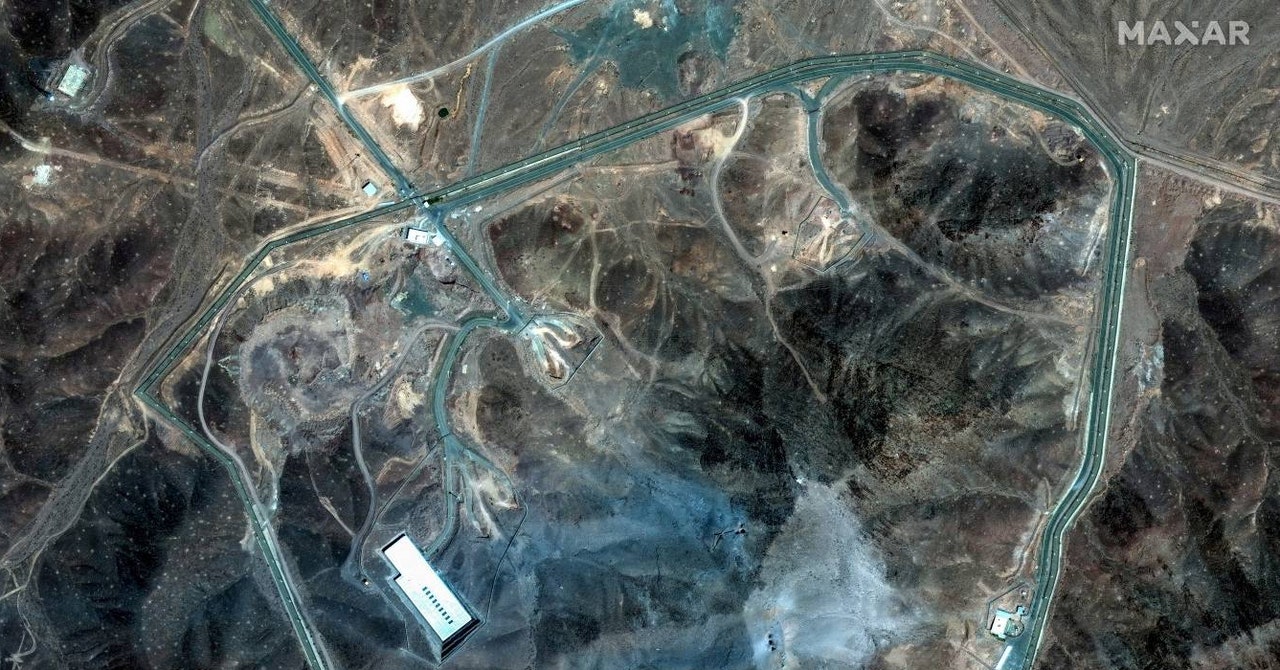
    The brunt of the bombing focused on Fordow, where US forces dropped a dozen GBU-57 Massive Ordnance Penetrators as part of its “Midnight Hammer” operation. These 30,000-pound “bunker-buster” bombs are designed to penetrate as deep as 200 feet into the earth before detonating. The Fordow complex is approximately 260 feet underground.

    That gap accounts for some of the uncertainty over exactly how much damage the Fordow site sustained. President Donald Trump shared a post on his Truth Social platform following the attack that declared “Fordow is gone,” and later said in a televised address that “Iran’s key nuclear enrichment facilities have been completely and totally obliterated.” His own military, however, was slightly more circumspect about the outcome in a Sunday morning briefing. “It would be way too early for me to comment on what may or may not still be there,” said general Dan Caine, chairman of the Joint Chiefs of Staff.

    Satellite imagery can inherently only tell you so much about a structure that is situated so far below the surface of the earth. But before and after imagery is the best publicly available information about the bombing’s impact.

    A satellite image from before the US bombing of Fordow.

    Photo: MAXAR Technologies/Handout via Reuters

    A satellite image from after the US bombing of Fordow.

    Photo: MAXAR Technologies/Handout via Reuters

    “What we see are six craters, two clusters of three, where there were 12 massive ordnance penetrators dropped,” says Jeffrey Lewis, director of the East Asia Nonproliferation Program at the Middlebury Institute’s James Martin Center for Nonproliferation Studies. “The idea is you hit the same spot over and over again to kind of dig down.”

    The specific locations of those craters matter as well, says Joseph Rodgers, deputy director and fellow at the Center for Strategic and International Studies’ Project on Nuclear Issues. While the entrance tunnels to the Fordow complex appear not to have been targeted, US bombs fell on what are likely ventilation shafts, based on satellite images of early construction at the site.

    “The reason that you’d want to target a ventilation shaft is that it’s a more direct route to the core components of the underground facility,” says Rodgers.

    That direct route is especially important given how deep underground Fordow was built. The US military relies on “basically a computer model” of the facility, says Lewis, which tells them “how much pressure it could take before it would severely damage everything inside and maybe even collapse the facility.” By bombarding specific targeted areas with multiple munitions, the US didn’t need bombs capable of penetrating the full 260 feet to cause substantial damage.

    “They’re probably not trying to get all the way into the facility. They’re probably just trying to get close enough to it and crush it with a shockwave,” Lewis says. “If you send a big enough shockwave through that facility, it’s going to kill people, break stuff, damage the integrity of it.”

    Bombing images Irans Nuclear reveal satellite sites
    Share. Facebook Twitter Pinterest LinkedIn Tumblr Email
    Previous ArticleBuild a Career Safety Net That Runs Itself with This $39 Tool
    Next Article Deals: Pixel 9, Galaxy S25 and Honor 400 series offered with freebies, cashback and discounts
    Techurz
    • Website

    Related Posts

    Opinion

    K2 to launch its first high-powered satellite for space compute

    March 19, 2026
    Opinion

    What the Epstein files reveal about EV startups and Silicon Valley

    February 15, 2026
    Opinion

    SkyFi raises $12.7M to turn satellite images into insights

    January 14, 2026
    Add A Comment
    Latest Tech Pulse

    College social app Fizz expands into grocery delivery

    September 3, 20252,290

    SolarSquare in talks to raise up to $60M as India’s rooftop solar market draws major VC interest

    May 23, 202622

    Future of Digital Privacy and Security: 7 Truths Nobody Tells You

    May 25, 202619
    Stay In Touch
    • YouTube
    • WhatsApp
    • Twitter
    • Pinterest
    • LinkedIn

    Techurz helps readers stay ahead of digital change with clear, practical, future focused technology intelligence written today,searched tomorrow.

    X (Twitter) Pinterest YouTube LinkedIn WhatsApp
    Company
    • About Us
    • Contact Us
    • Our Authors / Editorial Team
    • Write For Us
    • Advertise
    Policy
    • Editorial Policy
    • Privacy Policy
    • Terms and Conditions
    • Affiliate Disclosure
    • Cookie Policy
    • Disclaimer
    • DMCA
    Explore
    • AI Systems
    • Cyber Reality
    • Future Tech
    • Disruption Lab
    • Signals
    • Tech Pulse
    • Sitemap

    Join the Techurz Brief

    The future does not arrive suddenly.
    Stay ahead with fast, sharp tech signals.

    Type above and press Enter to search. Press Esc to cancel.