

Close Menu
TechurzTechurz
    What's Hot

    Asian AI startups launch Mythos-like models as Anthropic’s export ban drags on

    June 27, 2026

    Corgi, the buzzy Y Combinator-backed insurance tech startup, says it didn’t steal an open source product

    June 26, 2026

    OpenAI poaches Uber India chief to lead its biggest market outside the US

    June 26, 2026
    X (Twitter) Pinterest YouTube LinkedIn WhatsApp
    Tech Pulse
    • Asian AI startups launch Mythos-like models as Anthropic’s export ban drags on
    • Corgi, the buzzy Y Combinator-backed insurance tech startup, says it didn’t steal an open source product
    • OpenAI poaches Uber India chief to lead its biggest market outside the US
    • Early Bird pricing ends tonight for Founder Summit
    • Robotaxis drive miles just to get cleaned and charged; this new startup wants to fix that
    X (Twitter) Pinterest YouTube LinkedIn WhatsApp
    TechurzTechurz
    • Home
    • Tech Pulse
    • Future Tech
    • AI Systems
    • Cyber Reality
    • Disruption Lab
    • Signals
    TechurzTechurz
    Home - Disruption Lab - 500-Million-Year-Old Fossil Molecules Offer Rare Insight Into How Earth’s First Animals Lived And Ate
    Disruption Lab

    500-Million-Year-Old Fossil Molecules Offer Rare Insight Into How Earth’s First Animals Lived And Ate

    TechurzBy TechurzAugust 30, 2025Updated:May 11, 2026No Comments3 Mins Read
    Share Facebook Twitter Pinterest LinkedIn Tumblr Reddit Telegram Email
    500-Million-Year-Old Fossil Molecules Offer Rare Insight Into How Earth’s First Animals Lived And Ate
    Share
    Facebook Twitter LinkedIn Pinterest Email

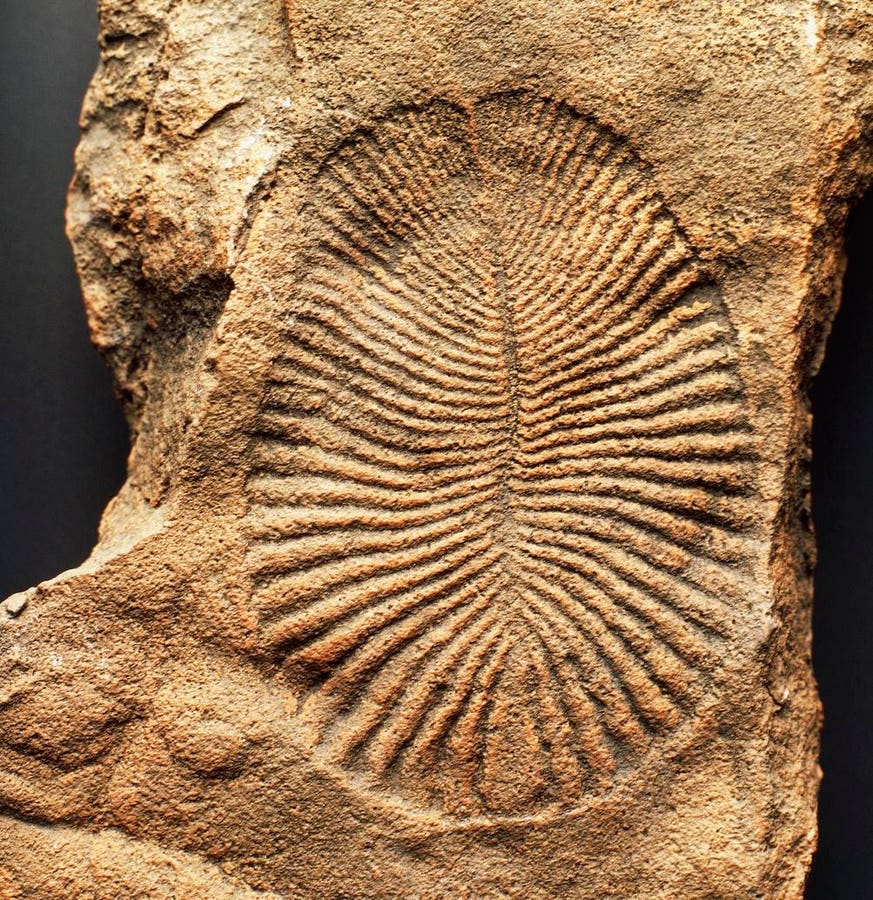
    Dickinsonia costata fossil, Ediacaran biota, Precambrian Period.

    De Agostini via Getty Images

    In a new study, Christopher Mulligan, a Ph.D. student at the Department of Earth and Planetary Sciences, University of California, reexamined chemical traces in Dickinsonia, one of the earliest known multicellular organism on Earth. Its fossils contain unusually high levels of coprostane-like molecules, a chemical compound linked to modern animals.

    In 1947, geologist Reginald C. Sprigg announced the discovery of fossils of possible animal-like creatures from the Ediacara Hills in Australia. Preliminary dating of the rock formations revealed that the Ediacara Fauna was living more than 500 million years ago in a shallow sea.

    Dickinsonia is one of the most enigmatic critters of the Ediacara Fauna, resembling a sort of hybrid between a worm and a jellyfish. Scientists have long debated if it was an animal at all, with some even suggesting a lichen affinity.

    Since its discovery, chemical tests have shown many molecules linked to modern animals, including steroids and coprostanol, preserved in Dickinsonia fossils. To test where the coprostanol compound came from, Mulligan analyzed 115 animal genomes to look for evidence when coprostane-producing enzymes first evolved. The results showed no evidence in invertebrates, suggesting Dickinsonia’s coprostanol wasn’t produced by the organism itself.

    While the study cannot rule out the possibility of contamination, Mulligan proposes an alternative hypothesis to explain how the coprostanol ended into the Dickinsonia fossils.

    Coprostane-like molecules can be derived from the decay of other organic compounds. The seafloor of the Ediacaran sea — as suggested by fossil evidence — was covered by a dense microbial mat. The microorganisms living in the microbial mat fed on decaying organic material, and among their waste products were coprostane-like molecules. Dickinsonia, feeding on the microbial mat, accumulated and preserved these molecules in its soft tissue. Still today, bacteria living in vertebrate guts form coprostanol by metabolizing cholesterol, and coprostanol is typically released into the environment as a waste product (curiously enough, human feces are especially enriched in coprostanol).

    Dickinsonia apparently possesses no visible mouth or digestion system, and scientists were unsure how the living organism sustained itself. Some argued that the lack of any feeding mechanism was the result of poor preservation in the coarse-grained sandstone where Dickinsonia fossils are found. Others imagined Dickinsonia slowly crawling around the seafloor, then resting on selected spots and absorbing nutrients directly through its soft body surface. The new study seems to support this feeding strategy, offering a rare insight into how some of Earth’s first animals lived and ate.

    The full study, “A Reassessment of the Coprostane Biomarker in the Ediacaran With Implications for Dickinsonia,” was published in the journal Geobiology and can be found online here.

    Additional material and interviews provided by University of California.

    500MillionYearOld animals Ate Earths Fossil insight Lived molecules offer Rare
    Share. Facebook Twitter Pinterest LinkedIn Tumblr Email
    Previous ArticleThe fall of EV startup Fisker: A comprehensive timeline
    Next Article Anthropic detects the inevitable: genAI-only attacks, no humans involved
    Techurz
    • Website

    Related Posts

    Opinion

    Sam Altman makes ‘mic drop’ offer to every Y Combinator startup

    May 20, 2026
    Opinion

    How SpaceX preempted a $2B fundraise with a $60B buyout offer

    April 22, 2026
    Opinion

    Insight Partners scrubs investment post about Delve amid ‘fake compliance’ allegations

    March 24, 2026
    Add A Comment
    Latest Tech Pulse

    College social app Fizz expands into grocery delivery

    September 3, 20252,290

    SolarSquare in talks to raise up to $60M as India’s rooftop solar market draws major VC interest

    May 23, 202622

    Future of Digital Privacy and Security: 7 Truths Nobody Tells You

    May 25, 202619
    Stay In Touch
    • YouTube
    • WhatsApp
    • Twitter
    • Pinterest
    • LinkedIn

    Techurz helps readers stay ahead of digital change with clear, practical, future focused technology intelligence written today,searched tomorrow.

    X (Twitter) Pinterest YouTube LinkedIn WhatsApp
    Company
    • About Us
    • Contact Us
    • Our Authors / Editorial Team
    • Write For Us
    • Advertise
    Policy
    • Editorial Policy
    • Privacy Policy
    • Terms and Conditions
    • Affiliate Disclosure
    • Cookie Policy
    • Disclaimer
    • DMCA
    Explore
    • AI Systems
    • Cyber Reality
    • Future Tech
    • Disruption Lab
    • Signals
    • Tech Pulse
    • Sitemap

    Join the Techurz Brief

    The future does not arrive suddenly.
    Stay ahead with fast, sharp tech signals.

    Type above and press Enter to search. Press Esc to cancel.