


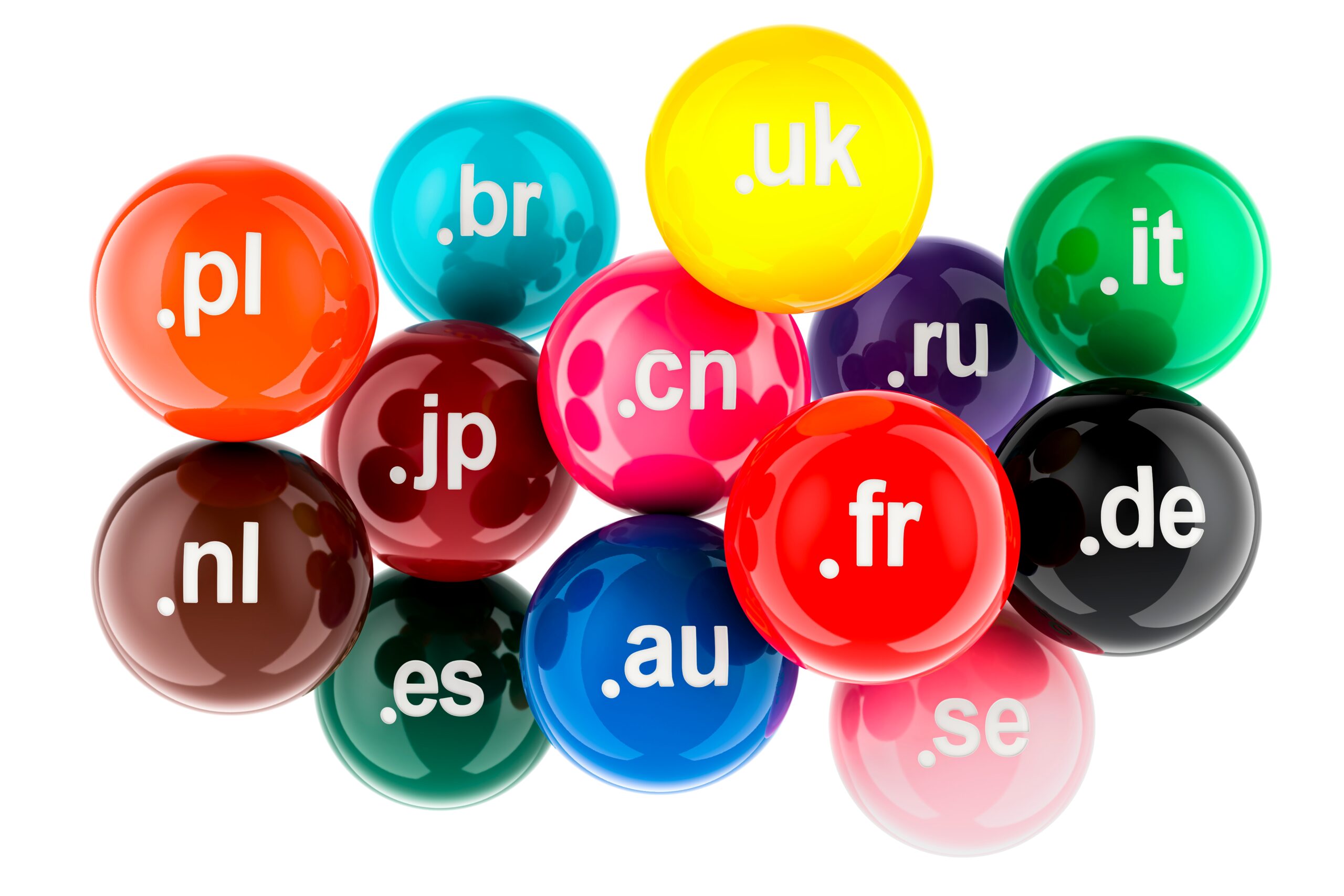
To succeed in the digital age, businesses must not only establish a strong online presence but continuously adapt their digital strategy as the virtual landscape evolves.
While there is no one-size-fits-all solution for rapid business expansion, a practical and impactful step is the use of country code top-level domains, or ccTLDs, to build consumer trust and enhance local visibility.
Subject to some regional requirements, these domains – such as .ai for Anguilla or .au for Australia – offer a simple yet effective way to signal geographic relevance and credibility.
You may like
Despite the growing convenience of modern search tools, the value of country code top-level domains (ccTLDs) remains largely untapped.
Often perceived as minor variations at the end of a URL, ccTLDs in fact play a crucial role in branding, security, economic development, and regional search engine optimisation (SEO).
Modern registry services and registrar tools offer streamlined management, making it surprisingly efficient for businesses to expand their global digital footprint while maintaining local relevance.
Ram Mohan
Social Links Navigation
Chief Strategy Officer at Identity Digital
Local loyalty: Building consumer trust and visibility
To attract customers in new regions, building a trustworthy brand is essential. Without trust, business growth is unlikely.
Country code top-level domains (ccTLDs) serve as a signal of credibility, increasing the likelihood that customers will not only make a visit but also return and potentially make a purchase.
According to au Domain Administration’s (auDA) “Why .au” survey, half of Australians only buy from online businesses with a .au domain.
Moreover, three in four Australians are more likely to trust a business if its website ends in .au, underscoring the powerful role domain names play in fostering consumer confidence.
For businesses expanding into new markets, a localised domain name demonstrates long-term commitment to the region and signals an intention to build lasting customer relationships.
Customising the website to reflect local culture and language further enhances this connection, delivering a more personalised, hyperlocal experience for both new and returning visitors.
Equally important, using a relevant ccTLD can sometimes improve a site’s ranking in region-specific search engine results – boosting organic visibility and driving growth. Search engines often use ccTLDs as a strong geographic signal, helping them to serve relevant content to users in specific regions.
Trend-setters: Harnessing trend-driven ccTLDs
Although traditionally used to signal geographic relevance, ccTLDs are increasingly proving their value on the global stage.
Amid shifting global trends and surging interest in emerging technologies, certain ccTLDs have evolved into powerful marketing tools – delivering substantial economic benefits to their countries of origin. A prime example of this is Anguilla’s now-coveted .ai domain.
As artificial intelligence (AI) has gained global prominence, demand for the .ai domain has surged – growing nearly 400% over the past five years. This rapid adoption has generated substantial revenue for Anguilla.
The Independent reported that, in 2023 alone, .ai accounted for about 20% of Anguilla’s total government revenue. The same article revealed that this windfall has helped fund vital national projects, including airport expansion, improved healthcare for the elderly, and accelerated development of the island’s vocational training centre.
Anguilla is not an isolated case. Other nations have also reaped economic rewards from their ccTLDs – such as .tv for Tuvalu, .pr for Puerto Rico, and .ly for Libya.
In a crowded digital landscape, these domains allow brands to differentiate themselves and quickly convey their niche. This clarity is especially powerful when it comes to driving growth and establishing a strong, memorable presence online.
ccTLDs can also be chosen for their strategic relevance to a specific industry or offering, even if they aren’t globally viral. For instance, a one-to-one business might find a .me (Montenegro) or a local artisan in Italy might prioritize a .it for credibility within their local community.
Beyond boosting national economies and enhancing consumer trust, ccTLDs also serve as digital homes for smaller communities and cultures.
While widely spoken languages like English, Spanish, and Chinese dominate the web, approximately 3,078 of the world’s 7,168 living languages are classified as endangered as of 2023.
In the effort to preserve cultural heritage, it’s essential that the internet remains inclusive – free from limitations based on language or geographic origin. This is where ccTLDs play a vital role in supporting linguistic and cultural diversity online.
At the heart of this mission is the principle of Universal Acceptance – the idea that all domain names and email addresses should function seamlessly across every internet-connected device and software, without technical barriers or bias.
In this context, ccTLDs act as digital beacons, enabling diverse communities to establish an online presence that reflects their unique identity.
For small and medium-sized businesses, using a ccTLD isn’t just about reaching customers – it’s about fostering a sense of belonging. By choosing a domain that resonates with a specific cultural or regional audience, these businesses can build not only a customer base, but a community.
The enduring importance of ccTLDs
ccTLDs offer businesses a unique opportunity to build trust, enhance local visibility, and connect authentically with diverse communities.
Beyond their traditional role in indicating geographic relevance, ccTLDs have evolved into powerful tools for branding, economic growth, and cultural preservation. By strategically leveraging ccTLDs, businesses can not only stand out in a crowded digital landscape but also position themselves for sustained success both locally and globally.
To explore how a specific ccTLD can strategically enhance your brand’s localized strategy and serve as a powerful asset in your digital toolkit, begin by researching the availability and relevance of domains in your target markets.
This article was produced as part of TechRadarPro’s Expert Insights channel where we feature the best and brightest minds in the technology industry today. The views expressed here are those of the author and are not necessarily those of TechRadarPro or Future plc. If you are interested in contributing find out more here: https://www.techradar.com/news/submit-your-story-to-techradar-pro
