

Close Menu
TechurzTechurz
    What's Hot

    Peec, one of Berlin’s rising startups, more than doubled annualized revenue in months to $10M, sources say

    May 23, 2026

    This young startup is taking on a fragrance industry that hasn’t changed in a almost half century

    May 21, 2026

    Maka Kids is redefining kids’ screen time with a streaming app optimized for well-being, not engagement

    May 21, 2026
    Facebook X (Twitter) Instagram
    Tech Pulse
    • Peec, one of Berlin’s rising startups, more than doubled annualized revenue in months to $10M, sources say
    • This young startup is taking on a fragrance industry that hasn’t changed in a almost half century
    • Maka Kids is redefining kids’ screen time with a streaming app optimized for well-being, not engagement
    • Beauty booking startup Fresha hits $1 billion valuation with KKR backing
    • General Catalyst just led a $63M bet on India’s travel payments market
    X (Twitter) Pinterest YouTube LinkedIn WhatsApp
    TechurzTechurz
    • Home
    • Tech Pulse
    • Future Tech
    • AI Systems
    • Cyber Reality
    • Disruption Lab
    • Signals
    TechurzTechurz
    Home - AI - SPARCS CubeSats to Test Electrodynamic Tethers
    AI

    SPARCS CubeSats to Test Electrodynamic Tethers

    TechurzBy TechurzJune 23, 2025Updated:May 10, 2026No Comments3 Mins Read
    Share Facebook Twitter Pinterest LinkedIn Tumblr Reddit Telegram Email
    SPARCS CubeSats to Test Electrodynamic Tethers
    Share
    Facebook Twitter LinkedIn Pinterest Email


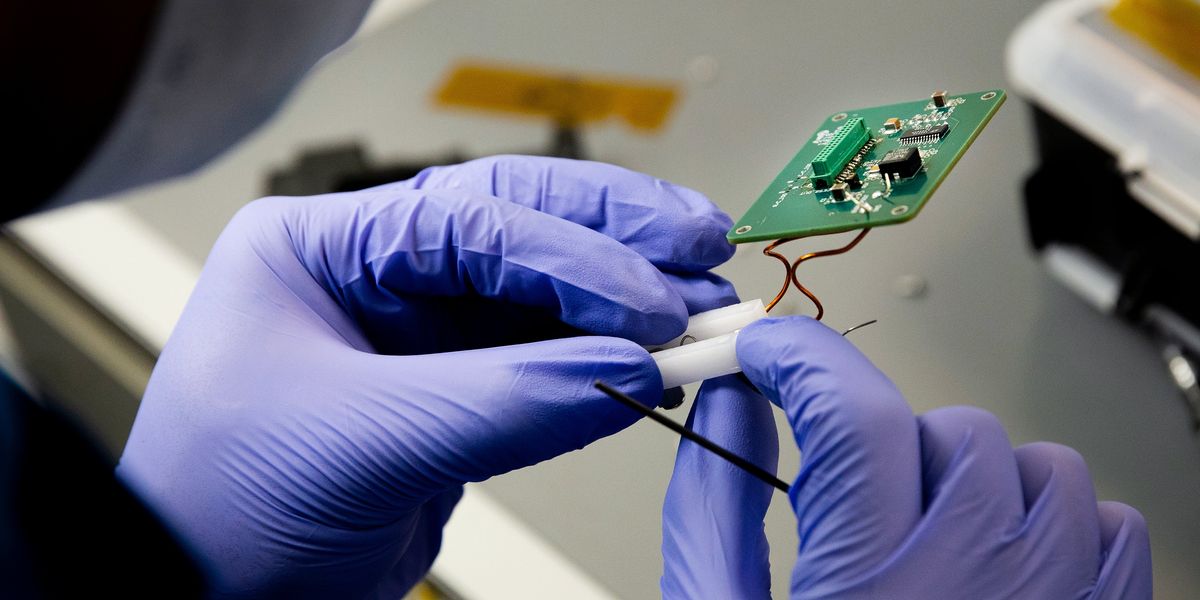
    More and more satellites are being added to low Earth orbit (LEO) every month. As that number continues to increase, so do the risks of that critical area surrounding Earth becoming impassable, trapping us on the planet for the foreseeable future. Ideas from different labs have presented potential solutions to this problem, but one of the most promising, electrodynamic tethers (EDTs), have only now begun to be tested in space. A new CubeSat called the Spacecraft for Advanced Research and Cooperative Studies (SPARCS) mission from researchers at the Sharif University of Technology in Tehran hopes to contribute to that effort by testing an EDT and inter-satellite communication system as well as collecting real-time data on the radiation environment of its orbital path.

    aspect_ratio

    SPARCS actually consists of two separate CubeSats. SPARCS-A is a 1U CubeSat primarily designed as a communications platform, with the mission design requiring it to talk to SPARCS-B, which is a 2U CubeSat that, in addition to the communication system, contains a EDT. That EDT, which can measure up to 12 meters in length, is deployed via a servomotor, with a camera watching to ensure proper deployment.

    EDTs are essentially giant poles with electric current running through them. They use this current, and the tiny magnetic field it produces, to push off of the Earth’s natural magnetic sphere using a property called the Lorentz force. This allows the satellite to adjust its orbit without the use of fuel, simply by orienting its EDT in a specific direction (which the EDT itself can assist with) and then using the Lorentz force to either push it up into a higher orbit, or—more importantly for the purposes for technology demonstration—to slow the CubeSat down to a point where it make a controlled entry into the atmosphere.

    That controlled entry feature is why EDTs have garnered so much attention. Previous missions, such as KITE from JAXA and MiTEE from the University of Michigan have already attempted to use EDTs to change their orbits. Unfortunately neither of those missions successfully utilized their EDT, though a follow-up mission called MiTEE-2 is in the works with an even larger EDT than SPARCS.

    The final piece of SPARCS’ kit is its dosimeter, which is intended to monitor the radiation environment of its orbit. As anyone familiar with spacecraft design knows, radiation hardening of electronics is absolutely critical to the success of a mission, but it is also expensive and time consuming, so best done at a minimal required level. Understanding the radiation environment of this popular orbital path can help future engineers make better, and hopefully less expensive, design decisions tailored to operation in this specific area.

    Engineers have already finalized the design for the mission and have run simulations showing its expected operations. They have now moved on to building an engineering model of the two CubeSats, allowing them to validate their design and test the real-world implementation before it is ready for launch. Given the current turmoil in that region of the world, there is a chance that conflict could put a halt to development of this system. But, if successfully tested and launched, the very first demonstration of an EDT system could be deployed in the not-to-distant future.

    From Your Site Articles

    Related Articles Around the Web

    CubeSats Electrodynamic SPARCS test Tethers
    Share. Facebook Twitter Pinterest LinkedIn Tumblr Email
    Previous Article5 Chromecast features to make the most of your TV (including a smart home hack)
    Next Article Mattress Encasement vs. Mattress Protector
    Techurz
    • Website

    Related Posts

    Cyber Reality

    The ultimate business resiliency test: Inside Kantsu’s ransomware response

    October 9, 2025
    AI

    How we feel about AI friends, OpenAI’s money, and vibe coding

    September 13, 2025
    AI

    Your Powerbeats Pro 2 are getting a serious upgrade – but there’s a catch

    September 13, 2025
    Add A Comment
    Latest Tech Pulse

    College social app Fizz expands into grocery delivery

    September 3, 20252,289 Views

    A Former Apple Luminary Sets Out to Create the Ultimate GPU Software

    September 25, 202516 Views

    AI is becoming introspective – and that ‘should be monitored carefully,’ warns Anthropic

    November 3, 202512 Views
    Stay In Touch
    • YouTube
    • WhatsApp
    • Twitter
    • Pinterest
    • LinkedIn

    Techurz helps readers stay ahead of digital change with clear, practical, future-focused technology intelligence - written today, searched tomorrow.

    X (Twitter) Pinterest YouTube LinkedIn WhatsApp
    Company
    • About Us
    • Contact Us
    • Our Authors / Editorial Team
    • Write For Us
    • Advertise
    Policy
    • Editorial Policy
    • Privacy Policy
    • Terms and Conditions
    • Affiliate Disclosure
    • Cookie Policy
    • Disclaimer
    • DMCA
    Explore
    • AI Systems
    • Cyber Reality
    • Future Tech
    • Disruption Lab
    • Signals
    • Tech Pulse
    • Sitemap

    Join the Techurz Brief

    The future does not arrive suddenly.
    Stay ahead with fast, sharp tech signals.

    Type above and press Enter to search. Press Esc to cancel.