


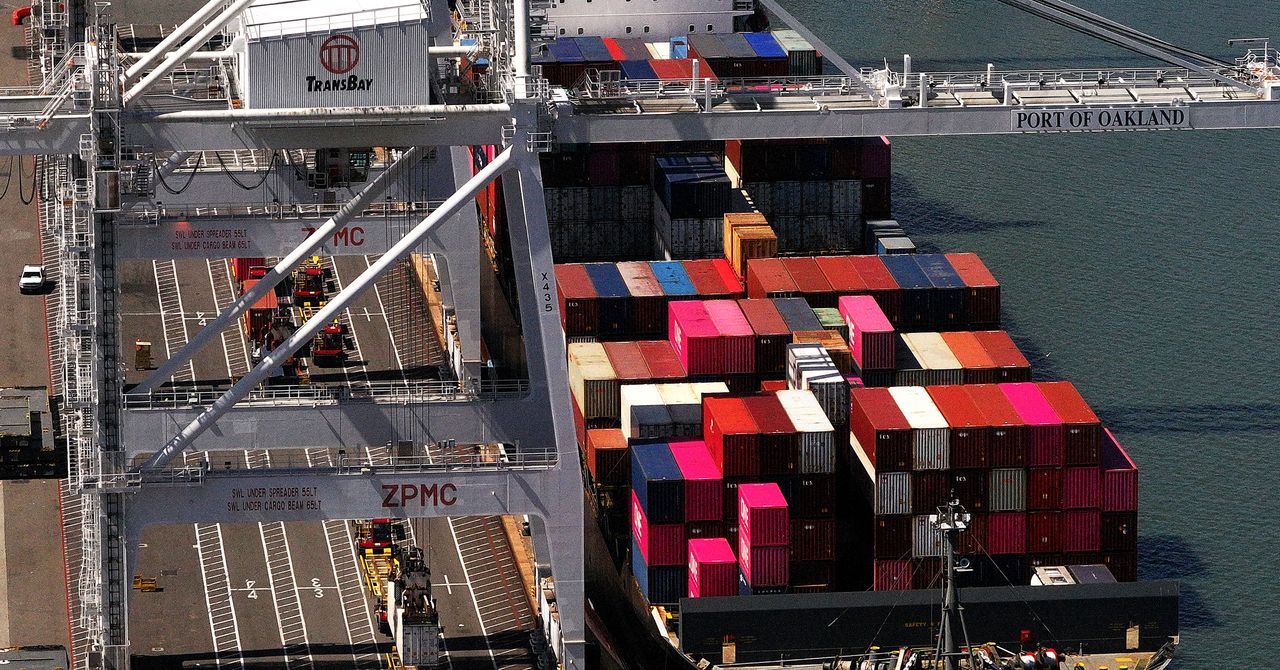
As the chief merchandising officer for one of the largest sellers on Amazon, Owen Carr knew that the deck chairs he ordered from a Chinese factory in early April would cost him more than ever before. That’s because the chairs, which normally go for $79 on Amazon, were among the first Chinese imports subject to minimum tariffs of 145 percent—a sky-high rate imposed by President Donald Trump—when they arrived at a port in Seattle in late April. “I was paying more to customs than to the factory for the good itself,” Carr says. “Mind boggling.”
Now his company, Spreetail, is part of a narrow class of importers asking whether the Trump administration might provide a refund. On May 12, Trump reached a 90-day trade-war truce with China, cutting the minimum China tariffs to just 30 percent. The higher rate was in effect barely a month, from April 10 through May 14. “We did think there would be an agreement, but we didn’t think it would be that fast and that low,” Carr says.
A handful of trade attorneys who spoke with WIRED say they have told clients that refunds are unprecedented and unlikely—but not impossible. Businesses that had to pay the higher rate believe they were unfairly ensnared in Trump’s hasty negotiations. “There’s still a chance” of refunds, says Michael Roll, a partner at Roll & Harris. “I wouldn’t say there’s hope. I wouldn’t bet on that.”
Trump, Congress, or the courts would have to authorize a new tariffs exemption for companies caught up in the trade deal for refunds to become a reality. Attorneys say their clients have been lobbying the Trump administration and lawmakers for exemptions, including retroactive measures that would result in money back. It’s not a frivolous request. Companies that make cars, chips, and drugs have been spared from other tariff policies.
US Customs and Border Protection, which administers tariffs and exemptions, did not respond to a request for comment about the possibility of refunds.
Trump views his trade policies as crucial to increasing US manufacturing and gaining power over China. But his moves are beginning to erode the prices and product selection long familiar to US consumers, according to retail data and experts. Giving 115 percent back to merchants who paid the higher tariff rate would help avert further price increases and allow them to stay afloat if Trump renews tariff hikes, attorneys say. “For all but the most profitable and largest companies, this has been devastating,” says Ron Oleynik, a partner at law firm Holland & Knight.
Paying higher tariffs even once can have long-term consequences for small to midsize companies, attorneys say. US rules require importers to hold a bond—effectively insurance—so that the government can claim at least some funds from companies that flout the law and don’t pay what they owe. The level of insurance required is determined by a business’ total tariff payments over the past 12 months; as coverage requirements rise, so do the overall costs of the bond. “I have heard this is going to kill us if we have to up our bonds,” Oleynik says.
“Dollars Back”
Companies such as Spreetail recognized the risks of importing goods after Trump imposed a 125 percent tariff on Chinese imports last month. Many businesses decided against placing new orders, and others quickly halted shipments that were in progress. But Carr says Spreetail wanted to support its suppliers, who might otherwise have had to shut down factories as orders tumbled. He also felt confident that he could raise prices enough to make new imports financially worthwhile.
Spreetail ended up paying elevated rates on the deck chairs and about 200 other products out of the 20,000 it imports, which include Razor scooters, ChargePoint EV chargers, and Sterilite boxes, Carr says. It paid rates as high as 190 percent after accounting for item-specific tariffs. “We will not be able to get those dollars back,” Carr adds, perhaps resigned to the limited prospect of refunds.
