

Close Menu
TechurzTechurz
    What's Hot

    Peec, one of Berlin’s rising startups, more than doubled annualized revenue in months to $10M, sources say

    May 23, 2026

    This young startup is taking on a fragrance industry that hasn’t changed in a almost half century

    May 21, 2026

    Maka Kids is redefining kids’ screen time with a streaming app optimized for well-being, not engagement

    May 21, 2026
    Facebook X (Twitter) Instagram
    Tech Pulse
    • Peec, one of Berlin’s rising startups, more than doubled annualized revenue in months to $10M, sources say
    • This young startup is taking on a fragrance industry that hasn’t changed in a almost half century
    • Maka Kids is redefining kids’ screen time with a streaming app optimized for well-being, not engagement
    • Beauty booking startup Fresha hits $1 billion valuation with KKR backing
    • General Catalyst just led a $63M bet on India’s travel payments market
    X (Twitter) Pinterest YouTube LinkedIn WhatsApp
    TechurzTechurz
    • Home
    • Tech Pulse
    • Future Tech
    • AI Systems
    • Cyber Reality
    • Disruption Lab
    • Signals
    TechurzTechurz
    Home - AI - New IEEE Course on Electrostatic Discharge Prevention
    AI

    New IEEE Course on Electrostatic Discharge Prevention

    TechurzBy TechurzAugust 5, 2025Updated:May 10, 2026No Comments3 Mins Read
    Share Facebook Twitter Pinterest LinkedIn Tumblr Reddit Telegram Email
    New IEEE Course on Electrostatic Discharge Prevention
    Share
    Facebook Twitter LinkedIn Pinterest Email


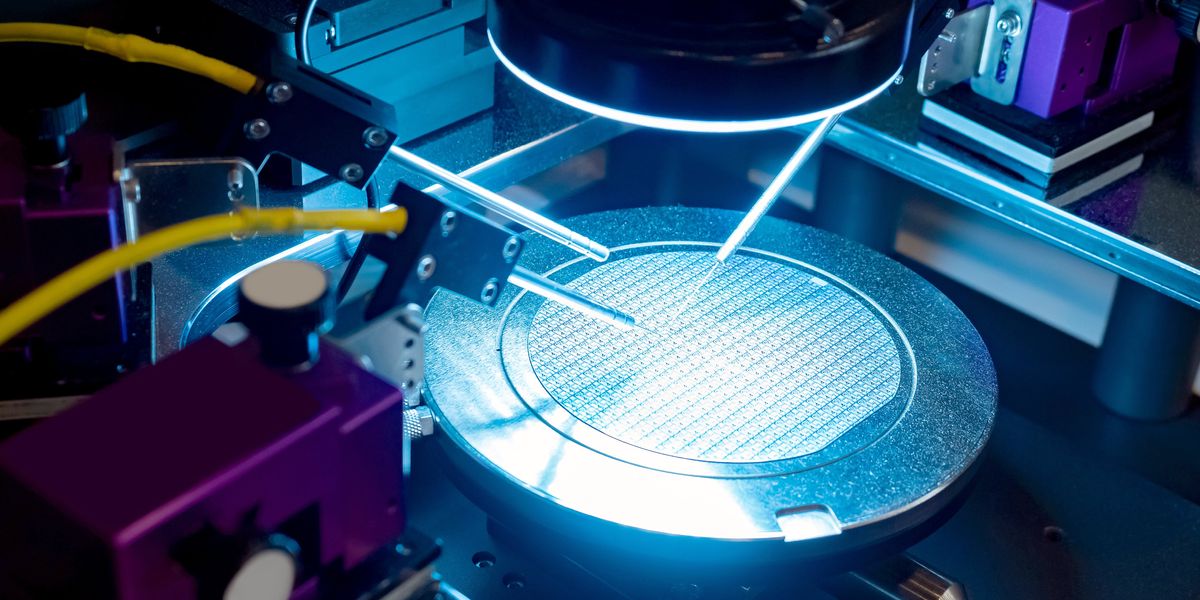
    Today’s semiconductor devices are built with nanometer-scale features and operate at increasingly lower voltages—which makes them more susceptible to even minor electrical overstress.

    Electrostatic discharge (ESD) is a persistent, costly challenge in the electronics industry. A discharge of just 100 volts can degrade or destroy sensitive components designed to operate at voltages as low as 1.2 V.

    According to the EOS/ESD Association, ESD rapidly and spontaneously transfers an electrostatic charge induced by a high electrostatic field. It typically occurs when two objects with different electrical potentials come into contact or close proximity, allowing electrons to jump between them, often through a small spark.

    ESD can cause immediate physical damage to circuit paths or introduce latent defects that lead to failures later in the product life cycle.

    As electrical devices become smaller and more sensitive, the ESD risks grow, along with their financial impact.

    Industry experts estimate that ESD is responsible for more than 30 percent of semiconductor failures during manufacturing and handling.

    The financial impact can add up quickly. The cost of the discharge damage can range from a few US cents for a simple diode to thousands of dollars for complex integrated circuits, according to the EOS/ESD Association. When factoring in revisions, labor, shipping, and overhead, the total cost to manufacturers can be substantial.

    A new ESD protection design program

    To equip engineers, technicians, and quality-assurance professionals with knowledge and tools to mitigate electrostatic discharge, IEEE has launched a Practical ESD Protection Design course and certificate program. The new training is suitable for individuals and organizations seeking to improve their ESD control.

    The standards-based instruction is aligned with ANSI/ESD S20.20–21: Protection of Electrical and Electronic Parts and other industry guidelines. The interactive modules cover theory, real-world case studies, and practical mitigation techniques.

    “An understanding of ESD is valued in multiple areas, ranging from design to testing and handling equipment in the field,” says Zachariah Peterson, an IEEE member and ESD industry expert and executive consultant for Northwest Engineering Solutions, in Portland, Ore.

    “Equipment failure due to ESD results in more than just rework costs, the damage is also to a company’s brand. The ability to anticipate ESD gives engineers a critical leg up in building reliable products and a durable business.”

    After successfully completing the training program, learners earn an IEEE certificate for 89 professional development hours and 8.9 continuing education units.

    As the electronics industry evolves, the importance of ESD control is likely to increase. With the rise of artificial intelligence, 5G, and edge computing, the demand for high-performance, reliable chips is growing while the margin for error is shrinking.

    The IEEE Practical ESD Protection Design program is not just a preventative measure; it’s a strategic choice that can support innovation, quality, and long-term success.

    From Your Site Articles

    Related Articles Around the Web

    Discharge electrostatic IEEE prevention
    Share. Facebook Twitter Pinterest LinkedIn Tumblr Email
    Previous ArticleYou May Soon Be Able to Chat on WhatsApp Even Without an Account
    Next Article Google’s Gemini Can Now Tell Bedtime Stories, Too
    Techurz
    • Website

    Related Posts

    Cyber Reality

    From prevention to rapid response: The new era of CISO strategy

    September 16, 2025
    AI

    How we feel about AI friends, OpenAI’s money, and vibe coding

    September 13, 2025
    AI

    Your Powerbeats Pro 2 are getting a serious upgrade – but there’s a catch

    September 13, 2025
    Add A Comment
    Latest Tech Pulse

    College social app Fizz expands into grocery delivery

    September 3, 20252,289 Views

    A Former Apple Luminary Sets Out to Create the Ultimate GPU Software

    September 25, 202516 Views

    AI is becoming introspective – and that ‘should be monitored carefully,’ warns Anthropic

    November 3, 202512 Views
    Stay In Touch
    • YouTube
    • WhatsApp
    • Twitter
    • Pinterest
    • LinkedIn

    Techurz helps readers stay ahead of digital change with clear, practical, future-focused technology intelligence - written today, searched tomorrow.

    X (Twitter) Pinterest YouTube LinkedIn WhatsApp
    Company
    • About Us
    • Contact Us
    • Our Authors / Editorial Team
    • Write For Us
    • Advertise
    Policy
    • Editorial Policy
    • Privacy Policy
    • Terms and Conditions
    • Affiliate Disclosure
    • Cookie Policy
    • Disclaimer
    • DMCA
    Explore
    • AI Systems
    • Cyber Reality
    • Future Tech
    • Disruption Lab
    • Signals
    • Tech Pulse
    • Sitemap

    Join the Techurz Brief

    The future does not arrive suddenly.
    Stay ahead with fast, sharp tech signals.

    Type above and press Enter to search. Press Esc to cancel.