


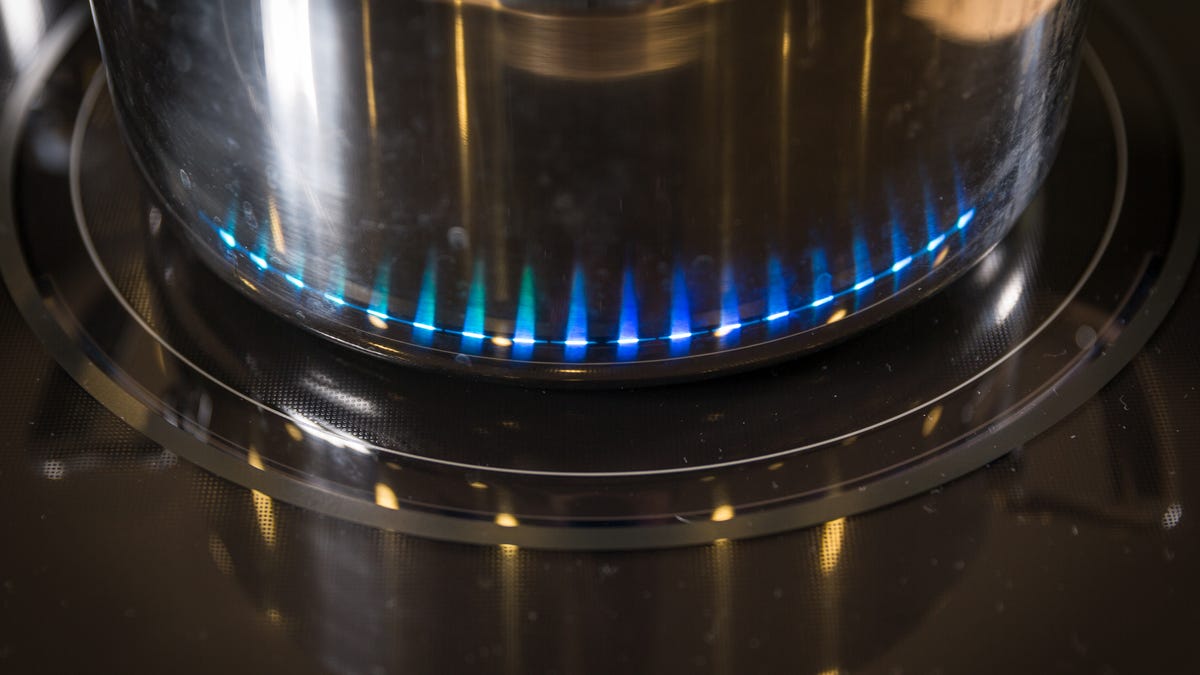
Even if you enjoy cooking, waiting for a pot of water to boil is probably one of the things you’d rather not have to deal with. And yes, the more you watch it, the slower it boils — that’s just science. But did you know that some ways of heating a pot are quicker than others? They can be better for other reasons, too. Using an electric stove can take longer than you’d like, making a gas range the preferred choice — not to mention they usually heat your pots and pans more evenly, too. And with summer very much here, you’ve better things to do than stand and wait for water to boil. So gas is the way to go, right? Well, it’s complicated.
As quick as they are, gas ranges have their own problems, including the potential health hazards that come with setting a fossil fuel alight just so you can make some noodles. Thankfully, for those looking to go electric with their cooking, there are choices. Induction stoves are a popular option nowadays, and they don’t have many of the problems that you get with traditional electric ranges. They also heat more quickly and evenly while being more energy-efficient. The trick is magnets.
Here’s a look at how induction cooktops compare to electric ranges.
The mechanics of induction and electric heat
Electric and induction cooktops produce the same outcome — dinner — but the way they actually get there is quite different.
The burners on electric cooktops heat up and transfer that energy to your pots and pans through what’s called conduction. The burners consist of metal coils, which may be exposed or covered by a cooktop made of glass or ceramic, that are heated with an electric current.
The LG Signature Smart InstaView microwave mounts above the company’s induction stove, and a camera mounted on the bottom of the microwave allows you to watch your food cook on the range from across the room.
That heat then transfers either directly to the cookware, in the case of exposed coils, or into the conductive surface and then onto your pots and pans.
Induction cooktops, meanwhile, use magnetic elements to energize your metal pots and pans, heating up the cookware itself instead of heating up the surface it sits on. This means the whole pan is being heated up evenly and less energy is wasted in heating up the air around the stove or the surrounding surface.
Read more: The Cooktop Burner That Saved Us During a Kitchen Remodel
The pros and cons of an induction cooktop
Induction cooking is faster and safer, but that doesn’t mean it’s the easiest switch. There are some key differences to know.
Induction cooktop pros
Cooking on an induction cooktop has plenty of benefits. Primary among them is the fact that they require far less energy to heat. Because they transfer heat directly to cookware, considerably less energy is lost through the cooking process. By some estimates, induction cooktops are capable of delivering as much as 90% of the electromagnetic energy generated to the food in the pan, compared to as little as 38% of the energy generated in gas ranges.
Another benefit of induction cooktops is the speedy cooking times. Induction surfaces can boil water in about half the time it takes for gas to do so, for instance. At CES 2025, we saw the Copper Charlie induction stove bring water to a boil in about 30 seconds. That induction stove and oven is expensive — about $6,000 — but it also comes with a 5 kilowatt-hour battery, allowing it to run during a power outage.
Because of how induction cooktops transfer heat, the surface itself does not actually get as hot, except for the residual heat of having a hot pan on it. That means it’s much safer if you touch it by accident. Spill food? You won’t have to scrape it off after you’re done, because it won’t cook onto the stovetop. That’s safer, and it makes cleanup a breeze.
Another advantage is that induction cooktops generally aren’t heating anything up unless there’s a metal pan on top of an element, so you can worry less about the myriad hazards of leaving the stove on.
Induction cooktop cons
The main downside of an induction range is the cost. If you’re on a budget, it may be difficult to find an induction cooktop that’s the size you want and meets your preferred price. Copper’s stove is particularly pricey at $6,000, but induction range and ovens from other brands typically start around $1,000 and go up from there.
There are also some hidden costs: Most induction stoves require a 240-volt outlet to run. If you already have an electric stove, you may already have one of those in your kitchen. If you’re switching from gas, you might need to call an electrician to get the right outlet installed — and you need to have the space for it in your electrical panel. Those costs add up. (The Copper stove we saw at CES can plug into a standard 120-volt outlet because of its battery, but it also costs $6,000 to begin with.)
On top of the product and installation costs, you may need to buy new pots and pans.
Induction stoves only work with cookware made of ferromagnetic material. Specifically, that means stainless steel, cast iron and carbon steel. Pots and pans made from aluminum and copper aren’t compatible. Adding to the confusion, some cookware uses a combination of materials in its construction, so its induction status isn’t always obvious.
To know for sure, give your pan the magnet test. If the magnet sticks, you’re good to go. If not, then you may have to swap it for another one. Worse, you might have to change out all your existing cookware before your kitchen will be ready for induction. When you buy cookware, look on the label for information saying it’s “induction ready” or something like it.
Of course, if you’re just wanting to take induction cooking for a spin, you can save on a lot of cost by picking up a portable induction burner, like a magnetic hot plate, for around $100 or less.
Read more: The Best Way to Clean Your Cast-Iron Skillet is With This Kitchen Staple
The Copper Charlie induction stove comes with a 5kWh battery, so it can plug into a standard outlet and keep running during a power outage.
The pros and cons of electric cooktops
Resistive electric cooktops — the ones you’re probably used to — are far more common than induction for a reason, but there are some major hangups.
Electric cooktop pros
Electric cooktops aren’t quite as hip as induction cooktops, but that’s okay. They’ve been around for a while, and they’re still quite popular for good reason: They get the job done.
Simplicity and reliability are among the primary selling points of an electric cooktop, and installation should be easy and straightforward, too. Don’t concern yourself with special equipment or particularly steep price tags. Electric cooktops are common and functional, so there’s no learning curve.
Another benefit of the electric cooktop is the ability to make use of residual heat. You may notice that the stovetop stays warm even after you turn it off. You can use this to help keep food warm or use those final minutes of excess heat to finish off the cooking process before serving your finished dish.
Electric cooktop cons
Electric ranges are not without their downsides. Residual heat can lead to unfortunate situations if you happen to place your hand on the surface or spill something on it while it’s still warm. They can also take longer to heat up, and the coils can sometimes provide uneven heat or waste lots of energy if you’re using a pan that’s smaller than the surface being heated.
There are still plenty of things to consider when deciding on the perfect cooktop for you, including your budget, the size of your kitchen, and how much you plan on actually using it. You might want to experience these cooktops for yourself before you decide, if possible. See how each one works and if you might like to cook on it.
There are plenty of great cooktops that use both electric and induction heating mechanisms, so if you do some searching, you’re likely to find one that fits your needs. A thoughtful approach will also help you produce great meals every time you use them. Though remember: A stove only provides the heat. You have to do the rest.
