

Close Menu
TechurzTechurz
    What's Hot

    Asian AI startups launch Mythos-like models as Anthropic’s export ban drags on

    June 27, 2026

    Corgi, the buzzy Y Combinator-backed insurance tech startup, says it didn’t steal an open source product

    June 26, 2026

    OpenAI poaches Uber India chief to lead its biggest market outside the US

    June 26, 2026
    X (Twitter) Pinterest YouTube LinkedIn WhatsApp
    Tech Pulse
    • Asian AI startups launch Mythos-like models as Anthropic’s export ban drags on
    • Corgi, the buzzy Y Combinator-backed insurance tech startup, says it didn’t steal an open source product
    • OpenAI poaches Uber India chief to lead its biggest market outside the US
    • Early Bird pricing ends tonight for Founder Summit
    • Robotaxis drive miles just to get cleaned and charged; this new startup wants to fix that
    X (Twitter) Pinterest YouTube LinkedIn WhatsApp
    TechurzTechurz
    • Home
    • Tech Pulse
    • Future Tech
    • AI Systems
    • Cyber Reality
    • Disruption Lab
    • Signals
    TechurzTechurz
    Home - AI - This quantum radar could image buried objects
    AI

    This quantum radar could image buried objects

    TechurzBy TechurzAugust 11, 2025Updated:May 10, 2026No Comments3 Mins Read
    Share Facebook Twitter Pinterest LinkedIn Tumblr Reddit Telegram Email
    This quantum radar could image buried objects
    Share
    Facebook Twitter LinkedIn Pinterest Email

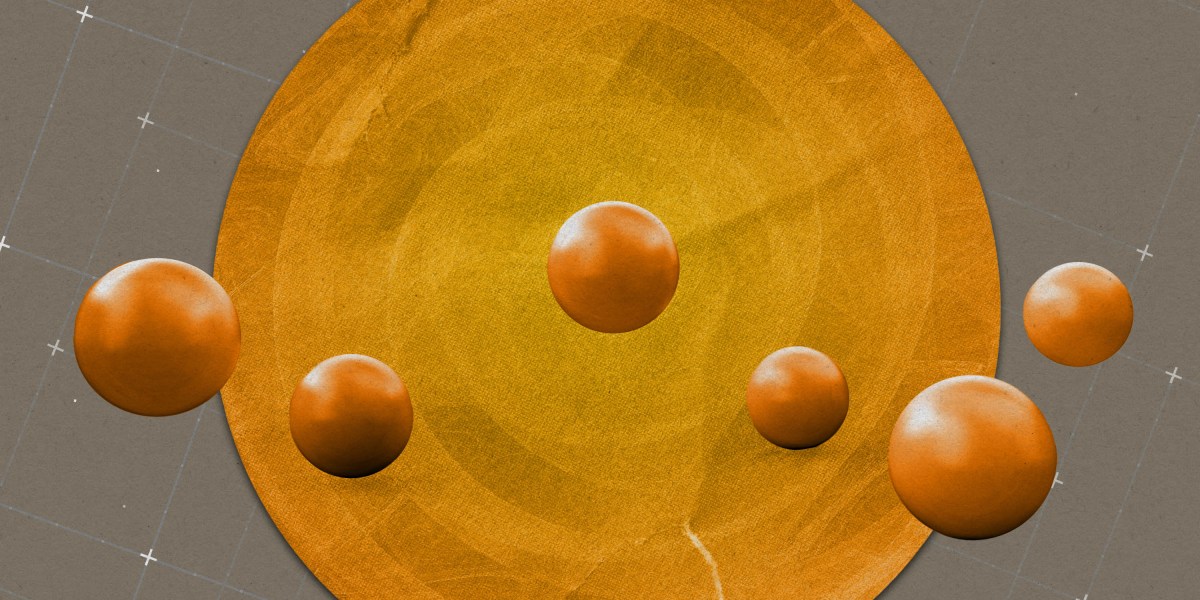
    The glass cell that serves as the radar’s quantum component is full of cesium atoms kept at room temperature. The researchers use lasers to get each individual cesium atom to swell to nearly the size of a bacterium, about 10,000 times bigger than the usual size. Atoms in this bloated condition are called Rydberg atoms. 

    When incoming radio waves hit Rydberg atoms, they disturb the distribution of electrons around their nuclei. Researchers can detect the disturbance by shining lasers on the atoms, causing them to emit light; when the atoms are interacting with a radio wave, the color of their emitted light changes. Monitoring the color of this light thus makes it possible to use the atoms as a radio receiver. Rydberg atoms are sensitive to a wide range of radio frequencies without needing to change the physical setup, says Michał Parniak, a physicist at the University of Warsaw in Poland, who was not involved in the work. This means a single compact radar device could potentially work at the multiple frequency bands required for different applications.

    Simons’s team tested the radar by placing it in a specially designed room with foam spikes on the floor, ceiling, and walls like stalactites and stalagmites. The spikes absorb, rather than reflect, nearly all the radio waves that hit them. This simulates the effect of a large open space, allowing the group to test the radar’s imaging capability without unwanted reflections off walls. 

    MATT SIMONS, NIST

    The researchers placed a radio wave transmitter in the room, along with their Rydberg atom receiver, which was hooked up to an optical table outside the room. They aimed radio waves at a copper plate about the size of a sheet of paper, some pipes, and a steel rod in the room, each placed up to five meters away. The radar allowed them to locate the objects to within 4.7 centimeters. The team posted a paper on the research to the arXiv preprint server in late June.

    The work moves quantum radar closer to a commercial product. “This is really about putting elements together in a nice way,” says Parniak. While other researchers have previously demonstrated how Rydberg atoms can work as radio wave detectors, he says, this group has integrated the receiver with the rest of the device more sleekly than before. 

    Other researchers have explored the use of Rydberg atoms for other radar applications. For example, Parniak’s team recently developed a Rydberg atom sensor for measuring radio frequencies to troubleshoot chips used in car radar. Researchers are also exploring whether radar using Rydberg-atom receivers could be used for measuring soil moisture.

    This device is just one example of a quantum sensor, a type of technology that incorporates quantum components into conventional tools. For example, the US government has developed gyroscopes that use the wave properties of atoms for sensing rotation, which is useful for navigation. Researchers have also created quantum sensors using impurities in diamond to measure magnetic fields in, for example, biomedical applications.

    buried image objects Quantum Radar
    Share. Facebook Twitter Pinterest LinkedIn Tumblr Email
    Previous Article5 bloatware apps you should delete from your Samsung phone ASAP
    Next Article An Alternate Upgrade Path for Steam Deck Gamers
    Techurz
    • Website

    Related Posts

    AI Systems

    The Future of AI Systems: 7 Architectural Shifts Driving the AI Revolution

    June 13, 2026
    Opinion

    Quantum Space’s military SPAC is trying to catch SpaceX’s IPO wave

    June 11, 2026
    Opinion

    Before quantum computing arrives, this startup wants enterprises already running on it

    March 13, 2026
    Add A Comment
    Latest Tech Pulse

    College social app Fizz expands into grocery delivery

    September 3, 20252,290

    SolarSquare in talks to raise up to $60M as India’s rooftop solar market draws major VC interest

    May 23, 202622

    Future of Digital Privacy and Security: 7 Truths Nobody Tells You

    May 25, 202619
    Stay In Touch
    • YouTube
    • WhatsApp
    • Twitter
    • Pinterest
    • LinkedIn

    Techurz helps readers stay ahead of digital change with clear, practical, future focused technology intelligence written today,searched tomorrow.

    X (Twitter) Pinterest YouTube LinkedIn WhatsApp
    Company
    • About Us
    • Contact Us
    • Our Authors / Editorial Team
    • Write For Us
    • Advertise
    Policy
    • Editorial Policy
    • Privacy Policy
    • Terms and Conditions
    • Affiliate Disclosure
    • Cookie Policy
    • Disclaimer
    • DMCA
    Explore
    • AI Systems
    • Cyber Reality
    • Future Tech
    • Disruption Lab
    • Signals
    • Tech Pulse
    • Sitemap

    Join the Techurz Brief

    The future does not arrive suddenly.
    Stay ahead with fast, sharp tech signals.

    Type above and press Enter to search. Press Esc to cancel.