


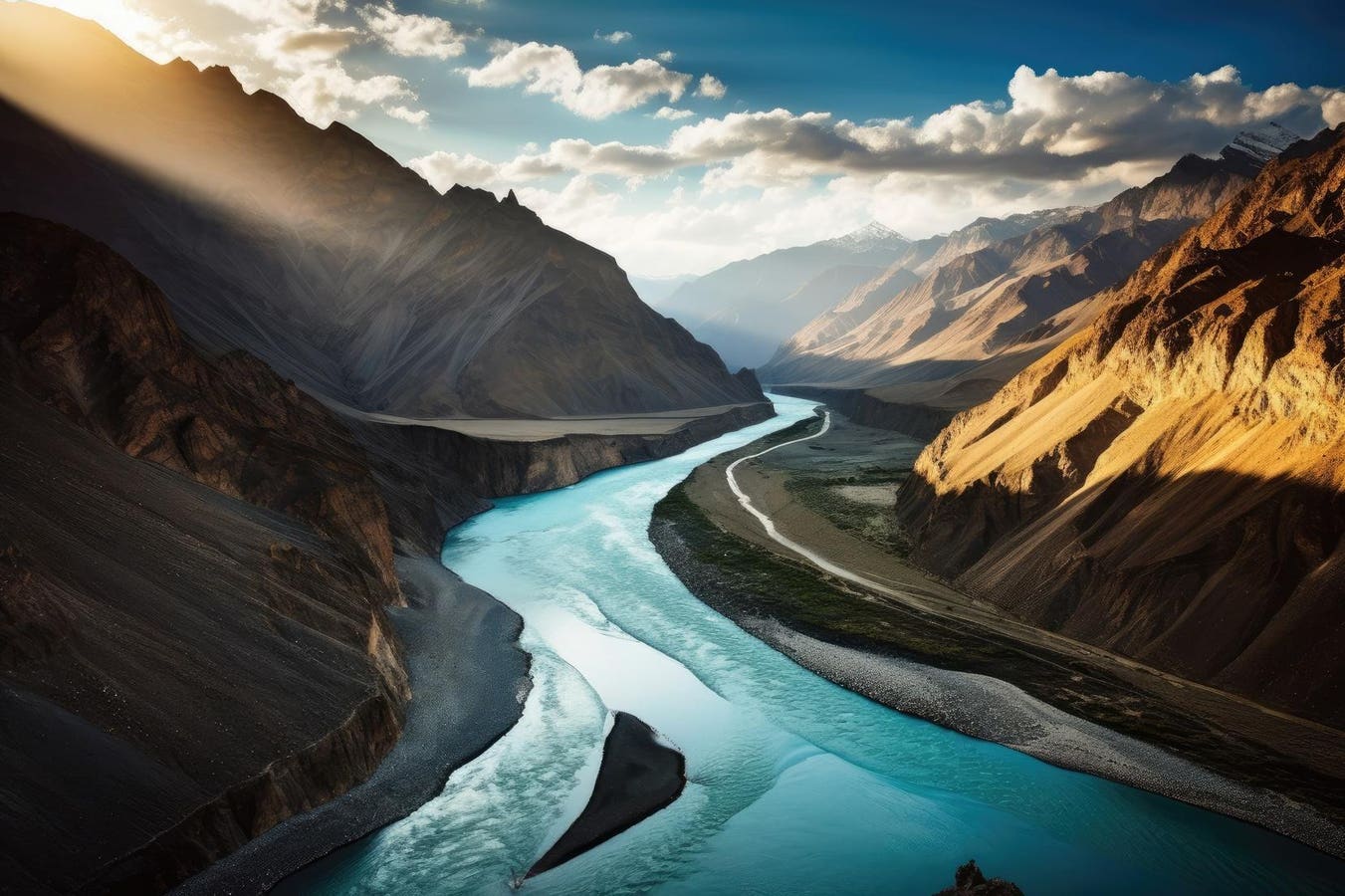
Ai generated from Adobe. Water Resources are being threatened by geopolitical machinations.
Adobe Stock
The current flair up between India and Pakistan has ramifications far beyond Kashmir. Different observers may focus on various points of interest, but one escalation has me particularly concerned: India’s unilateral withdrawal from the Indus Waters Treaty and the continued weaponization of water.
The Indus Waters Treaty was agreed to in 1960, and has long been lauded. Through previous wars and times of lesser tension, the critical water resources managed by this treaty have been shared to the benefit of both nations. Until the recent attack and its fallout, the Indus Waters Treaty has helped to reinforce standards of behavior in conflict like protecting access to water resources. This principle is protected by international law, which states that access to clean drinking water is a human right for all of us.
India has recently decided to cease participating in the treaty. This opens up opportunities, can set precedents, and lead to blowback. This treaty has historically set the standard for water sharing between the two countries, giving 80% of the Indus River system waters to Pakistan. While technically India can’t withdraw from the treaty, if they decide to take unilateral action on the ground, Pakistan will be in a desperate circumstance with few choices on how to respond. That is, by themselves.
India was granted the use of water from the Sutlej, Beas and Ravi rivers. Pakistan was granted most … More
Wildlife Alliance
India has recently said that with the suspension of the treaty, they plan to build four new dams that will necessarily create leverage over those downstream, Pakistan. Beyond the hazards and drawbacks of dams under the ‘best’ of conditions, and the damage that happens from accidents and poor design or construction, hydropower dams are a useful tool for geopolitical maneuvering. This stems from their ability to intentionally cause massive harm to those downstream, something India is aware of with regards to Pakistan.
They may be setting a standard they will regret. India should think hard on how things could go from here. In any conflict there are levels of escalation. When we have three nuclear powers in a tense region with even greater geopolitical and historical contexts to consider, creating the ability to cause either droughts or floods is tantamount to creating a weapon of mass destruction. Dams have long been seen in this context for those downstream, but are a similar risk to the builders.
China has approved the construction of yet another hydropower dam, now a gargantuan project that will have about triple the capacity of the Three Gorges Dam, currently the largest in the world. This will be just on their side of the border with India, and gives China control over water resources that India depends on. This would be interesting by itself, but becomes directly relevant when we consider that China and Pakistan have warmer relations than India has with either of them. If China could see it be to their benefit, they could act on Pakistan’s behalf. The same way that India could control the flow of water to Pakistan, China could restrict the flow of water to India. With Pakistan owing China $26 billion, in a most cynical way one might argue that China would want to protect their investment.
Dams are a vulnerability for those who build them. To consider potential blowback for China in this encounter, let’s look at the Three Gorges Dam. Commentators have said that Taiwan essentially became a nuclear-armed power when China built the Three Gorges Dam. If Taiwan wanted to, they could use conventional weapons to sufficiently destroy the dam, and flood the regions downstream, potentially harming 400 million Chinese citizens. Shanghai and Wuhan wouldn’t do well. Beyond the immediate dead, the refugees, destroyed agriculture, loss of economic capacity, all would utterly devastate China. This situation, but on a smaller scale, is what anyone downstream of any dam must consider as a possible consequence of collapse. The 1975 devastation at from Banqiao Dam, caused by excessive rainfall, was the most lethal event caused by dams failing, to date. This catastrophe immediately killed tens of thousands, with another 150,000 perishing from direct aftereffects. Disease, starvation, tainting the clean water, can all await those who’re downstream of a collapsed dam, be it from weather or explosives.
Water warfare is a dirty and unethical business that violates international law and basic morality. With that said, it’s a useful weapon of war specifically because it is so damaging. People have been doing it for about 4500 years. While we collectively recognize the importance of curtailing such behavior, the realities of warfare are that an actor will seize any useful advantage they can.
