

Close Menu
TechurzTechurz

    Subscribe to Updates

    Get the latest creative news from FooBar about art, design and business.

    What's Hot

    Kaltura acquires eSelf, founded by creator of Snap’s AI, in $27M deal

    November 10, 2025

    Remote driving startup Vay could grab up to $410M from Singapore’s Grab

    November 10, 2025

    Consolidation begins to hit the carbon credit market

    November 10, 2025
    Facebook X (Twitter) Instagram
    Trending
    • Kaltura acquires eSelf, founded by creator of Snap’s AI, in $27M deal
    • Remote driving startup Vay could grab up to $410M from Singapore’s Grab
    • Consolidation begins to hit the carbon credit market
    • Knicks player Miles McBride launches a location-sharing friendship app to rival Snap Map
    • Scribe hits $1.3B valuation as it moves to show where AI will actually pay off
    • Lenskart recovers from tepid open to close first day slightly above IPO price
    • Slow Ventures holds a ‘finishing school’ to help founders learn to be fancy
    • How one founder plans to save cities from flooding with terraforming robots
    Facebook X (Twitter) Instagram Pinterest Vimeo
    TechurzTechurz
    • Home
    • AI
    • Apps
    • News
    • Guides
    • Opinion
    • Reviews
    • Security
    • Startups
    TechurzTechurz
    Home»AI»A new atomic clock in space could help us measure elevations on Earth
    AI

    A new atomic clock in space could help us measure elevations on Earth

    TechurzBy TechurzMay 22, 2025No Comments3 Mins Read
    Share Facebook Twitter Pinterest LinkedIn Tumblr Reddit Telegram Email
    A new atomic clock in space could help us measure elevations on Earth
    Share
    Facebook Twitter LinkedIn Pinterest Email

    To prevent such costly construction errors, in 2015 scientists in the International Association of Geodesy voted to adopt the International Height Reference Frame, or IHRF, a worldwide standard for elevation. It’s the third-dimensional counterpart to latitude and longitude, says Sanchez, who helps coordinate the standardization effort. 

    Now, a decade after its adoption, geodesists are looking to update the standard—by using the most precise clock ever to fly in space.

    That clock, called the Atomic Clock Ensemble in Space, or ACES, launched into orbit from Florida last month, bound for the International Space Station. ACES, which was built by the European Space Agency, consists of two connected atomic clocks, one containing cesium atoms and the other containing hydrogen, combined to produce a single set of ticks with higher precision than either clock alone. 

    Pendulum clocks are only accurate to about a second per day, as the rate at which a pendulum swings can vary with humidity, temperature, and the weight of extra dust. Atomic clocks in current GPS satellites will lose or gain a second on average every 3,000 years. ACES, on the other hand, “will not lose or gain a second in 300 million years,” says Luigi Cacciapuoti, an ESA physicist who helped build and launch the device. (In 2022, China installed a potentially stabler clock on its space station, but the Chinese government has not publicly shared the clock’s performance after launch, according to Cacciapuoti.) 

    From space, ACES will link to some of the most accurate clocks on Earth to create a synchronized clock network, which will support its main purpose: to perform tests of fundamental physics. 

    But it’s of special interest for geodesists because it can be used to make gravitational measurements that will help establish a more precise zero point from which to measure elevation across the world.

    Alignment over this “zero point” (basically where you stick the end of the tape measure to measure elevation) is important for international collaboration. It makes it easier, for example, to monitor and compare sea-level changes around the world. It is especially useful for building infrastructure involving flowing water, such as dams and canals. In 2020, the international height standard even resolved a long-standing dispute between China and Nepal over Mount Everest’s height. For years, China said the mountain was 8,844.43 meters; Nepal measured it at 8,848. Using the IHRF, the two countries finally agreed that the mountain was 8,848.86 meters. 

    A worker performs tests on ACES at a cleanroom at the Kennedy Space Center in Florida.

    ESA-T. PEIGNIER

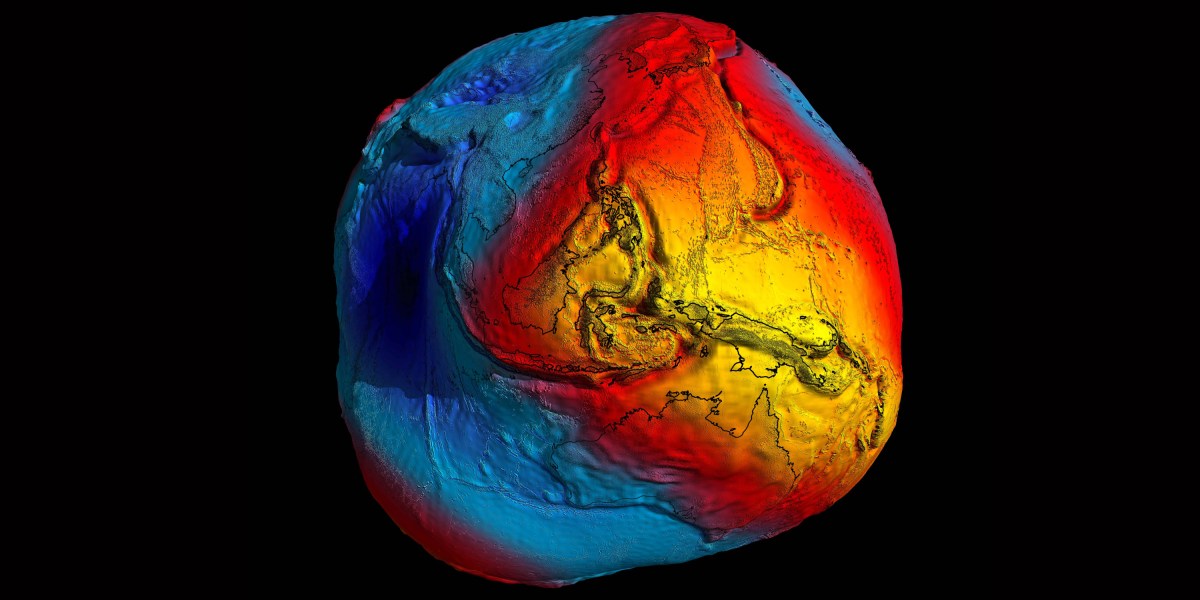
    To create a standard zero point, geodesists create a model of Earth known as a geoid. Every point on the surface of this lumpy, potato-shaped model experiences the same gravity, which means that if you dug a canal at the height of the geoid, the water within the canal would be level and would not flow. Distance from the geoid establishes a global system for altitude.

    atomic clock Earth elevations measure Space
    Share. Facebook Twitter Pinterest LinkedIn Tumblr Email
    Previous ArticleToday’s NYT Wordle Hints, Answer and Help for May 23, #1434
    Next Article The best Apple AirTag accessories for 2025
    Techurz
    • Website

    Related Posts

    Opinion

    From Air Force officer to space defense CEO: Why Even Rogers left to build weapons for orbit

    November 5, 2025
    Security

    I let Edge’s Copilot Mode buy me a new space heater – here’s how the AI browser did

    October 25, 2025
    Opinion

    How AI is powering the future of space at Disrupt 2025

    October 24, 2025
    Add A Comment
    Leave A Reply Cancel Reply

    Top Posts

    A Former Apple Luminary Sets Out to Create the Ultimate GPU Software

    September 25, 202511 Views

    The Reason Murderbot’s Tone Feels Off

    May 14, 20259 Views

    Start Saving Now: An iPhone 17 Pro Price Hike Is Likely, Says New Report

    August 17, 20258 Views
    Stay In Touch
    • Facebook
    • YouTube
    • TikTok
    • WhatsApp
    • Twitter
    • Instagram
    Latest Reviews

    Subscribe to Updates

    Get the latest tech news from FooBar about tech, design and biz.

    Most Popular

    A Former Apple Luminary Sets Out to Create the Ultimate GPU Software

    September 25, 202511 Views

    The Reason Murderbot’s Tone Feels Off

    May 14, 20259 Views

    Start Saving Now: An iPhone 17 Pro Price Hike Is Likely, Says New Report

    August 17, 20258 Views
    Our Picks

    Kaltura acquires eSelf, founded by creator of Snap’s AI, in $27M deal

    November 10, 2025

    Remote driving startup Vay could grab up to $410M from Singapore’s Grab

    November 10, 2025

    Consolidation begins to hit the carbon credit market

    November 10, 2025

    Subscribe to Updates

    Get the latest creative news from FooBar about art, design and business.

    Facebook X (Twitter) Instagram Pinterest
    • About Us
    • Contact Us
    • Privacy Policy
    • Terms and Conditions
    • Disclaimer
    © 2025 techurz. Designed by Pro.

    Type above and press Enter to search. Press Esc to cancel.